

 送る
送る シェア
シェア
 詳細情報
詳細情報 ガイドを表示

 画像をダウンロード
 似ている作品
 スライドショー
 統計情報
統計情報tile


 続きを読む
続きを読む
ジークレー/アートプリント
スピーディーな制作と多彩な仕上げオプションが魅力の、ミュージアムクオリティなジークレー・キャンバスプリント。 ( 手描きの複製画を注文する デジタル画像販売へ切り替え)




































作品のオリジナル比率に合わせた、当店の規定サイズからお選びください。

額縁や壁のスペースに合わせて、ご希望の幅と高さを入力してください。プリントはカットすることは可能ですが、元の画像より大きくすることはできないため、異なる比率のサイズを選択された場合は、画像の一部が欠けることになります。印刷を開始する前に、内容を確認していただくためのデジタルモックアップをお送りいたします。このページに表示されている画像は、実際のカット後の状態を示すものではありません。実際の仕上がりはモックアップにてご確認ください。


 ガラスオプションは、110cm未満のサイズでのみご利用いただけます。

tile
ジークレー/アートプリント
複製画サイズ一覧
-


合計金額
¥ 12591
A Visionary Encounter: Exploring William Frend De Morgan's "Tile"
William Frend De Morgan (1839-1917) stands as a singular figure within the Victorian artistic landscape—a testament to intellectual curiosity and an unwavering dedication to blending scientific observation with profound aesthetic expression. His artwork transcends mere decoration; it’s imbued with layers of symbolism that speak to themes of mortality, regeneration, and the interconnectedness of nature and humanity. “Tile,” created around 1900, exemplifies this distinctive approach, offering a captivating glimpse into De Morgan's artistic vision and cementing his place as one of Britain’s most influential decorative artists.
- Subject Matter: The painting depicts a feline creature resting upon the earth, its gaze directed towards an unseen horizon. Alongside it are two serpents—one coiled at the upper left corner, the other positioned on the right side—creating a dynamic interplay of opposing forces. Above all this is perched a bird, symbolizing aspiration and freedom.
- Style: De Morgan’s style leans heavily into Art Nouveau influences, characterized by flowing lines, organic forms, and an emphasis on decorative detail. However, unlike many contemporaries who embraced purely ornamental pursuits, De Morgan sought to infuse his designs with intellectual rigor.
Technique: Ceramic Precision Meets Artistic Intuition
De Morgan’s mastery lay not only in conceptualizing striking imagery but also in executing it with meticulous craftsmanship. “Tile” showcases a remarkable level of technical skill, achieved through the painstaking process of ceramic sculpting and glazing. The artist utilized terracotta clay—a readily available material—to sculpt the feline figure and serpents, demonstrating an understanding of both form and texture. Subsequent layering of glaze—primarily cobalt blue—created luminous surfaces that captured the subtle nuances of light and shadow.
- Material: Terracotta Clay
- Glaze Technique: Cobalt Blue Glazing – This technique produces a rich, saturated color known for its durability and ability to withstand repeated firing cycles.
Historical Context & Symbolism
Created during the height of the Arts and Crafts movement, “Tile” reflects the broader intellectual currents of the era—a reaction against industrialization and a fervent belief in the transformative power of handcrafted artistry. The serpent motif is particularly significant, representing both evil and wisdom—a duality that mirrors De Morgan’s own philosophical stance. Similarly, the bird embodies hope and transcendence, suggesting an upward gaze towards spiritual enlightenment. The vase serves as a grounding element, anchoring the composition while simultaneously hinting at fertility and renewal.
Emotional Impact & Artistic Legacy
"Tile" transcends its formal constraints to evoke a profound sense of contemplation. De Morgan’s deliberate use of color—particularly the dominant cobalt blue—creates an atmosphere of serenity and solemn beauty. The artist's meticulous attention to detail speaks to his unwavering commitment to elevating craftmanship into art, leaving behind a legacy that continues to inspire artists and collectors alike.
- Color Palette: Cobalt Blue – Used extensively in Art Nouveau designs, cobalt blue symbolizes tranquility and spiritual depth.
- Overall Impression: A meditative piece conveying themes of duality, aspiration, and the enduring beauty of natural forms.
よくあるご質問
William Frend De Morgan作「tile」の活用方法や、おすすめの設置スペースについて教えてください。
「tile」はAccentに最適で、Living Roomへの飾るのがおすすめです。
その色彩を考慮すると、"tile" はどの場所に飾るのがおすすめですか?
William Frend De Morgan作「tile」のNeutralsな色彩は、おすすめの空間であるLiving Roomに調和します。
注文前にWilliam Frend De Morgan作「tile」をプレビューすることはできますか?
アーティストについて
A Life Immersed in Pattern and Innovation
William Frend De Morgan, born in London in 1839, was a figure who defied easy categorization. He wasn’t simply a potter, nor merely a tile designer, or even solely a novelist—he was a polymath whose artistic spirit permeated multiple disciplines. Born into an intellectually stimulating environment – his father, Augustus De Morgan, was a renowned mathematician, and his mother, Sophia Elizabeth Frend, a progressive thinker and writer – young William received encouragement to pursue his creative inclinations. Though he initially enrolled at the Royal Academy Schools, a sense of disillusionment soon set in, leading him toward a more collaborative and aesthetically aligned path. This pivotal shift came with his introduction to William Morris, a meeting that would profoundly shape De Morgan’s artistic trajectory and immerse him within the burgeoning Arts and Crafts movement.From Stained Glass to Ceramic Revelation
De Morgan's early explorations centered on stained glass, working alongside Morris & Co., contributing designs imbued with medieval and mythological narratives. However, it was a fascination with lustre – that shimmering, iridescent quality found in ancient Hispano-Moresque pottery and Italian maiolica – that truly ignited his artistic passion. He dedicated himself to rediscovering the lost techniques of lustreware, meticulously experimenting with glazes and firing processes. This pursuit wasn’t merely about replicating an aesthetic; it was a scientific investigation driven by an insatiable curiosity. By 1872, De Morgan had fully committed to ceramics, establishing his own pottery in Chelsea. The decade that followed proved remarkably fruitful, though marked by technical challenges. He skillfully combined commercially produced tiles with his own creations, notably developing a high-quality biscuit tile celebrated for its irregularities and durability. His designs during this period began to coalesce around recurring motifs: fantastical creatures, galleons, fish, and intricate floral patterns, all rendered in a distinctive “Persian” palette of deep blues, turquoise, manganese purple, greens, Indian red, and lemon yellow.Eastern Influences and Artistic Flourishing
De Morgan’s artistic vision was deeply informed by his profound interest in Eastern art, particularly Islamic tilework. This fascination wasn't superficial imitation but a genuine appreciation for the complex geometric patterns, vibrant colors, and symbolic richness of these traditions. He absorbed these influences, translating them into a unique visual language that blended medieval aesthetics with Oriental motifs. Between 1882 and 1900, De Morgan received significant commissions, most notably producing elaborate tile panels for twelve P&O liners under the direction of T.E. Colcutt, as well as earlier work for Tsar Alexander II’s yacht, Livadia. These large-scale projects showcased his ability to translate intricate designs into expansive decorative schemes. His pottery also flourished, encompassing chargers, rice dishes, and vases, often brought to life through the skilled hands of decorators like Charles Passenger, Fred Passenger, Joe Juster, and Miss Babb – artists who faithfully executed De Morgan’s visionary concepts.A Legacy Beyond Ceramics
Though his pottery and tile designs remain his most celebrated achievements, William De Morgan's creative energy extended into the realm of literature. In his later years, he embarked on a second career as a novelist, publishing nine works between 1906 and 1917. His novels, characterized by realistic dialogue and insightful social commentary, were well-received during his lifetime. De Morgan’s impact resonates through the enduring appeal of his art. He wasn't simply replicating historical styles; he was innovating, experimenting, and forging a unique aesthetic that continues to captivate audiences today. The De Morgan Centre in London stands as a testament to his legacy, preserving and showcasing his remarkable contributions to Victorian decorative arts. His work embodies the spirit of the Arts and Crafts movement – a commitment to craftsmanship, artistic integrity, and the harmonious integration of art into everyday life.Key Dates & Notable Works
- 1839: Born in Gower Street, London.
- 1863: Began experimenting with stained glass and ventured into pottery.
- 1872: Established his own pottery in Chelsea.
- 1882-1900: Commissioned to produce tile panels for P&O liners and the Tsar’s yacht.
- 1906-1917: Published nine novels.
- 1917: Passed away in London.
- The Annunciation (featured on OriginalUniqueArt.com)
- Sunrise, Inverness Copse (by Paul Nash, featured on OriginalUniqueArt.com)
- Music Cabinet
- The Welsh Bible

William Frend De Morgan
1839 - 1917 , United Kingdom
アーティスト情報
- Full Name: William Frend De Morgan
- Nationality: British
- Date Of Birth: 1839
- Date Of Death: 1917
- Place Of Birth: London, United Kingdom
- Notable Artworks:
- The Annunciation
- Music Cabinet
- The Welsh Bible
- Artistic Movement Or Style: Arts and Crafts
- Artists Who Influenced This Artist: ['William Morris']
関連記事

The Alchemy of Clay: A Collector's Guide to the Mastery, Texture, and Timeless Form of Ceramic Art
Discover the profound beauty of ceramic art. Our expert guide explores the alchemy of clay, texture, and glaze, offering collectors deep insights into mastering earth and fire to create timeless, sculptural masterpieces for any curated collection.

Frederick Morgan: A Study in Aestheticism & Victorian Beauty
Explore the captivating world of Frederick Morgan, a key figure in Victorian Aestheticism. Discover his beautiful paintings, recurring themes, and lasting legacy with our expert analysis. Learn more today!

ゴヤ傑作25選:スペインの魂を揺さぶる、深遠な芸術の世界 | OriginalUniqueArt
ゴヤ傑作25選:ロマン主義を代表するスペインの巨匠、フランシスコ・デ・ゴヤの世界へ。黒衣の女からマハまで、魂を揺さぶる絵画の物語と技法を紐解きます。OriginalUniqueArtで高品質なアートレプリカを見つけ、インテリアに深みと風格を。今すぐコレクションをご覧ください。
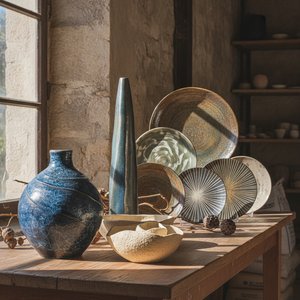
The Art of Ceramics: A Guide to Mastery, Texture, and Timeless Form for the Discerning Collector
Explore the profound elegance of ceramic art. From master glazes to sculptural forms, our expert guide offers discerning collectors deep insights into the mastery, texture, and timeless value of fine ceramics for sophisticated collections and luxury interiors.
