
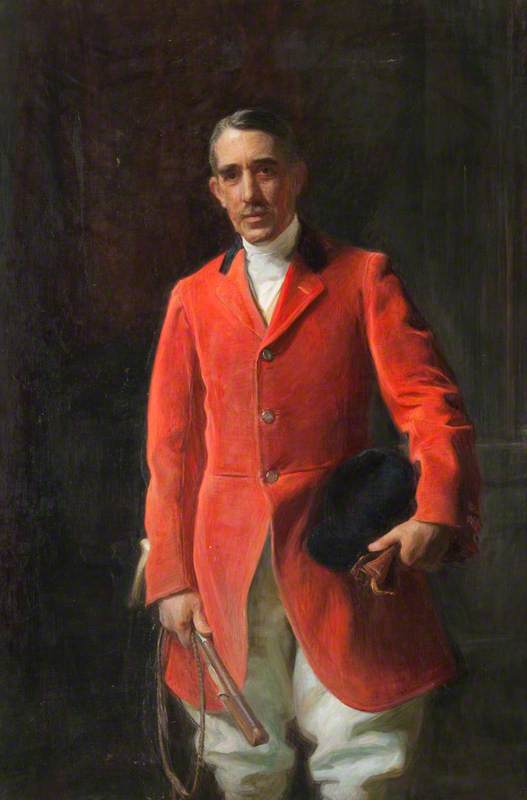
 設置イメージを確認
 送る
送る シェア
シェア
 詳細情報
詳細情報 ガイドを表示

 画像をダウンロード
 似ている作品
 X線調査
X線調査 スライドショー
 統計情報
統計情報George Barclay, Esq
 145.0 x 100.0 cm
 Paisley Art Institute Collection
 続きを読む
続きを読む
手描き油彩複製画
当社のアーティストが、お客様のご希望のサイズと額縁に合わせて、キャンバスに手描きで制作する油彩画です。 ( プリント版に切り替え デジタル画像販売へ切り替え)




































作品のオリジナル比率に合わせた、当店の規定サイズからお選びください。

フレームや壁のスペースに合わせて、ご希望の幅と高さを入力してください。本作品は手描きのため、異なる比率のサイズをご希望の場合、絵画の周囲を少し広げて描くか、あるいは端を少しカットして調整することが可能です。お客様のご要望に合わせます。制作を開始する前に、仕上がりを確認するためのデジタルモックアップをお送りいたします。このページに表示されている画像は完成品の実物ではなく、あくまでモックアップによるイメージです。
ご注文後、OriginalUniqueArt.com チームより詳細な指示をお送りするとともに、仕上がりイメージ(モックアップ)をご提供いたします。


 ガラスオプションは、110cm未満のサイズでのみご利用いただけます。

George Barclay, Esq
再現技法
複製画サイズ一覧
-


合計金額
¥ 47236
アーティストについて
William Carter: Echoes of Victorian Faith and Landscape
Born around 1843 in the heart of London’s Bedford Square, William Carter was a painter whose brief, luminous life captured the very essence of a transitioning England. As a British landscape artist, his work serves as a poignant window into the Victorian era—a period defined by a profound reverence for the natural world and an burgeoning fascination with scientific precision. Though his career was tragically truncated by his death at the young age of twenty-one, Carter managed to weave a distinctive thread into the tapestry of 19t-century art, creating a synthesis of Romantic idealism and the emerging realist tendencies that would come to define the age.
The foundations of Carter’s artistic journey were laid by his privileged upbringing. The son of John Thornton Carter, a prominent coal and iron baron, William was raised amidst the symbols of Britain's industrial ascendancy. This background provided him with the means to pursue an elite education, blending classical scholarship with rigorous artistic training. His development was shaped by the mentorship of two vastly different masters: the Symbolist George Frederic Watts, who instilled in him a sense of spiritual depth and thematic complexity, and John Goss, whose commitment to realism influenced Carter’s meticulous observational skills. This duality—the tension between the ethereal and the tangible—became the hallmark of his creative vision.
A Vision of Quietude and Detail
While many of his contemporaries sought to capture the sweeping, tempestuous grandeur of the sublime in the tradition of Turner, Carter found his voice in the intimate and the serene. His canvases often eschewed the dramatic storm for the quiet dignity of the English countryside. One might find himself wandering through rolling hillsides dotted with grazing sheep or standing before a still, reflective lake that mirrored the soft light of a summer afternoon. These were not merely topographical studies; they were atmospheric meditations designed to evoke a sense of peace and contemplative depth.
Carter’s technique was characterized by an extraordinary attention to detail and a mastery of subtle tonal harmonies. He possessed a keen ability to render textures with such conviction that the viewer could almost feel the coarseness of wool or the dampness of earth. His use of light and shadow was never merely decorative; it served to create volume and a sense of lived-in reality, grounding his more poetic landscapes in a palpable, physical world. Through this careful application of oil on canvas, he bridged the gap between the dreamlike qualities of Romanticism and the grounded truth of Realism.
Legacy and Historical Significance
The historical significance of William Carter lies in his ability to capture a specific cultural moment: the intersection of Victorian faith and the dawn of modern observation. His work reflects a society that was simultaneously looking backward toward pastoral innocence and forward toward an era of empirical discovery. Even though his total output remains modest due to his untimely passing in 1864, the impact of his aesthetic remains visible in the way he treated the landscape as both a spiritual sanctuary and a subject of scientific interest.
Today, Carter’s paintings are cherished not only for their technical merit but as historical artifacts that preserve the atmosphere of a lost era. His ability to imbue quiet scenes with profound emotional weight ensures that his name remains etched in the annals of British art history. To view a Carter landscape is to experience a moment of stillness, a brief respite from the industrial roar of the 19th century, inviting the modern observer to rediscover the beauty found in the subtle and the overlooked.

William Carter
1843 - 1864
アーティスト情報
- Full Name: William Carter
- Nationality: British
- Date Of Birth: 1843
- Date Of Death: 1864
- Place Of Birth: London, England
- Notable Artworks: ['Lynmouth']
- Artistic Movement Or Style: Victorian Portraiture
- Artists Who Influenced This Artist:
- Henry William Cripps
- Edward Joseph Halsey
- Artists Or Movements Influenced By This Artist: ['Romanticism']