

 設置イメージを確認
 送る
送る シェア
シェア
 詳細情報
詳細情報 ガイドを表示

 画像をダウンロード
 似ている作品
 X線調査
X線調査 スライドショー
 Q&A
Q&A 統計情報
統計情報Jungle Form
 Oil On Canvas
- WallArt
- Surrealism
 1952
1952- Modern
 46.0 x 36.0 cm
 MAM Rio
 続きを読む
続きを読む
このページに掲載されている作品は著作権法によって保護されており、当社の許可なく同一の複製物を制作または販売することは法律で禁じられています。この保護は、以下のような国際条約に基づき執行されます。 ベルヌ条約 および、以下の条項に定められたものを含む各国の法律により、 米国著作権法 第17編。
この手法は、著作権で保護された作品の複製や複写を伴わないため、著作権法に完全に準拠しています。これは単なる模倣ではなく、創造的な再解釈です。元の作品からインスピレーションを受けつつも、それとは異なる、全く新しい絵画を生み出すものです。
ジークレー/アートプリント
スピーディーな制作と多彩な仕上げオプションが魅力の、ミュージアムクオリティなジークレー・キャンバスプリント。 ( 手描きの複製画を注文する デジタル画像販売へ切り替え)




P118B ¥10

P118H ¥10

P118W ¥10

P438Z ¥10

P508JH ¥12

P508YH ¥12

P805H ¥10

P805Z ¥10

P919BZ ¥10

P919G ¥10

P919XJ ¥10

P959ZH ¥10

P968JZ ¥12

W106C ¥8

W218G ¥10

W218JH ¥8

W218Y ¥10

W307PJ ¥10

W316G ¥10

W316PJ ¥8

W316Y ¥10

W398PJ ¥8

W4111J ¥10

W500HY ¥15

W500JH ¥15

W692G ¥12

W849H ¥8

W940BG ¥15

W953PJ ¥8




作品のオリジナル比率に合わせた、当店の規定サイズからお選びください。

額縁や壁のスペースに合わせて、ご希望の幅と高さを入力してください。プリントはカットすることは可能ですが、元の画像より大きくすることはできないため、異なる比率のサイズを選択された場合は、画像の一部が欠けることになります。印刷を開始する前に、内容を確認していただくためのデジタルモックアップをお送りいたします。このページに表示されている画像は、実際のカット後の状態を示すものではありません。実際の仕上がりはモックアップにてご確認ください。


 ガラスオプションは、110cm未満のサイズでのみご利用いただけます。

Jungle Form
ジークレー/アートプリント
複製画サイズ一覧
-


合計金額
¥ 12587
A Verdant Metamorphosis: The Biomorphic Allure of Jungle Form
In the evocative depths of William Baziotes’ Jungle Form, viewers are invited into a dreamscape where the boundaries between the human silhouette and the primordial wild begin to dissolve. Created in 1952, this masterpiece serves as a profound testament to the artist's ability to bridge the psychological intensity of Surrealism with the raw, gestural energy of Abstract Expressionism. The painting presents a striking green figure, a woman seen from behind, whose very essence seems woven from the lush, tangled textures of a tropical thicket. Her form is not merely painted; it is constructed through a sophisticated layering of emerald, moss, and forest hues, suggesting a being that is simultaneously flesh and flora.
The composition captures a moment of quiet, almost ritualistic movement. With one arm raised toward the heavens, the figure evokes a sense of reaching—perhaps for light, perhaps for transcendence. This gesture, combined with the rhythmic verticality of the background, creates a tension between the organic fluidity of the body and the structured, architectural elements that frame her. The interplay of light and shadow across her verdant skin gives the work a sculptural quality, making it an arresting focal point for any sophisticated interior. For the collector, this piece offers more than just visual beauty; it provides a window into the subconscious, where the human spirit finds its reflection in the untamed natural world.
Technique and the Language of Abstraction
Baziotes was a master of biomorphic abstraction, a technique that utilizes organic, rounded shapes reminiscent of biological life. In Jungle Form, his brushwork achieves a remarkable tactile depth. The application of paint suggests a variety of textures—some areas appear smooth and liquid, while others possess a rugged, bark-like density. This mastery of medium allows the artist to manipulate the viewer's perception, making the figure feel as though she is emerging from a dense, breathing organism. The use of a monochromatic green palette, punctuated by subtle shifts in value, prevents the composition from becoming chaotic, instead guiding the eye through a harmonious, rhythmic dance of form and shadow.
The historical context of this work is deeply rooted in the post-war American art movement. As a key figure associated with the WPA era and the subsequent rise of the New York School, Baziotes utilized his Greek heritage and Surrealist training to infuse American abstraction with a sense of myth and ancient memory. Jungle Form embodies this synthesis perfectly; it is an abstract work that feels deeply rooted in the primal history of life itself. For interior designers seeking to introduce a sense of organic luxury and intellectual depth into a space, this reproduction offers a sophisticated way to anchor a room with a conversation piece that is both visually soothing and intellectually stimulating.
Symbolism and Emotional Resonance
Beyond its formal brilliance, Jungle Form resonates on an emotional level that touches upon themes of identity, growth, and the cyclical nature of life. The choice of a green, arboreal figure suggests a profound connection to the Earth—a return to a state of primordial innocence or perhaps a metamorphosis into something more enduring than human bone and blood. There is a certain solitude in the figure's posture, yet it is not a lonely solitude; rather, it is a meditative state of being, an integration with the environment that feels both peaceful and powerful.
To possess a reproduction of this work is to bring a piece of the sublime into one's personal sanctuary. It serves as a reminder of the beauty found in complexity and the strength found in vulnerability. Whether placed in a contemporary gallery-style living room or a quiet study, Jungle Form commands attention through its quiet intensity, offering an enduring sense of wonder to all who linger before its verdant depths.
よくあるご質問
「Jungle Form」(1952)は、William Baziotesのキャリアにおけるどの時期の作品にあたりますか?
1952年という制作時期は、William Baziotesの画業におけるMature Periodに「Jungle Form」を位置づけています。
William Baziotes作「Jungle Form」の配色(パレット)はどのように表現されていますか?
William Baziotes作「Jungle Form」は、Darkなカラーパレットを使用しています。この配色が、作品全体の色彩的特徴を象徴しています。
William Baziotes作「Jungle Form」の形状とサイズを教えてください。
William Baziotes作「Jungle Form」は、サイズ46 x 36 cmのPortrait作品です。
アーティストについて
The Dreamscape Architect: The Life and Vision of William Baziotes
Within the vibrant, often turbulent constellation of the New York School, few artists captured the ethereal boundary between the conscious mind and the primordial subconscious as poignantly as William Baziotes. Born in 1912 to Greek immigrants in Pittsburgh, Pennsylvania, Baziotes carried within him a profound connection to ancient heritage—a fascination with classical sculpture and mythic resonance that would later breathe life into his abstract forms. His formal journey began at the National Academy of Design, where he emerged in 1936 as a painter deeply attuned to the technical rigors of his craft, yet possessed by an irrepressible urge to explore the unseen realms of the psyche.
The trajectory of Baziotes’ career was irrevocably shaped by the socio-economic landscape of the Great Depression. Through his involvement with the Works Progress Administration (WPA), particularly the easel project between 1938 and 1940, he found the freedom to experiment with large-scale canvases that demanded a more visceral, gestural approach. It was during this era that he began to weave together the disparate threads of European Surrealism and the burgeoning American Abstract Expressionism. While his contemporaries often leaned toward pure abstraction or intellectualized concepts, Baziotes remained a poet of the image, utilizing automatism not merely as a technique, but as a gateway to a more evocative, biomorphic language.
Biomorphic Echoes and Surrealist Shadows
Baziotes’ visual vocabulary is perhaps most famously defined by its use of biomorphic forms—organic, rounded shapes that suggest biological life, cellular structures, or the fluid movement of deep-sea organisms. His work often feels like a window into a prehistoric or extraterrestrial landscape, where the distinction between flesh and flora becomes beautifully blurred. In masterpieces such as Jungle Form (1952), one encounters a mesmerizing metamorphosis; a verdant figure emerges from a tangled thicket, her very essence seemingly woven from emerald and mossy textures. This ability to marry the psychological intensity of Surrealism with the raw, energetic brushwork of Abstract Expressionism allowed him to create works that are simultaneously haunting and deeply rhythmic.
His inspirations were as diverse as they were profound. Beyond the visual influence of primitive art, Baziotes drew immense spiritual and linguistic nourishment from the poetry of Charles Baudelaire and the timeless elegance of ancient Greek art. This literary and historical depth infused his paintings with a sense of tragic beauty and ritualistic movement. Whether through the melancholic color palettes found in works like The Falcon or the stark, haunting compositions of The Flesh Eaters, Baziotes sought to capture a moment of transcendence—a reaching toward the heavens or an exploration of the shadows lurking within the human spirit.
Legacy and the New York School
The mid-1940s marked the zenith of Baziotes’ professional recognition. His 1944 debut solo exhibition at Peggy Guggenheim’s legendary Art of This Century gallery served as a definitive arrival, placing him at the epicenter of the modern art world. He was not merely a participant in this movement but a foundational architect of its community. Alongside luminaries such as Mark Rothko, Robert Motherwell, and David Hare, Baziotes co-founded the Subjects of the Artist School in 1948. This institution became a vital crucible for artistic dialogue, hosting lectures by icons like John Cage and Jean Arp, and fostering a collaborative environment that would define the postwar American aesthetic.
In his later years, Baziotes transitioned into a period of significant pedagogical influence, teaching at prestigious institutions including the Museum of Modern Art and New York University. Though his life was tragically cut short by lung cancer in 1963, just days before his fifty-first birthday, his contribution to the evolution of modern art remains indelible. He leaves behind a legacy characterized by:
- The Synthesis of Styles: Successfully bridging the gap between the dream-logic of Surrealism and the gestural freedom of Abstract Expressionism.
- Biomorphic Innovation: Developing a unique visual language of organic, fluid forms that evoke both biological life and mythic archetypes.
- Cultural Integration: Infusing American abstraction with the weight of classical antiquity and European poetic traditions.
- Educational Leadership: Strengthening the New York art community through the establishment of collaborative schools and academic instruction.
Today, the works of William Baziotes continue to captivate collectors and historians alike, offering a profound meditation on the interconnectedness of the human soul and the untamed natural world.

William Baziotes
1912 - 1963 , United States of America
アーティスト情報
- Full Name: William Baziotes
- Nationality: American
- Date Of Birth: 1912
- Date Of Death: 1963
- Place Of Birth: Pittsburgh, United States of America
- Notable Artworks:
- Aquatic
- Dusk
- The Room
- Artistic Movement Or Style: Abstract Expressionism
- Artists Who Influenced This Artist:
- Charles Curran
- Ivan Olinsky
- Gifford Beal
- Leon Kroll
- Artists Or Movements Influenced By This Artist: ['Surrealism']
関連記事

Kandinsky's Masterpieces: 25 Paintings That Define Abstract Art | OriginalUniqueArt
Journey through Wassily Kandinsky's 25 most iconic abstract paintings. Explore his revolutionary use of color, form & spiritual expressionism. Find museum-quality Kandinsky reproductions and elevate your home decor with OriginalUniqueArt.com. Discover all masterpieces on OriginalUniqueArt.com!

幾何学的抽象絵画を定義した傑作10選|アート、アーティスト、インテリア装飾
モンドリアン、マレーヴィチ…幾何学的抽象絵画を代表する傑作10選。各作品の背景や色彩構成、アーティストの情熱に迫ります。美術館品質の複製画はOriginalUniqueArt.comで。オンラインでアートコレクションをご覧ください。

ポール・セザンヌ:至高の25選 - 傑作と革新の軌跡 | OriginalUniqueArt
ポール・セザンヌの至高の25選。ポスト印象派を代表する画家、セザンヌの傑作と革新的な技法を紐解きます。OriginalUniqueArtで高品質な複製画やインテリアアートを見つけ、芸術の世界をご自宅に。今すぐコレクションをご覧ください。

抽象表現主義を定義する十大傑作:芸術と装飾の深遠な旅
抽象表現主義を定義する10の傑作。ポロック、ロスコら巨匠たちの情熱と色彩の世界へ。各作品に込められた物語と技法を紐解き、至高のアート体験を。OriginalUniqueArt.comで、ミュージアムクオリティの複製画や洗練されたインテリアアイデアを発見してください。
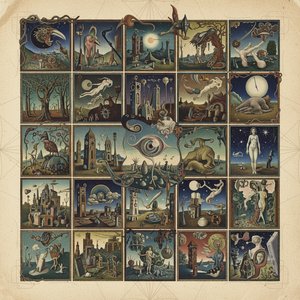
マックス・エルンスト傑作25選:シュルレアリスムの深淵と装飾への誘い
マックス・エルンストの傑作25選。シュルレアリスムを代表する画家、その夢と無意識の世界を描いた絵画や版画を紐解きます。リビングやオフィスに飾るモダンアート、インテリアに最適な作品を見つけませんか?OriginalUniqueArt.comで全コレクションをオンラインで探す。