
 プレビュー
プレビュー
 プリントを購入
 シェアする
シェアする シェアする
シェアする
 詳細を見る
詳細を見る

 ダウンロード
 似ている作品
 X線調査
X線調査 スライドショー
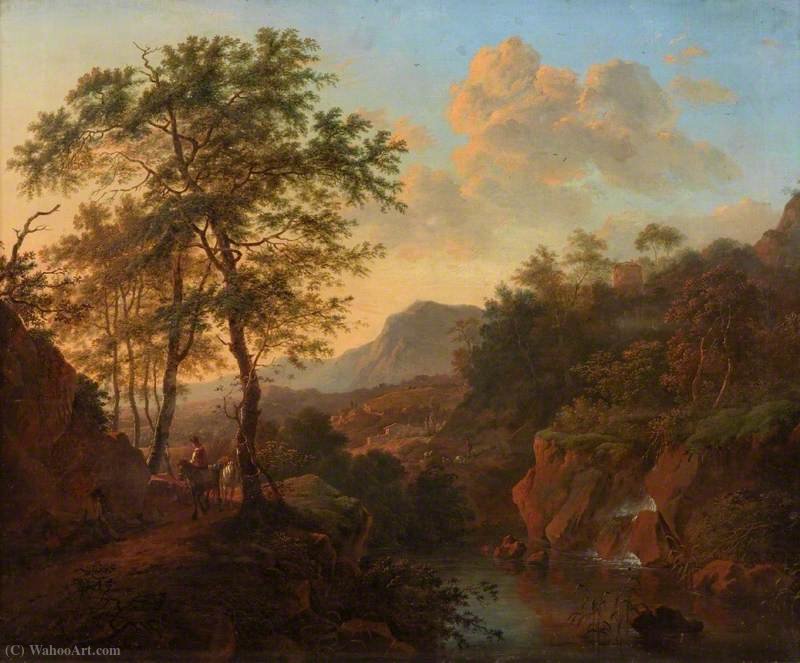
River Scene with Figures

 詳細を見る
詳細を見る




































作品のオリジナル比率に合わせた、当店の規定サイズからお選びください。

特定のフレームやスペースに合わせて、ご希望のサイズをご入力いただけます。選択されたサイズが元の画像の比率と異なる場合、アートワークをトリミングするか、手描きで要素を追加して絵画を拡張いたします。デジタルモックアップ を制作し、制作開始前にご確認(承認)をいただきます。
画面上のプレビューは、実際のトリミングや拡張を正確に反映しているものではありません。最終的な構図は、モックアップによってのみ正確にご確認いただけます。
カスタムサイズもご利用いただけますが、元の比率を維持するためには、あらかじめ用意されたリストからサイズを選択することをお勧めいたします。
ご注文後、OriginalUniqueArt.com チームより詳細な指示をお送りするとともに、仕上がりイメージ(モックアップ)をご提供いたします。


 ガラスオプションは、110cm未満のサイズでのみご利用いただけます。

River Scene with Figures
複製技法
複製画のサイズ
-


合計金額
$ 300
アーティストの略歴
A Tranquil Echo of Both and Lorraine
Willem de Heusch remains a figure shrouded in artistic mystery, yet his landscapes—particularly those imbued with the ethereal glow of twilight—hold an enduring fascination for art historians and collectors alike. Born in Utrecht, Netherlands, around 1625, scant biographical details survive, leaving scholars to reconstruct his life primarily through stylistic analysis and correspondence with fellow artists. His training is believed to have been overseen by Jan Both, a master whose distinctive style profoundly shaped de Heusch’s artistic vision—a vision that mirrored the aesthetic sensibilities of Claude Lorraine, marking him as a pivotal participant in the burgeoning Arcadian movement of the mid-17th century.
The essence of de Heusch's artistry lies in his ability to transport the viewer from the industrious streets of the Netherlands to the sun-drenched, idealized vistas of the Italian countryside. It is thought that he traveled through Italy between 1640 and 1645, a formative period that likely infused his palette with the warm, golden light characteristic of the Mediterranean. Upon his return to Utrecht by 1649, he did not merely bring back memories, but a transformed technique. He became a prominent figure in the local art scene, serving as a dean of the Utrecht guild alongside luminaries such as Cornelis Poppenburg and Jan Both. This period of stability allowed him to refine his specialty: the Italianate landscape, where wide expanses of country are punctuated by dramatic rock formations and the delicate, thin-leaved arborescence that defines the Arcadian ideal.
The Mastery of Light and Line
To gaze upon a work by de Heusch is to witness a masterful command over atmospheric perspective. His paintings are instantly recognizable for their ability to capture fleeting moments of sublime serenity, often focusing on the soft transitions of evening light. While some scholars note that his style is nearly indistinguishable from his mentor, Jan Both, particularly in the way they both utilized the influence of Claude Lorraine, de Heusch possessed a unique sensitivity to the textures of nature. His etchings, thirteen of which are known to exist, further demonstrate his skill as an engraver, echoing the same rhythmic beauty found in his oil paintings.
The technical brilliance of his work can be observed through several key elements:
- Atmospheric Depth: The use of hazy, distant horizons to create a sense of infinite space.
- Luminous Coloration: A palette designed to evoke the warmth of a setting sun, casting long, soft shadows across the landscape.
- Structural Detail: The meticulous rendering of rugged geological features and classical ruins that ground his idealized scenes in a sense of ancient history.
A Lasting Artistic Legacy
Beyond his individual technical achievements, Willem de Heusch played a vital role in the continuity of the Dutch landscape tradition. His influence was not limited to his own canvases but extended through familial and professional lineages. His nephew, Jacob de Heusch, became a notable painter in his own right, inheriting his uncle's talent and stylistic devotion to the Italianate manner. This connection underscores how the aesthetic values of the Utrecht school were preserved and passed down through generations, maintaining a standard of excellence that resonated across Europe.
Though he passed away in Utrecht in 1692, de Heusch’s contribution to the history of art remains profound. His works continue to reside in some of the world's most prestigious institutions, including the Louvre in Paris, the Städel in Frankfurt, and the Belvedere in Vienna. Through these enduring masterpieces, he continues to invite viewers into a world of quiet majesty, where the light of a long-lost Italian afternoon never truly fades.

Willem de Heusch
1625 - 1692 , Netherlands
基本情報
- Artistic Movement Or Style: Italianate landscapes; Arcadian art
- Artists Or Movements Influenced By This Artist: ['Jan Both']
- Artists Who Influenced This Artist:
- Jan Both
- Claude Lorraine
- Date Of Birth: c. 1625
- Date Of Death: 9 march 1692
- Full Name: Willem de Heusch
- Nationality: Dutch
- Notable Artworks:
- River Scene with Figures
- Two Shepherds And An Avenue
- Hilly Landscape with Figures
- Place Of Birth: Utrecht, Netherlands
関連記事

Demandes Commerciales
APS ofrece reproducciones de bellas artes y encargos personalizados desde 2004. Confían en nosotros corporaciones, hoteles y coleccionistas selectos para obras de arte de calidad museística, servicio discreto y soluciones artísticas completas. ¡Póngase en contacto con nosotros para obtener un presupuesto personalizado!

ロマン派ランドスケープ:時代を彩る巨匠の10選|アートとインテリアの世界
ロマン派絵画の時代を彩る10選。巨匠たちの風景が織りなす感動の世界へ。ターナー、ルーベンスなど、名作の裏話と高精細複製でアートをお部屋に。OriginalUniqueArt.comで至福のアート体験を。

ゴヤ傑作25選:スペインの魂を揺さぶる、深遠な芸術の世界 | OriginalUniqueArt
ゴヤ傑作25選:ロマン主義を代表するスペインの巨匠、フランシスコ・デ・ゴヤの世界へ。黒衣の女からマハまで、魂を揺さぶる絵画の物語と技法を紐解きます。OriginalUniqueArtで高品質なアートレプリカを見つけ、インテリアに深みと風格を。今すぐコレクションをご覧ください。

Masterpieces of Light: A Definitive Guide to the Landscapes of the Dutch Golden Age
Discover the luminous mastery of Dutch Golden Age landscapes. Our expert guide explores the atmospheric realism of masters like Van Goyen and Cuyp. Elevate your space with museum-quality, hand-painted oil reproductions from OriginalUniqueArt.com. Art history, beautifully realized.

Willem van de Velde the Elder: Master of Maritime Painting & Chronicler of the Dutch Golden Age
Discover the captivating maritime paintings of Willem van de Velde the Elder, a master chronicler of the Dutch Golden Age. Explore his unparalleled realism and lasting influence on naval art history.

