
 プレビュー
プレビュー
 シェアする
シェアする シェアする
シェアする
 詳細を見る
詳細を見る

 ダウンロード
 似ている作品
 X線調査
X線調査 スライドショー
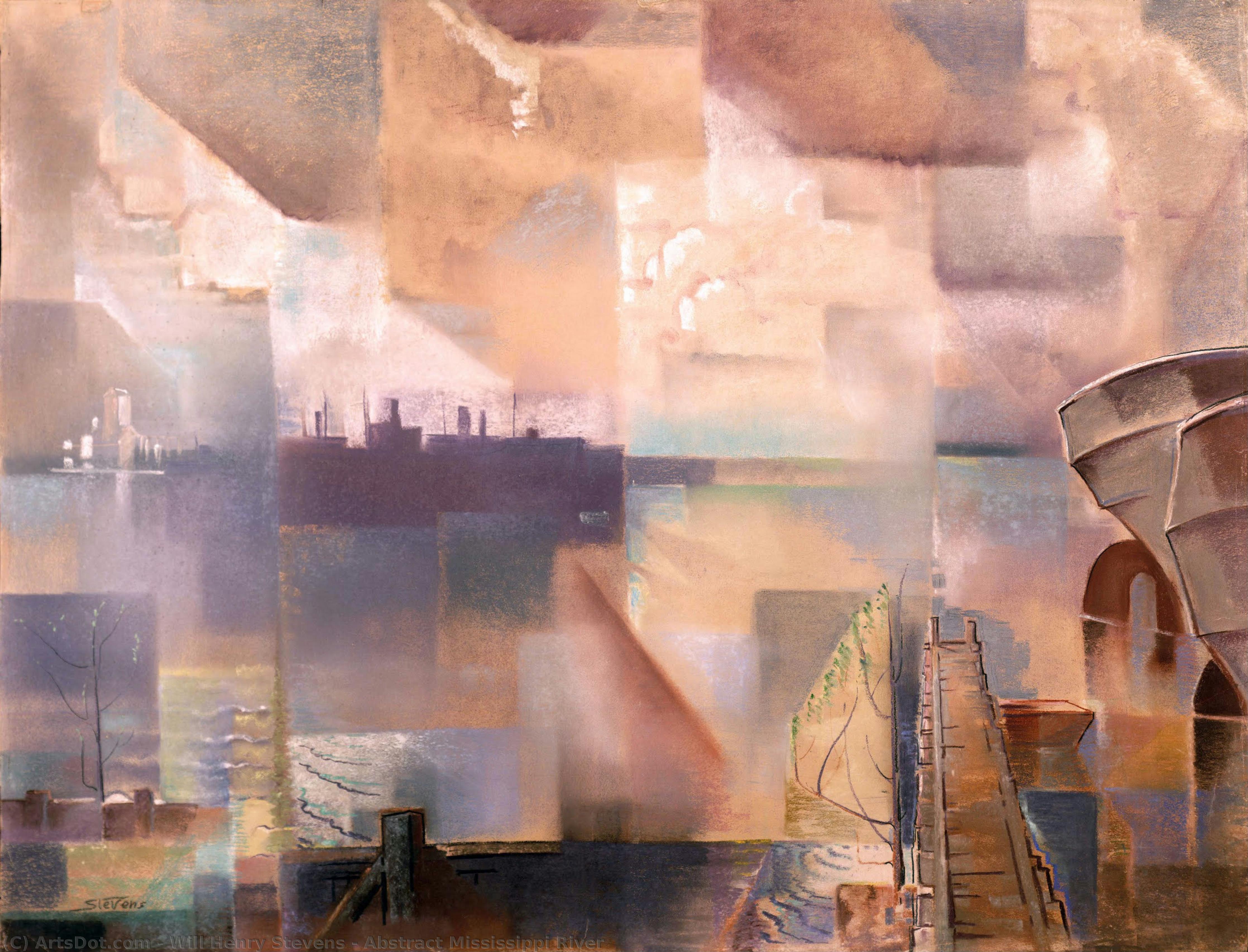
Abstract Mississippi River


 詳細を見る
詳細を見る
ジークレー/アートプリント
迅速な制作と多彩な仕上げオプションを備えた、ミュージアムクオリティのジークレーまたはキャンバスプリント。 ( 手描きの絵画を購入 画像を購入)




































作品のオリジナル比率に合わせた、当店の規定サイズからお選びください。

特定のフレームやスペースに合わせて、ご自身でサイズを指定することも可能です。選択されたサイズが元の画像の比率と一致しない場合、作品をトリミングするか、鏡面反射または単色での塗りつぶしによって画像を拡張いたします。制作を開始する前に、ご確認用のデジタルモックアップをお送りいたします。
画面上のプレビューには、実際のトリミングや拡張は反映されませんのでご注意ください。最終的な構図を正確に確認できるのは、モックアップのみとなります。
カスタムサイズも承っておりますが、元の比率を維持するためには、あらかじめ用意されたリストからサイズを選択することをお勧めいたします。


 ガラスオプションは、110cm未満のサイズでのみご利用いただけます。

Abstract Mississippi River
ジークレー/アートプリント
複製画のサイズ
-


合計金額
$ 80
作品詳細説明
アーティストの略歴
The Alchemist of Southern Light
Will Henry Stevens stands as a singular figure in American modernist painting, celebrated for his evocative depictions of the rural South and his pioneering exploration of tonal pastel mediums. Born November 28, 1881, in Vevay, Indiana—a town nestled along the banks of the Ohio River—Stevens’ artistic journey unfolded against the backdrop of a burgeoning interest in naturalism and a profound connection to the landscapes of his formative years. His father, an apothecary, instilled in him a meticulous attention to detail and a foundational understanding of chemistry, skills that would later prove invaluable in his experimental approach to pigment formulations.
Stevens’ formal artistic education began at the Cincinnati Art Academy, where he honed his drawing skills before embarking on a career path marked by serendipitous encounters and intellectual stimulation. Notably, he befriended Jonas Lie, Van Dearing Perrine, and Albert Pinkham Ryder—artists who championed the principles of naturalism and encouraged Stevens to prioritize observation over idealized representation. These formative relationships profoundly shaped his artistic vision, fostering an appreciation for the philosophical explorations of nature found in the works of Emerson, Thoreau, and Whitman. The influence of Whistler and Twachtman further solidified his commitment to tonal painting—a technique prioritizing subtle gradations of color and emphasizing the expressive qualities of light and shadow over conventional, heavy brushstrokes.
Innovation Through Chemistry and Color
What truly distinguished Stevens from many of his contemporaries was his scientific approach to the medium itself. He did not merely use art supplies; he created them. Drawing upon the chemical knowledge inherited from his father, Stevens developed a unique pastel medium, meticulously crafted through the careful grinding and mixing of raw pigments. This innovative approach liberated him from the constraints of traditional oil painting, allowing for an unparalleled freedom in capturing the fleeting, ephemeral moments of Southern light and atmosphere. His ability to manipulate texture and tone allowed him to bridge the gap between representational landscape and pure abstraction.
His career was a beautiful duality of styles. While he is often categorized as a modernist, his work remained deeply rooted in a love for the natural world. He moved seamlessly between two distinct modes:
- The Representational: Detailed, realistic landscapes that captured the soul of the Southern terrain, particularly during his summers in the mountains of Western North Carolina and Eastern Tennessee.
- The Abstract: Non-objective works and abstractions of nature that explored the underlying rhythms, shapes, and energies of the environment.
A Legacy Etched in the American Landscape
As Stevens transitioned into his later years, he became a fixture of the Southern art scene, notably serving on the faculty of Newcomb College of Art in New Orleans. This period marked a significant evolution toward modernism, as he successfully integrated the nationalistic spirit of the American Regionalists with the groundbreaking philosophies of the European avant-garde. Even as his work moved toward more abstract forms, it never lost its connection to the earth and the light that defines it.
Today, the historical significance of Will Henry Stevens is preserved in some of the most prestigious institutions in the United States. His ability to capture the "spirit" of a place through the lens of modern technique has earned him a permanent place in the canon of American art. His works can be found in the collections of:
- The Smithsonian American Art Museum
- The Museum of Fine Arts, Boston
- The Los Angeles County Museum of Art (LACMA)
- The North Carolina Museum of Art
- The Ogden Museum of Southern Art
Through his mastery of the pastel medium and his unwavering devotion to the nuances of nature, Stevens left behind a body of work that serves as both a scientific achievement in pigmentary innovation and a poetic tribute to the enduring beauty of the American landscape.

Will Henry Stevens
1881 - 1949 , United States of America
基本情報
- Artistic Movement Or Style: Naturalism & Modernism
- Artists Or Movements Influenced By This Artist: ['James McNeill Whistler']
- Artists Who Influenced This Artist:
- Ralph Waldo Emerson
- Henry David Thoreau
- Walt Whitman
- Date Of Birth: November 28, 1881
- Date Of Death: August 25, 1949
- Full Name: Will Henry Stevens
- Nationality: American
- Notable Artworks: ['Abstract Mississippi River']
- Place Of Birth: Vevay, United States
関連記事

Kandinsky's Masterpieces: 25 Paintings That Define Abstract Art | OriginalUniqueArt
Journey through Wassily Kandinsky's 25 most iconic abstract paintings. Explore his revolutionary use of color, form & spiritual expressionism. Find museum-quality Kandinsky reproductions and elevate your home decor with OriginalUniqueArt.com. Discover all masterpieces on OriginalUniqueArt.com!

抽象表現主義を定義する十大傑作:芸術と装飾の深遠な旅
抽象表現主義を定義する10の傑作。ポロック、ロスコら巨匠たちの情熱と色彩の世界へ。各作品に込められた物語と技法を紐解き、至高のアート体験を。OriginalUniqueArt.comで、ミュージアムクオリティの複製画や洗練されたインテリアアイデアを発見してください。

幾何学的抽象絵画を定義した傑作10選|アート、アーティスト、インテリア装飾
モンドリアン、マレーヴィチ…幾何学的抽象絵画を代表する傑作10選。各作品の背景や色彩構成、アーティストの情熱に迫ります。美術館品質の複製画はOriginalUniqueArt.comで。オンラインでアートコレクションをご覧ください。
カジミール・マレーヴィチ:至高の25選 - 抽象芸術の革命とホームデコレーション
カジミール・マレーヴィチの至高の25選。シュプレマティズムを代表する「ブラックスクエア」をはじめ、抽象芸術の革命的作品群を紐解きます。ロシア構成主義からミニマリズムまで、美術史に輝く傑作をOriginalUniqueArt.comで。高品質なアートプリントとホームデコレーションの世界へ。今すぐコレクションをご覧ください。
パウル・クレー傑作25選:色彩と象徴に満ちた芸術の世界 | OriginalUniqueArt
パウル・クレーの傑作25選🎨 色彩と象徴に満ちた抽象絵画の世界を旅。ドイツ表現主義からバウハウスまで、クレーの革新的な技法と感動的な作品群をOriginalUniqueArtで。高品質な美術品複製やインテリアアートも豊富です。オンラインストアで全コレクションをご覧ください。

