
 プレビュー
プレビュー
 プリントを購入
 シェアする
シェアする シェアする
シェアする
 詳細を見る
詳細を見る

 ダウンロード
 似ている作品
 X線調査
X線調査 スライドショー
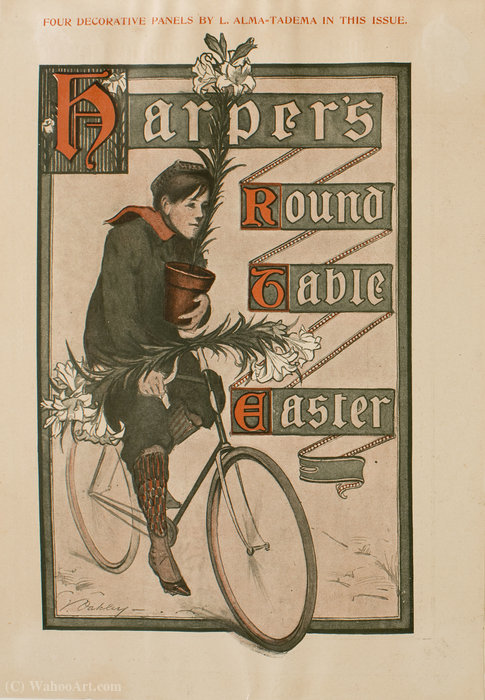
'Harper's Round Table. Easter', (30 x 20 CM) (1910)

 詳細を見る
詳細を見る




P118B $10

P118H $10

P118W $10

P438Z $10

P508JH $12

P508YH $12

P805H $10

P805Z $10

P919BZ $10

P919G $10

P919XJ $10

P959ZH $10

P968JZ $12

W106C $8

W218G $10

W218JH $8

W218Y $10

W307PJ $10

W316G $10

W316PJ $8

W316Y $10

W398PJ $8

W4111J $10

W500HY $15

W500JH $15

W692G $12

W849H $8

W940BG $15

W953PJ $8




作品のオリジナル比率に合わせた、当店の規定サイズからお選びください。

特定のフレームやスペースに合わせて、ご希望のサイズをご入力いただけます。選択されたサイズが元の画像の比率と異なる場合、アートワークをトリミングするか、手描きで要素を追加して絵画を拡張いたします。デジタルモックアップ を制作し、制作開始前にご確認(承認)をいただきます。
画面上のプレビューは、実際のトリミングや拡張を正確に反映しているものではありません。最終的な構図は、モックアップによってのみ正確にご確認いただけます。
カスタムサイズもご利用いただけますが、元の比率を維持するためには、あらかじめ用意されたリストからサイズを選択することをお勧めいたします。
ご注文後、OriginalUniqueArt.com チームより詳細な指示をお送りするとともに、仕上がりイメージ(モックアップ)をご提供いたします。


 ガラスオプションは、110cm未満のサイズでのみご利用いただけます。

'Harper's Round Table. Easter', (30 x 20 CM) (1910)
複製技法
複製画のサイズ
-


合計金額
$ 300
アーティストの略歴
A Pioneer of American Muralism: The Life and Art of Violet Oakley
Violet Oakley, born in Bergen Heights, New Jersey, in 1874, emerged as a pivotal figure in the landscape of early 20th-century American art. Descended from a distinguished lineage of artists – both her grandfathers were members of the National Academy of Design – she was immersed in an artistic environment from birth. This familial legacy provided a strong foundation for her own burgeoning talent, nurtured through formal studies at the Art Students League of New York under James Carroll Beckwith and Irving R. Wiles, followed by enriching experiences in England and France with masters like Raphaël Collin. However, it was her time studying illustration with Howard Pyle at Drexel Institute that truly charted the course of her career, propelling her into a world where artistic vision met commercial demand. Oakley quickly established herself as a sought-after illustrator, contributing to prominent magazines such as *The Century Magazine*, *Collier's Weekly*, and *St. Nicholas Magazine*. These early works reveal an artist already attuned to narrative detail and atmospheric nuance, qualities that would become hallmarks of her later, more monumental achievements.The Red Rose Girls and the Renaissance Revival
Around 1897, Oakley became part of a remarkable artistic sisterhood in Philadelphia, sharing studio space with fellow artists Elizabeth Shippen Green and Jessie Willcox Smith, alongside her own sister Hester. Affectionately dubbed the “Red Rose Girls” by their mentor Howard Pyle, this collective fostered an environment of mutual support, creative exchange, and shared aesthetic sensibilities. The Red Rose Girls represented a new kind of female artistic community, challenging prevailing societal norms and forging paths for future generations of women in the arts. Oakley’s artistic style during this period was deeply influenced by the English Pre-Raphaelites, a movement she consciously emulated. This fascination with Renaissance aesthetics – characterized by rich symbolism, meticulous detail, and an emphasis on beauty and spiritual themes – permeated both her illustrations and her burgeoning interest in mural painting and stained glass design. She wasn’t merely replicating a style; rather, she was adapting it to American sensibilities, infusing it with her own unique vision and narrative voice. This commitment to the Renaissance revival set her apart as modern art movements gained prominence, yet it also contributed to a temporary decline in her reputation during the mid-20th century, only to be rediscovered and celebrated anew in recent years.Breaking Barriers: Murals and Monumental Commissions
Violet Oakley’s career reached its zenith with her groundbreaking work as a muralist. In 1900, she secured her first major commission – designing murals and stained glass for All Angels' Church in New York City – marking a significant step towards establishing herself as a leading artist of her time. However, it was the extensive series of murals she created for the Pennsylvania State Capitol in Harrisburg (spanning from 1902 to 1927) that cemented her legacy. This monumental project, comprising forty-three murals, remains the largest mural commission ever awarded to a woman, a testament to her exceptional talent and unwavering dedication. The themes explored within these murals – drawn from Pennsylvania’s history, mythology, and ideals of governance – reflect Oakley's deep engagement with civic responsibility and her belief in the power of art to inspire and uplift. Beyond Harrisburg, she completed commissions for Vassar College Alumni House, Charlton Yarnall house (Philadelphia), and Cuyuhoga County courthouse, further demonstrating her versatility and artistic range.Faith, Peace, and Lasting Influence
Oakley’s life and art were profoundly shaped by her spiritual beliefs. A significant turning point came in 1903 with her conversion to Christian Science following a healing from asthma. This faith infused her worldview and artistic expression, leading her to explore themes of spiritual truth, redemption, and the interconnectedness of humanity. Driven by her Quaker principles of pacifism, equality, and international cooperation, Oakley embarked on a poignant project after World War I: traveling to Geneva, Switzerland, to create portraits of League of Nations delegates, published as “Law Triumphant.” This work embodies her unwavering commitment to peace and her belief in the potential for global harmony. Throughout her career, she received numerous accolades, including the gold medal in illustration at the 1904 Saint Louis International Exposition and becoming the first woman to receive the Gold Medal of Honor from the Pennsylvania Academy of Fine Arts in 1905. Violet Oakley’s pioneering spirit paved the way for future generations of women artists, challenging gender barriers and demonstrating that artistic excellence knows no bounds. Her induction into the Society of Illustrators Hall of Fame in 1996 and the inclusion of her home and studio, Cogslea, on the National Register of Historic Places are fitting tributes to a life dedicated to art, faith, and social justice. Today, Oakley’s work continues to resonate with audiences, celebrated for its beauty, craftsmanship, and enduring message of hope and spiritual truth.
Violet Oakley
1874 - 1961 , United States of America
基本情報
- Artistic Movement Or Style: Renaissance-revival
- Artists Or Movements Influenced By This Artist: ['Pre-Raphaelites']
- Artists Who Influenced This Artist:
- Raphaël Collin
- Howard Pyle
- Date Of Birth: June 10, 1874
- Date Of Death: 1961
- Full Name: Violet Oakley
- Nationality: American
- Notable Artworks:
- All Angels' Church Murals
- Pennsylvania Capitol Murals
- League of Nations Portraits
- Harper’s Round Table. Easter
- Place Of Birth: Bergen Heights, USA
関連記事
The Refined Aesthetic of Victorian Illustration: A Study in Narrative & Technique
Explore the captivating world of Victorian illustration! Discover Pre-Raphaelite influences, key artists like Rossetti & Stephens, and the era's rich narrative detail. A deep dive for art enthusiasts.

William Powell Frith: Narratives of Victorian Society & the Rise of Realist Painting
Explore the life & works of William Powell Frith, the 'greatest British painter of social scenes.' Discover his iconic Victorian genre paintings and learn about his lasting impact on realist art. Hand-painted reproductions available.

Pre-Raphaelite Romanticism: The Revival of Medieval Beauty and Nature in Victorian Art
Explore the profound beauty of Pre-Raphaelite Romanticism. Discover how visionaries like Rossetti and Millais revived medievalism and nature through meticulous detail and vibrant color in Victorian art history.

ダンテ・ガブリエル・ロセッティ傑作25選:美と象徴が織りなす芸術の世界 | OriginalUniqueArt
ダンテ・ガブリエル・ロセッティの傑作25選。プレラファエライトの象徴主義、美しい女性画の世界へ。油絵やアートプリントで、リビングや寝室を彩るインテリアアートを見つけましょう。OriginalUniqueArt.comで名画コレクションを探索。
Victorian Naturalism: The Art of Botanical Precision and the Soul of the Natural World
Discover the exquisite era of Victorian Naturalism. Explore how master artists blended scientific precision with breathtaking realism to capture the soul of nature through botanical oil paintings and legendary landscapes.

