 プリント版に切り替え
 詳細を表示
詳細を表示







































 いずれかの辺が105 cm(約41インチ)を超えるアートワークまたは複製画の場合、フレームは分解されたキットの状態でお届けいたします。この方法は、輸送中の破損を防ぎ、安全に配送するために採用しております。


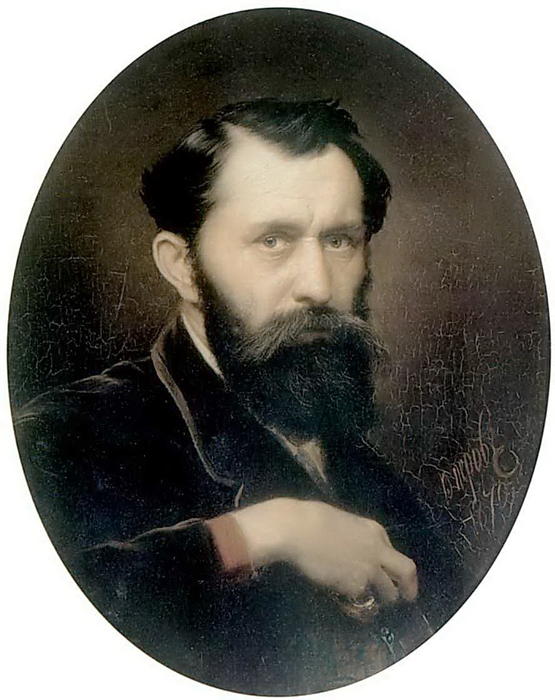
Self-Portrait by Vasily Grigoryevich Perov: A Glimpse into the Soul of a Realist
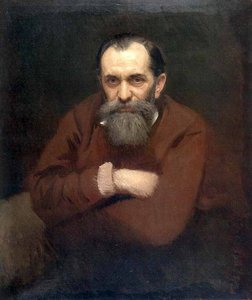
The Self-portrait by Vasily Grigoryevich Perov, created in 1870, is a captivating example of Realism that continues to fascinate art enthusiasts worldwide. This oil on canvas painting measures 63 x 52 cm and stands as a testament to the artist's skill in capturing an accurate depiction of visual reality while simultaneously revealing profound psychological depth.
Artistic Context and Style: The Rise of Russian Realism
Perov was a key figure in the Russian Realist movement, which emerged in the mid-19th century as a reaction against Romantic idealism. Realism sought to depict life as it truly was, focusing on everyday subjects and social issues with unflinching honesty. Perov’s work had a significant impact on the development of art in Russia, influencing subsequent generations of artists who embraced this commitment to portraying reality without embellishment. The Self-portrait showcases Perov's ability to blend elements of realism with a deep understanding of human emotion. The painting is characterized by its use of earthy tones, subtle lighting, and an emphasis on texture, which creates a sense of depth and dimensionality. This meticulous attention to detail was central to the Realist aesthetic.
A Detailed Examination: Technique and Composition
The Self-portrait demonstrates Perov’s mastery of oil painting techniques. The artist employs subtle gradations of color and light to model the face and clothing, creating a sense of volume and realism. Noticeable brushstrokes add texture and vitality to the surface, preventing the image from appearing overly smooth or artificial. The composition is carefully considered; the subject's face is centrally positioned within an oval frame, drawing the viewer’s eye directly to his gaze. The dark background serves to isolate Perov, intensifying the focus on his expression and conveying a sense of introspection. The lighting appears soft and diffused, highlighting the textures of the man’s clothing and facial features.
Symbolism and Emotional Impact: A Portrait of Introspection
Beyond its technical brilliance, the Self-portrait resonates with viewers due to its emotional depth. Perov's expression is serious, perhaps even melancholic, inviting speculation about his inner thoughts and feelings. The long beard and hair, rendered with meticulous detail, suggest a man of intellect and experience. The overall somber mood, created by the muted color palette and dark background, contributes to an atmosphere of formality and introspection. While Perov was known for depicting scenes of social hardship in his other works (such as The Queue at The Fountain and A Meal in the Monastery), this self-portrait offers a more personal glimpse into the artist's own psyche.
Perov and His Contemporaries: A Legacy of Realism
Vasily Grigoryevich Perov (1834 – 1882) was born in Tobolsk, Russia. His early life was marked by complexity due to his illegitimacy, a circumstance that likely informed his later social commentary through art. He received training at the Alexander Stupin Art School and the Moscow School of Painting. Perov’s contributions to the art world are not limited to his Self-portrait. Other artists who explored the Realist style include Jean Baptiste Camille Corot and Albert Edelfelt. For example, Corot’s A Ford with Large Trees and Edelfelt's Conveying a Child showcase the versatility and range of Realism.
Q&A
ワシーリー・グリゴリエヴィチ・ペローヴによる「Self-portrait」はパブリックドメインに含まれますか?また、その理由は何ですか?
ワシーリー・グリゴリエヴィチ・ペローヴによる「Self-portrait」はパブリックドメイン(著作権消滅)です。著作権の保護期間は作者の没年から起算されますが、ワシーリー・グリゴリエヴィチ・ペローヴは1882年に亡くなっています。
1870年に「Self-portrait」を制作した際、ワシーリー・グリゴリエヴィチ・ペローヴは何歳でしたか?
ワシーリー・グリゴリエヴィチ・ペローヴは37歳の時に「Self-portrait」を制作しました。作家は1833年に生まれ、本作の制作年は1870年です。
ワシーリー・グリゴリエヴィチ・ペローヴ作「Self-portrait」のコントラストはどの程度ですか?
「Self-portrait」の明暗のコントラストはStatementと記録されています。コントラストとは、明るい部分と暗い部分がどの程度強く異なっているかを表す指標です。
この絵画の詳細を見る
 設置イメージを表示
 シェアする
シェアする シェアする
シェアする
 詳細を見る
詳細を見る ガイドを表示

 ダウンロード
 似ている作品
 X線調査
X線調査 スライドショーを表示
 Q&A
Q&A 統計情報
統計情報