プリント版に切り替え
 詳細を表示
詳細を表示







































 いずれかの辺が105 cm(約41インチ)を超えるアートワークまたは複製画の場合、フレームは分解されたキットの状態でお届けいたします。この方法は、輸送中の破損を防ぎ、安全に配送するために採用しております。


A Moment Frozen in Time: The Essence of Utagawa Hiroshige
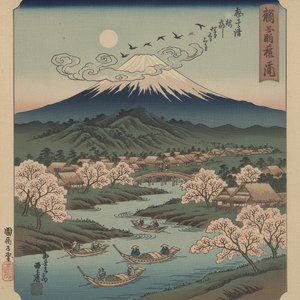
“Evening Snow at Kanbara,” a captivating woodblock print by the legendary Utagawa Hiroshige, isn't merely a depiction of a winter landscape; it’s an invitation to step into a serene and contemplative world. Created in 1834 during the vibrant Edo period, this piece embodies the core tenets of *ukiyo-e*, or “pictures of the floating world,” transforming everyday scenes into profound artistic statements. Hiroshige, often considered the last great master of this genre, possessed an extraordinary ability to capture not just the appearance of a place but also its very spirit – a quality powerfully evident in this evocative print.
The scene unfolds within a small Japanese village nestled amidst a vast expanse of snow-covered hills. The composition is deliberately restrained, prioritizing atmosphere and mood over meticulous detail. Buildings are rendered with simplified forms, their outlines softened by the printing technique, while figures – bundled in umbrellas against the biting cold – appear as fleeting glimpses of human life within this frozen landscape. This strategic use of negative space—the overwhelming presence of snow—draws attention to the delicate balance between humanity and nature, highlighting the resilience and quiet dignity of those who endure the harsh winter conditions.
The Language of Woodblock: Technique and Artistic Vision
Hiroshige’s mastery lies not only in his subject matter but also in his technical execution. The print is a testament to the intricate process of *ukiyo-e* production, relying on multiple woodblocks carved with painstaking precision. The base layer of grey tones establishes the foundational structure of the scene, while subtle gradations – achieved through layering and careful manipulation of ink—create depth and volume. Notice how the snow itself isn’t uniformly white; it’s infused with delicate shades of grey, suggesting the play of light and shadow as the sun dips below the horizon. The deliberate lack of strong shading contributes to the print's ethereal quality, lending a dreamlike atmosphere to the winter scene.
Furthermore, Hiroshige’s use of *bokashi*, or color gradation, is particularly noteworthy. This technique involved applying multiple layers of ink in varying concentrations to achieve subtle transitions and nuanced tonal effects—a hallmark of his style and a key element in conveying the atmospheric depth of the landscape. The monochrome palette, dominated by shades of grey and white, amplifies the sense of stillness and solitude, inviting viewers to contemplate the beauty of simplicity.
Symbolism and the Poetics of Nature
Beyond its aesthetic appeal, “Evening Snow at Kanbara” is rich in symbolic meaning. The snow itself represents purity, resilience, and the cyclical nature of life – a reminder that even amidst hardship, there’s an inherent beauty to be found. The villagers, huddled beneath their umbrellas, embody human adaptability and perseverance in the face of adversity. Their presence serves as a poignant counterpoint to the vastness and indifference of the natural world.
This print was part of Hiroshige's celebrated “Fifty-three Stations of the Tōkaidō” series, documenting his journey along Japan’s main highway. Each station offered a unique glimpse into the diverse landscapes and communities of Edo period Japan. Hiroshige’s ability to capture the essence of these locations—not just their physical appearance but also their atmosphere and spirit—solidified his reputation as one of the most influential artists in Japanese history, profoundly impacting both traditional *ukiyo-e* and later Western art movements like Impressionism.
Bringing Hiroshige’s Vision Home
Reproductions of “Evening Snow at Kanbara” offer a remarkable opportunity to bring this timeless masterpiece into your own space. Whether you choose an authentic woodblock print or a high-quality digital reproduction, the print's serene beauty and evocative atmosphere will undoubtedly enhance any room. Consider framing it in a simple, understated manner to allow the artwork’s inherent elegance to shine through – a subtle reminder of Hiroshige’s poetic vision and the enduring power of Japanese art.
Q&A
歌川広重作「Evening Snow at Kanbara」 の主要な色調は何ですか?
歌川広重作「Evening Snow at Kanbara」には、Ochre to Sepiaの色調が全体に広がっています。
歌川広重作「Evening Snow at Kanbara」の色彩構成はどのように成り立っていますか?
「Evening Snow at Kanbara」において、Gentleな対比とUnified Paletteな調和が響き合っています。
歌川広重作「Evening Snow at Kanbara」のコントラストはどの程度強いですか?
歌川広重作「Evening Snow at Kanbara」は、明部と暗部の間にGentleなコントラストを描き出しています。
この絵画の詳細を見る
 設置イメージを表示
 シェアする
シェアする シェアする
シェアする
 詳細を見る
詳細を見る ガイドを表示

 ダウンロード
 似ている作品
 X線調査
X線調査 スライドショーを表示
 Q&A
Q&A 統計情報
統計情報