

 設置イメージを確認
 送る
送る シェア
シェア
 詳細情報
詳細情報 ガイドを表示

 画像をダウンロード
 似ている作品
 X線調査
X線調査 スライドショー
 統計情報
統計情報The Diaries


 続きを読む
続きを読む
このページに掲載されている作品は著作権法によって保護されており、当社の許可なく同一の複製物を制作または販売することは法律で禁じられています。この保護は、以下のような国際条約に基づき執行されます。 ベルヌ条約 および、以下の条項に定められたものを含む各国の法律により、 米国著作権法 第17編。
この手法は、著作権で保護された作品の複製や複写を伴わないため、著作権法に完全に準拠しています。これは単なる模倣ではなく、創造的な再解釈です。元の作品からインスピレーションを受けつつも、それとは異なる、全く新しい絵画を生み出すものです。
ジークレー/アートプリント
スピーディーな制作と多彩な仕上げオプションが魅力の、ミュージアムクオリティなジークレー・キャンバスプリント。 ( 手描きの複製画を注文する デジタル画像販売へ切り替え)




P118B ¥10

P118H ¥10

P118W ¥10

P438Z ¥10

P508JH ¥12

P508YH ¥12

P805H ¥10

P805Z ¥10

P919BZ ¥10

P919G ¥10

P919XJ ¥10

P959ZH ¥10

P968JZ ¥12

W106C ¥8

W218G ¥10

W218JH ¥8

W218Y ¥10

W307PJ ¥10

W316G ¥10

W316PJ ¥8

W316Y ¥10

W398PJ ¥8

W4111J ¥10

W500HY ¥15

W500JH ¥15

W692G ¥12

W849H ¥8

W940BG ¥15

W953PJ ¥8




作品のオリジナル比率に合わせた、当店の規定サイズからお選びください。

額縁や壁のスペースに合わせて、ご希望の幅と高さを入力してください。プリントはカットすることは可能ですが、元の画像より大きくすることはできないため、異なる比率のサイズを選択された場合は、画像の一部が欠けることになります。印刷を開始する前に、内容を確認していただくためのデジタルモックアップをお送りいたします。このページに表示されている画像は、実際のカット後の状態を示すものではありません。実際の仕上がりはモックアップにてご確認ください。


 ガラスオプションは、110cm未満のサイズでのみご利用いただけます。

The Diaries
ジークレー/アートプリント
複製画サイズ一覧
-


合計金額
¥ 12591
The Diaries: An Exploration of Form and Ideology
Peter Friedl’s *The Diaries* (2015) presents a deceptively simple image—a bookshelf crammed with books—yet it embodies a profound conceptual engagement with art history and the broader anxieties surrounding representation. Born in Munich, Austria, in 1967, Friedl is recognized for his ability to dissect formal conventions while simultaneously interrogating their ideological underpinnings. This artwork exemplifies his signature approach: layering hollowed-out forms against one another to disrupt established hierarchies of power and offering a counterpoint to the modernist project’s promises.Conceptual Framework & Historical Context
Friedl draws inspiration from Mieke Bal's assertion that “nothing goes without saying,” prioritizing visual literacy as a crucial element in interpreting art. His work actively resists passive reception, prompting viewers to confront contradictions inherent within artistic endeavors and historical narratives. Specifically referencing the US Department of Housing and Urban Development’s American Homelessness Prevention and Rapid Re-Housing Program—a project designed to combat homelessness through financial assistance—Friedl utilizes the architectural scale model as a symbolic device. This model isn't merely a depiction of space; it represents a political stance, advocating for a future shaped by confronting societal inequities. The series underscores Friedl’s belief that art can serve as a catalyst for critical reflection and social change.Stylistic Characteristics & Technique
The painting itself is characterized by its deliberate austerity. Presented without contextual framing—a conscious decision to isolate the bookshelf—the sculpture invites contemplation on the history of modernism. Friedl employs a technique rooted in meticulous observation, capturing the textures and variations of light across the books’ surfaces. The arrangement isn't random; it reflects Friedl’s interest in presenting disparate concepts within a unified visual form. This juxtaposition highlights the tension between seemingly incompatible ideas—a core element of Friedl’s artistic philosophy. The use of muted colors contributes to an atmosphere of quiet contemplation, mirroring the contemplative mood conveyed by the subject matter itself.Symbolism & Emotional Resonance
The bookshelf serves as more than just a visual motif; it symbolizes knowledge, memory, and the accumulation of experience—themes central to Friedl’s oeuvre. The books themselves represent diverse voices and perspectives, reflecting the complexities of human history and intellectual discourse. By confronting viewers with this densely populated image, Friedl encourages them to engage in a dialogue about representation and its role in shaping our understanding of the world. Ultimately, *The Diaries* resonates with an emotional depth that transcends mere visual aesthetics—it speaks to the enduring human desire for connection and meaning amidst the uncertainties of contemporary life.Concluding Remarks
Thomas Peter Friedl’s *The Diaries* stands as a testament to his unwavering commitment to artistic innovation and intellectual rigor. It exemplifies his ability to transform seemingly commonplace subjects into vehicles for profound philosophical inquiry, cementing his place among the most influential artists of our time. Its understated elegance and conceptual complexity continue to inspire admiration and provoke discussion within the art world.よくあるご質問
Thomas Peter Friedl作「The Diaries」には何が描かれており、どのような情緒が漂っていますか?
Thomas Peter Friedl作「The Diaries」は、architecture, housingprogram, ideology, scalemodel, textimagerelation, historicalpowerstructures, modernismとCalmな雰囲気を融合させています。
Thomas Peter Friedl作「The Diaries」の活用方法や、おすすめの設置スペースについて教えてください。
「The Diaries」はAccentに最適で、Living Roomへの飾るのがおすすめです。
「The Diaries」のプリントは、どのような用途でのご利用がおすすめですか?
「The Diaries」のプリントのおすすめの使い方は、Accentです。
アーティストについて
The Architect of Memory
In the quiet corners of Munich, where his story began in 1967, a mind was forming that would eventually seek to dismantle the very structures we use to understand history. Before he became an interlocutor of representational forms, he moved through the world with a different kind of lens, working as a theater critic. This early immersion in drama and linguistics shaped his later ability to treat the visual field as a stage where power and identity are constantly being reenacted. He did not merely observe; he learned how the placement of a prop or the cadence of a line could alter the perception of truth.
As he moved toward Berlin, his practice began to expand into a multidisciplinary exploration that refused to be pinned down by a single medium. He turned to photography, painting, video, and even architectural scale models to investigate how we construct our political and aesthetic consciousness. His work often functions through a strategy of radical neutrality, where the artist avoids arguing for a specific reading but instead exposes the conditions underging the creation of meaning itself. By using hollowed-out forms and layering disparate elements, he sought to resolve the contradictions found within modernism.
The Weight of the Model
Much of his most profound inquiry resides in the physical presence of the model. In his series known as Rehousing, which spanned from 2012 to 2019, he utilized architectural scale models to reflect on history and ideology. These were not mere miniatures but case studies for a mental geography. He reconstructed the childhood home of his parents in Austria alongside much more politically charged spaces, such as the cabin of Martin Heidegger in the Black Forest, the residence of Ho Chi Minh in Hanoi, and even a slave hut from a plantation in Louisiana. Each structure carried the weight of its own history, acting as a vessel for the ideologies that built them.
This fascination with the intersection of text and image led to monumental installations like The Diaries in 2015. In this work, a bookshelf crammed with over 400 handwritten notebooks presented a deceptively simple image that actually interrogated the anxieties of representation. He used these objects to explore themes of knowledge, memory, and experience, forcing a confrontation with the textures of light and the accumulation of human thought. Through such meticulous observation, he demonstrated that nothing goes without saying.
A Stage for Social Critique
His later explorations often turned toward the theatricality of social struggle. In works like Teatro Popular and his video installations, he utilized techniques from puppet theater and tableaux vivant to highlight the mechanisms of historiography. He was particularly drawn to the permeability of language and the boundaries of identity. His video work Report, created for documenta 14, examined how language can both connect and divide, using the empty stage of a national theater to let actors recite texts in their own mother tongues.
Even when dealing with heavy themes of racial bias and colonial legacies, his approach remained rooted in a piercing dramaturgy. In Liberty City, he staged a reversal of a violent historical event in Miami, using the blurry, uncut quality of footage to mimic an amateur recording. This method allowed him to walk the line between documentation and fiction, challenging the viewer's compassion and their preconceived notions of justice. His career remains a continuous effort to use the tools of art to question the very aesthetics of cultural memory.

Thomas Peter Friedl
1967 - , Germany
アーティスト情報
- Full Name: Thomas Peter Friedl
- Notable Artworks:
- The Diaries
- German Village
- Installation View
- Place Of Birth: Munich, Germany
- Date Of Birth: 1967
関連記事
OriginalUniqueArt.com FAQ:壁画とフレスコ画の依頼:富裕層コレクターのためのカスタマイズ、スケール、設置に関する質問
OriginalUniqueArt.comでは、富裕層コレクター様向けに、完全カスタムの壁画・フレスコ画を承ります。スケール、設置、制作プロセスに関する疑問にお答えし、空間価値を高める最高品質のアートをご提供します。
Digital Illustration Guide: Scaling Art Procurement Efficiency for Large-Scale Hospitality Projects
Master large-scale art procurement with our guide for hotel designers. Learn to leverage digital illustration, custom mockups, and efficient bulk ordering to scale high-quality, hand-painted reproductions across global hospitality projects with precision and cost-efficiency.
Scaling Artistic Vision: Maintaining Bespoke Quality in High-Volume Custom Painting for Commercial Spaces
Elevate commercial spaces with bespoke art solutions. Discover how to scale artistic vision while maintaining exceptional quality, artist collaboration & seamless project management. Expert guidance for hotels, offices & beyond.
多施設展開ホテルにおけるアートプログラム管理:アイデンティティと規模の調和
多施設展開ホテルにおけるアートプログラム管理のノウハウを解説。ブランドアイデンティティ確立、規模に応じた戦略、ゲスト体験向上、持続可能性まで、専門家が徹底的にガイドします。
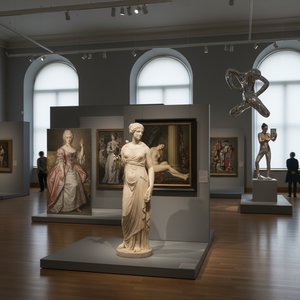
The Allure of the Pose: Representations of 'Model' Through Art History
Explore the fascinating history of the 'art model' through centuries of painting! Discover academic techniques, social contexts & the evolving role of models in art. OriginalUniqueArt offers custom reproductions and expert consultation.