プリント版に切り替え
 続きを読む
続きを読む







































 いずれかの辺が105 cm(約41インチ)を超えるアートワークまたは複製画の場合、フレームは分解されたキットの状態でお届けいたします。この方法は、輸送中の破損を防ぎ、安全に配送するために採用しております。


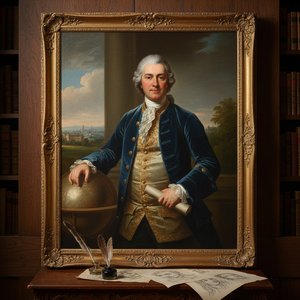
A Portrait of Refinement: Dr. Rice Charleton by Thomas Gainsborough
Thomas Gainsborough’s “Dr. Rice Charleton,” painted in 1764, is more than just a portrait; it's a masterful distillation of the Rococo era’s elegance and a subtle commentary on the burgeoning social landscape of Georgian England. The painting immediately draws the eye with its rich palette – deep greens, browns, and ochres layered over a luminous white shirt – creating an atmosphere both opulent and subtly shadowed. The subject himself, Dr. Rice Charleton, a respected physician at Bath’s Mineral Water Hospital, is presented not as a stern scholar but as a man of considerable charm and quiet confidence. His posture is relaxed, his gaze direct, suggesting a personality that commands respect without demanding it.
Gainsborough's skill lies in his ability to capture the fleeting effects of light and atmosphere. The forest background isn’t merely decorative; it’s meticulously rendered with linear perspective – rectangles defining the man’s clothing, oval shapes for his face, and simplified forms for the foliage – yet imbued with a sense of depth through atmospheric perspective. Notice how the trees in the distance fade into paler hues, creating an illusion of vastness and drawing the viewer's eye towards the central figure. The brushstrokes themselves are visible, adding texture to the fabric and suggesting a dynamic energy beneath the surface of the scene.
The Rococo Influence: Grace and Ornamentation
“Dr. Charleton” is firmly rooted in the Rococo style, a movement that flourished in Europe during the 18th century. Characterized by its emphasis on grace, elegance, and ornamentation, Rococo art sought to evoke feelings of pleasure and delight. Gainsborough expertly employs these principles here – the luxurious fabrics, the carefully arranged details, and the overall sense of refinement all speak to this aesthetic. However, unlike the often frivolous nature sometimes associated with Rococo, there’s a quiet dignity in this portrait, reflecting Dr. Charleton's profession and social standing.
The composition is deliberately centered around the figure, creating an intimate connection between the viewer and the subject. The use of diagonals – particularly in the man’s clothing and the lines of the forest – adds a sense of movement and dynamism to the scene. Furthermore, the lighting—a dramatic source from the upper left—casts strong shadows that accentuate his form and contribute to the painting's overall mood. It is not merely a likeness; it’s an evocation of character.
Symbolism and Social Context
Beyond its aesthetic qualities, “Dr. Charleton” offers glimpses into the social context of 18th-century England. The man's attire – a formal coat and cravat – signifies his status and wealth. The forest setting, with its association with nature and virtue, subtly reinforces this message. It’s a visual shorthand for the ideal gentleman: cultured, educated, and connected to the natural world. The inclusion of a medical profession also speaks to the growing importance of medicine during this period.
Interestingly, Gainsborough himself was somewhat ambivalent about portraiture, preferring landscapes. Yet, he recognized its commercial potential and skillfully navigated the demands of his patrons. “Dr. Charleton” exemplifies his ability to synthesize artistic vision with practical considerations – a testament to his enduring legacy as one of Britain’s greatest painters.
A Timeless Masterpiece: Reproduction and Appreciation
Reproductions of "Dr. Rice Charleton" capture the essence of Gainsborough's artistry, allowing viewers to appreciate its beauty and complexity from afar. Whether displayed in a grand hall or a cozy study, this painting continues to resonate with audiences today, offering a window into a bygone era and a celebration of human character. Consider commissioning a hand-painted reproduction – a faithful recreation that preserves the original’s luminosity, texture, and emotional impact for generations to come.
よくあるご質問
トーマス・ゲインズバラ作「Dr Rice Charleton」はどのような種類の作品ですか?
「Dr Rice Charleton」は、WallArtの作品です。
トーマス・ゲインズバラ作「Dr Rice Charleton」の制作年はいつですか?
「Dr Rice Charleton」は1764年に制作されました。この制作年は、トーマス・ゲインズバラのキャリアおよびその時代の文脈において、本作を位置づけるものです。
Dr Rice Charletonは、トーマス・ゲインズバラのキャリアにおけるどの時期の作品にあたりますか?
「Dr Rice Charleton」は、トーマス・ゲインズバラのMature Periodを象徴する作品です。
More about this painting
 設置イメージを確認
 送る
送る シェア
シェア
 詳細情報
詳細情報 ガイドを表示

 画像をダウンロード
 似ている作品
 X線調査
X線調査 スライドショー
 Q&A
Q&A 統計情報
統計情報