
 設置イメージを表示
 シェアする
シェアする シェアする
シェアする
 詳細を見る
詳細を見る ガイドを表示

 ダウンロード
 似ている作品
 X線調査
X線調査 スライドショーを表示
 Q&A
Q&A 統計情報
統計情報Self-Portrait

- 195.0 x 159.0 cm


 詳細を表示
詳細を表示
ジークレー/アートプリント
スピーディーな制作と多彩な仕上げオプションが魅力の、ミュージアムクオリティなジークレー・キャンバスプリント。 ( 手描き複製画を注文する デジタル画像販売へ切り替え)




P118B ¥10

P118H ¥10

P118W ¥10

P438Z ¥10

P508JH ¥12

P508YH ¥12

P805H ¥10

P805Z ¥10

P919BZ ¥10

P919G ¥10

P919XJ ¥10

P959ZH ¥10

P968JZ ¥12

W106C ¥8

W218G ¥10

W218JH ¥8

W218Y ¥10

W307PJ ¥10

W316G ¥10

W316PJ ¥8

W316Y ¥10

W398PJ ¥8

W4111J ¥10

W500HY ¥15

W500JH ¥15

W692G ¥12

W849H ¥8

W940BG ¥15

W953PJ ¥8




作品のオリジナル比率に合わせた、当店の規定サイズからお選びください。

額縁や壁のスペースに合わせて、ご希望の幅と高さを入力してください。プリントはカットすることは可能ですが、元の画像より大きくすることはできないため、異なる比率のサイズを選択された場合は、画像の一部が欠けることになります。印刷を開始する前に、内容を確認していただくためのデジタルモックアップをお送りいたします。このページに表示されている画像は、実際のカット後の状態を示すものではありません。実際の仕上がりはモックアップにてご確認ください。


 ガラスオプションは、110cm未満のサイズでのみご利用いただけます。

Self-Portrait
ジークレー/アートプリント
複製画サイズ一覧
-


合計金額
¥ 12819
Self-Portrait: A Window into the Soul of a Romantic Artist
Theodor Markus Rehbenitz’s 1817 “Self-Portrait” is not merely a likeness; it's an intimate revelation, a carefully constructed tableau of introspection and quiet dignity. Executed in delicate pencil on paper, this work transcends its humble medium to offer a profound glimpse into the mind of a pivotal figure within the German Romantic movement. The image presents a young man, likely in his early twenties, seated before a plain white background – a deliberate choice that immediately draws attention to the subject’s face and posture, stripping away any distracting elements and forcing a direct engagement with his gaze.
Rehbenitz was deeply influenced by the Nazarene movement, a group of artists who sought to revive the artistic principles of the Renaissance masters. Rejecting the flamboyant styles of Neoclassicism, the Nazareners prioritized clarity, sobriety, and a profound sense of spiritual depth. This is evident in Rehbenitz’s meticulous attention to detail – from the subtle shading around his eyes to the carefully rendered texture of his hair. The composition itself is restrained yet powerfully expressive; he avoids dramatic gestures or elaborate settings, instead focusing on conveying an inner state through nuanced facial expressions and a subtly melancholic demeanor.
A Study in Light and Shadow: Technique and Style
The artist’s mastery lies in his command of light and shadow. Rehbenitz employs a technique reminiscent of Rembrandt, utilizing subtle gradations of tone to create a sense of volume and depth within the portrait. The soft lighting illuminates his face, highlighting the delicate features of his eyes and nose, while casting gentle shadows across his brow and cheekbones. This masterful manipulation of chiaroscuro not only enhances the realism of the portrait but also imbues it with an emotional resonance – suggesting both vulnerability and resilience.
The pencil strokes themselves are remarkably controlled and deliberate. There’s a sense of painstaking observation, as if Rehbenitz were meticulously translating his perception onto the paper. The lines are fine and precise, yet they possess a remarkable fluidity, conveying a subtle sense of movement and life. This meticulous approach speaks to the artist's commitment to capturing not just an image but also the essence of his subject – his personality, his thoughts, and perhaps even his soul.
Historical Context: Romanticism and Self-Representation
Created in 1817, during a period of significant social and political upheaval in Europe, Rehbenitz’s “Self-Portrait” reflects the broader themes explored by the Romantic movement. Romantic artists sought to challenge traditional artistic conventions and explore the complexities of human emotion – often focusing on themes of individualism, subjectivity, and the power of nature. The act of self-portraiture itself was a relatively new phenomenon at this time, and Rehbenitz’s work can be seen as an early example of the genre's potential to offer profound insights into the artist’s inner world.
Furthermore, the portrait speaks to the Romantic fascination with introspection. The act of looking inward, of confronting one’s own mortality and vulnerability, was a central theme in Romantic literature and philosophy. Rehbenitz’s self-portrait invites us to contemplate our own identities and to consider the complexities of human experience – mirroring the core tenets of this influential artistic movement.
Symbolism and Emotional Resonance
While seemingly simple, “Self-Portrait” is rich in subtle symbolism. The young man's direct gaze engages the viewer directly, creating a sense of intimacy and shared vulnerability. His slightly downturned mouth suggests a quiet sadness or perhaps a contemplative mood – inviting us to speculate about his thoughts and feelings. The plain background serves not as an absence but as a deliberate focus on the subject’s face, emphasizing his individuality and inner life.
Ultimately, Rehbenitz's "Self-Portrait" is a testament to the power of art to capture not just appearances but also the essence of human experience. It remains a poignant and evocative work – a timeless meditation on self-awareness, introspection, and the enduring mysteries of the human soul.
Q&A
制作時期から見て、"Self-Portrait"はTheodor Markus Rehbenitzのキャリアにおけるどの時期にあたりますか?
1817年という制作年代から、「Self-Portrait」はTheodor Markus RehbenitzのEarly Romantic Periodに属します。
Theodor Markus Rehbenitz作「Self-Portrait」の明るさはどのように感じられますか?
視覚的な明るさの観点から見ると、Theodor Markus Rehbenitz作「Self-Portrait」 は brilliant です。
Theodor Markus Rehbenitz作「Self-Portrait」を異なる照明の下で見ることはできますか?
Theodor Markus Rehbenitz作「Self-Portrait」のX線解析ページは、X線写真のような表示を含む、作品画像の11層にわたる光学レイヤーをスライドして閲覧できるインタラクティブ・ビューアです。
関連記事

Romantic Realism's Finest: 10 Masterpieces for Your Home | OriginalUniqueArt
Explore 10 defining masterpieces of Romantic Realism! Discover Courbet, Millet & Daumier's powerful paintings—capturing emotion and social realities. Find museum-quality reproductions for your home at OriginalUniqueArt.com.

Anselm Feuerbach: Romantic Idealism & the Search for Spiritual Harmony in 19th-Century Painting
Explore the life & work of Anselm Feuerbach, a leading German Neoclassical painter. Discover his Romantic idealism, mythological scenes, and stunning portraits. Learn about his influences & lasting legacy with OriginalUniqueArt.
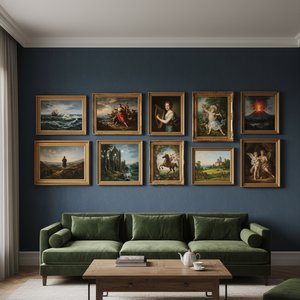
ロマン主義を彩る至宝:時代を象徴する10大名作の世界
ロマン主義を代表する10大名作を紐解く!ドラクロワ、ルーベンスなど巨匠たちの情熱と色彩が息づく世界。時代を超えて愛される傑作の物語を深く探求し、お部屋に彩りを添える高品質なアートプリントを見つけましょう。OriginalUniqueArt.comで全ての作品を発見してください。

Caspar David Friedrich: Romanticism's Master of Landscape & the Sublimity of Inner Experience
Explore the profound landscapes of Caspar David Friedrich, a master of German Romanticism. Discover the symbolism, themes & enduring influence of this iconic artist. A deep dive into his life and work.

19th Century Masterpieces: 10 Paintings That Defined an Era | OriginalUniqueArt
Journey through 19th century art with OriginalUniqueArt! Explore 10 iconic paintings – from Monet & Renoir to Courbet – and discover the stories behind Romanticism, Realism & Impressionism. Find museum-quality reproductions for your home decor. Explore the full collection online!