
 設置イメージを確認
 送る
送る シェア
シェア
 詳細情報
詳細情報 ガイドを表示

 画像をダウンロード
 似ている作品
 X線調査
X線調査 スライドショー
 統計情報
統計情報Counter composition XV


 続きを読む
続きを読む
手描き油彩複製画
当社のアーティストが、お客様のご希望のサイズと額縁に合わせて、キャンバスに手描きで制作する油彩画です。 ( プリント版に切り替え デジタル画像販売へ切り替え)




P118B ¥10

P118H ¥10

P118W ¥10

P438Z ¥10

P508JH ¥12

P508YH ¥12

P805H ¥10

P805Z ¥10

P919BZ ¥10

P919G ¥10

P919XJ ¥10

P959ZH ¥10

P968JZ ¥12

W106C ¥8

W218G ¥10

W218JH ¥8

W218Y ¥10

W307PJ ¥10

W316G ¥10

W316PJ ¥8

W316Y ¥10

W398PJ ¥8

W4111J ¥10

W500HY ¥15

W500JH ¥15

W692G ¥12

W849H ¥8

W940BG ¥15

W953PJ ¥8




作品のオリジナル比率に合わせた、当店の規定サイズからお選びください。

フレームや壁のスペースに合わせて、ご希望の幅と高さを入力してください。本作品は手描きのため、異なる比率のサイズをご希望の場合、絵画の周囲を少し広げて描くか、あるいは端を少しカットして調整することが可能です。お客様のご要望に合わせます。制作を開始する前に、仕上がりを確認するためのデジタルモックアップをお送りいたします。このページに表示されている画像は完成品の実物ではなく、あくまでモックアップによるイメージです。
ご注文後、OriginalUniqueArt.com チームより詳細な指示をお送りするとともに、仕上がりイメージ(モックアップ)をご提供いたします。


 ガラスオプションは、110cm未満のサイズでのみご利用いただけます。

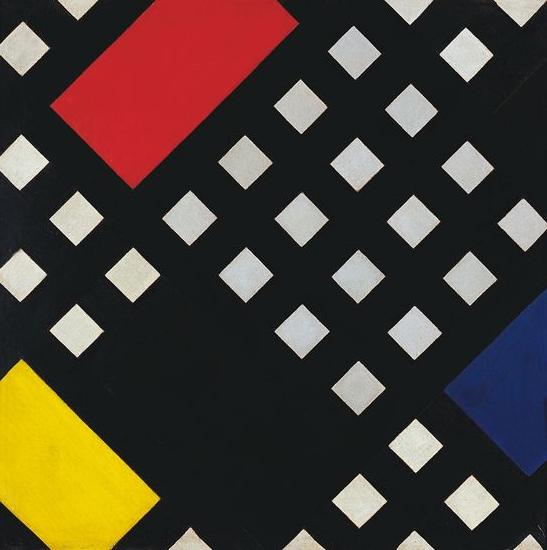
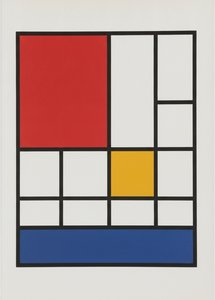
Counter composition XV
再現技法
複製画サイズ一覧
-


合計金額
¥ 47215
The Geometry of Harmony: Unveiling Theo van Doesburg’s Counter Composition XV
Theo van Doesburg's "Counter Composition XV," painted in 1925, isn’t merely a painting; it’s a distilled essence of the De Stijl movement – a radical declaration of order and universal harmony. This deceptively simple work, executed against a stark white canvas, pulsates with an underlying tension born from the careful orchestration of geometric forms and primary colors. It represents a pivotal moment in 20th-century art, moving beyond representational imagery to explore the very foundations of visual language itself. The piece immediately commands attention not through elaborate detail or narrative, but through its profound sense of balance and its unwavering commitment to abstraction.
At first glance, the composition appears austere – a red rectangle dominating the upper left quadrant, juxtaposed with a blue counterpart in the lower right. However, this initial impression quickly gives way to an appreciation for the intricate grid that underpins the entire work. A network of black and white squares, meticulously arranged, creates a dynamic interplay of movement and stillness, suggesting both order and potential disruption. This isn’t haphazard placement; it's a deliberate choreography designed to evoke a feeling of controlled dynamism – a visual embodiment of De Stijl’s core philosophy.
Deconstructing the Language of Abstraction
The brilliance of "Counter Composition XV" lies in its reduction. Van Doesburg stripped away all extraneous elements, leaving only the fundamental building blocks of form and color: red, yellow, blue, black, and white. This limited palette wasn’t chosen arbitrarily; each hue was selected for its inherent purity and intensity, intended to be experienced without distraction. The application is equally crucial – flat, unmodulated areas devoid of shading or blending. This technique emphasizes the geometric shapes themselves, highlighting their sharp edges and creating a sense of crystalline clarity. It's a testament to the artist’s belief that beauty could be found in simplicity and precision.
The absence of perspective is equally significant. Van Doesburg deliberately rejects traditional spatial representation, opting instead for a two-dimensional plane where shapes are presented as independent entities. Overlapping elements and variations in size subtly suggest depth, but the overall effect is one of flattened planes interacting within a carefully constructed framework. This approach reflects De Stijl’s rejection of illusionism and its embrace of a purely conceptual understanding of space.
Symbolism and the Pursuit of Universal Harmony
Beyond its formal qualities, "Counter Composition XV" carries profound symbolic weight. The geometric forms – rectangles, squares, lines – are not merely decorative; they represent fundamental principles of order, balance, and harmony. The primary colors, stripped of their associations with natural phenomena, become pure expressions of energy and vibration. Van Doesburg believed that through the rigorous application of these abstract elements, artists could create a visual language capable of transcending individual expression and communicating universal truths. The piece is an attempt to build a new aesthetic based on mathematical ratios and geometric relationships – a blueprint for a harmonious world reflected in art.
Theo van Doesburg’s “Counter Composition XV” stands as a powerful testament to the transformative potential of abstraction. It's more than just a painting; it’s an invitation to contemplate the underlying order of the universe and the possibility of creating beauty through pure geometric form. Its stark simplicity, combined with its profound symbolic depth, continues to resonate with viewers today, cementing its place as a cornerstone of modern art.
よくあるご質問
テオ・ファン・ドースブルフ作「Counter composition XV」の全体的な雰囲気はどのようなものですか?
テオ・ファン・ドースブルフ作「Counter composition XV」の全体的なムードはModernです。このムードは、作品が持つ全体的な雰囲気。
「Counter composition XV」のガイドはどこにありますか?
テオ・ファン・ドースブルフ作「Counter composition XV」のガイドページでは、印刷して活用できる2枚構成のファクトシートを提供しています。これには、作品とその詳細情報をまとめたデータテーブル、アーティストの生涯における時代背景を示す年代チャート、同アーティストによる他の作品、測定されたカラーパレット、そしてそのままコピーして使用できる4つの形式の引用文献情報が含まれています。
テオ・ファン・ドースブルフ作「Counter composition XV」の活用方法や、おすすめの設置スペースについて教えてください。
テオ・ファン・ドースブルフ作「Counter composition XV」 のおすすめの用途は (Statement)、飾る場所は (Living Room) です。
アーティストについて
抽象の建築家:調和を重んじた生涯
テオ・ファン・ドースブルフは、1883年にオランダのユトレヒトでキリスト教エミール・マリー・キュッパーとして生まれた。彼は単なる画家ではなく、印象派とポスト印象派の残響の中で、フィンセント・ファン・ゴッホを彷彿とさせるスタイルを初期に見せたが、それは彼の永続的な遺産を定義する劇的な変貌への重要な序章に過ぎなかった。1913年、ワシリー・カンディンスキーの *Rückblicke* との出会いが転換点となり、真の芸術的表現は外部世界の複製ではなく、純粋な抽象を通して内なる精神性を伝えることにあるという深い確信が生まれた。この信念からネオプラスティシズム、一般的にはデ・スティールとして知られる運動が誕生し、彼はその創設者であり、熱心な提唱者となった。新たな視覚言語の創造:デ・スティールの原則
デ・スティールは単なる芸術的スタイルではなく、視覚的な形に翻訳された包括的な哲学的マニフェストだった。ファン・ドースブルフは、芸術を直線、直角、赤、黄、青といった原色に加え、黒、白、灰色といった最も基本的な要素へと還元することを信じていた。この質素なパレットは制約から生まれたのではなく、宇宙の根底にある秩序に共鳴するこれらの根本的な形が普遍性への欲求に基づいていた。彼はキャンバスを超えて建築、デザイン、そして日常生活のあらゆる側面に及ぶ「総合的な」芸術作品を構想した。コラボレーションは不可欠であり、ファン・ドースブルフはJ.J.P. Oudやゲリット・リートフェルトといった建築家と緊密に協力し、デ・スティールの原則を体現するステンドグラス、家具、そしてインテリア全体をデザインした。彼のコラボレーションはピート・モンドリアンにも及び、彼ら二人は影響力のある雑誌 *De Stijl* を共同で創刊し、彼らのアイデアを発信し、志を同じくするクリエイターたちを引き寄せた。しかし、共通の起源にもかかわらず、ネオプラスティシズムの厳格さに関してファン・ドースブルフとモンドリアンとの間に緊張が生じた。1926年、ファン・ドースブルフは「エレメンタリズム」を導入し、斜線やよりダイナミックな構成を提唱した。この転換は最終的に運動の分裂につながり、彼の落ち着きのない精神と絶え間ない芸術的進化への探求が明らかになった。絵画を超えて:多面的な芸術的ビジョン
画家として称賛される一方で、ファン・ドースブルフの芸術的追求は驚くほど多様だった。彼は多作な作家、詩人、批評家であり、彼のペンを使ってデ・スティールの理論的基盤を明確にし、従来の芸術概念に挑戦した。初期1920年代におけるダダイズムへの関与は、彼のアートの地平線をさらに広げ、コラージュやタイポグラフィーを取り入れた実験的な作品につながった。この時期には、彼はバウハウスで教鞭をとり、次世代のアーティストやデザイナーと彼のアイデアを共有した。彼は伝統的な芸術形式にとどまることに満足せず、社会を変革する力があると信じて芸術を日常生活に積極的に統合しようとした。インテリアや家具のデザインは単なる美的演習ではなく、デ・スティールの原則を反映した調和のとれた生活空間を作り出す試みだった。ソフィー・テューバー=アルプとジョルジュ・ヴァントングルーとの共同によるアーティストレジデンスのデザインはその好例であり、彼の理想のイメージで世界を構築しようとする全体的なアプローチを示している。遺産と永続的な影響:モダニズムの先駆者
テオ・ファン・ドースブルフの生涯は1931年に47歳という若さで悲劇的に幕を閉じたが、彼の現代美術への影響は依然として大きい。デ・スティールは比較的短命な運動であったにもかかわらず、バウハウスのデザイン、ミニマリズム、コンストラクティビズムといったその後の芸術的発展に多大な影響を与えた。幾何学的抽象、純粋な色彩、機能主義に対する彼の強調は、今日でもアーティストやデザイナーの心に響き続けている。彼の作品は、芸術が単なる表現ではなく、根本的な形とアイデアを探求することであるというリマインダーとして役立っている。ファン・ドースブルフの遺産は彼の絵画やデザインを超えており、それは揺るぎない芸術的革新への献身と抽象の変革力に対する信念にある。デ・スティールの言語で表現された統一され調和のとれた世界という彼のビジョンは、より美しく意味のある環境を作り出そうとする人々を今も鼓舞し続けている。主要作品と永続的な影響
- Study for Simultaneous Compositions XXII (1922): ネオプラスティシズムの典型的な例であり、運動の特徴的な幾何学的形状と限定された色彩パレットを示している。
- Composition with half values (1928): デ・スティールの美学におけるトーンの変化の探求を実証している。
- Dancers (1917-1918): 彼の作品における移行期を表しており、具象的な要素と新たな抽象的傾向が融合している。
- Collaboration on *De Stijl* journal: 運動のアイデアを発信し、アーティストや知識人の対話を促進するための重要なプラットフォームだった。
- Elementarism (1926): ネオプラスティシズムにダイナミズムを注入しようとしたファン・ドースブルフの試みであり、斜線とより流動的な構成が導入されている。

テオ・ファン・ドースブルフ
1883 - 1931 , オランダ
関連記事

ゴヤ傑作25選:スペインの魂を揺さぶる、深遠な芸術の世界 | OriginalUniqueArt
ゴヤ傑作25選:ロマン主義を代表するスペインの巨匠、フランシスコ・デ・ゴヤの世界へ。黒衣の女からマハまで、魂を揺さぶる絵画の物語と技法を紐解きます。OriginalUniqueArtで高品質なアートレプリカを見つけ、インテリアに深みと風格を。今すぐコレクションをご覧ください。
De Stijl Unlocked: The Bold Geometry of Modern Design & Pop Impact
Unlock the power of De Stijl. Explore how the bold geometry and primary colors of Mondrian and Van Doesburg revolutionized modern design, from fine art to pop culture impact. Discover how to bring this high-impact, minimalist aesthetic into your contemporary space.
Theo van Doesburg: Pioneering De Stijl & the Evolution of Neo-Plasticism
Explore the revolutionary De Stijl movement & Neo-Plasticism with our expert guide. Discover Piet Mondrian, Theo van Doesburg, and the lasting impact of this influential art style. Learn about collecting & investing in De Stijl masterpieces.
De Stijl: Mastering the Art of Pure Abstraction and Geometric Harmony for the Modern Collector
Explore the profound elegance of De Stijl. Discover how Piet Mondrian and the masters of Neoplasticism utilized geometric harmony and primary colors to redefine modern abstraction. An authoritative guide for the discerning collector seeking timeless, structured beauty.
Pure Harmony: Discover the Bold Geometry and Spiritual Order of De Stijl Art
Explore the profound beauty of De Stijl art. Discover how masters like Piet Mondrian used bold geometry and primary colors to seek universal harmony through Neoplasticism. A deep dive into the spiritual order behind the world's most iconic abstract movements.
