
 設置イメージを確認
 送る
送る シェア
シェア
 詳細情報
詳細情報 ガイドを表示

 画像をダウンロード
 似ている作品
 X線調査
X線調査 スライドショー
 Q&A
Q&A 統計情報
統計情報Landscape VII

- 24.0 x 34.0 cm


 続きを読む
続きを読む
このページに掲載されている作品は著作権法によって保護されており、当社の許可なく同一の複製物を制作または販売することは法律で禁じられています。この保護は、以下のような国際条約に基づき執行されます。 ベルヌ条約 および、以下の条項に定められたものを含む各国の法律により、 米国著作権法 第17編。
この手法は、著作権で保護された作品の複製や複写を伴わないため、著作権法に完全に準拠しています。これは単なる模倣ではなく、創造的な再解釈です。元の作品からインスピレーションを受けつつも、それとは異なる、全く新しい絵画を生み出すものです。
ジークレー/アートプリント
スピーディーな制作と多彩な仕上げオプションが魅力の、ミュージアムクオリティなジークレー・キャンバスプリント。 ( 手描きの複製画を注文する デジタル画像販売へ切り替え)




P118B ¥10

P118H ¥10

P118W ¥10

P438Z ¥10

P508JH ¥12

P508YH ¥12

P805H ¥10

P805Z ¥10

P919BZ ¥10

P919G ¥10

P919XJ ¥10

P959ZH ¥10

P968JZ ¥12

W106C ¥8

W218G ¥10

W218JH ¥8

W218Y ¥10

W307PJ ¥10

W316G ¥10

W316PJ ¥8

W316Y ¥10

W398PJ ¥8

W4111J ¥10

W500HY ¥15

W500JH ¥15

W692G ¥12

W849H ¥8

W940BG ¥15

W953PJ ¥8




作品のオリジナル比率に合わせた、当店の規定サイズからお選びください。

額縁や壁のスペースに合わせて、ご希望の幅と高さを入力してください。プリントはカットすることは可能ですが、元の画像より大きくすることはできないため、異なる比率のサイズを選択された場合は、画像の一部が欠けることになります。印刷を開始する前に、内容を確認していただくためのデジタルモックアップをお送りいたします。このページに表示されている画像は、実際のカット後の状態を示すものではありません。実際の仕上がりはモックアップにてご確認ください。


 ガラスオプションは、110cm未満のサイズでのみご利用いただけます。

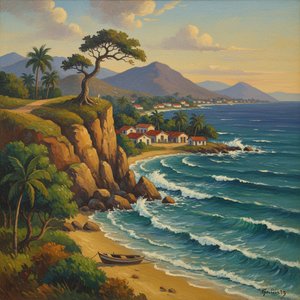
Landscape VII
ジークレー/アートプリント
複製画サイズ一覧
-


合計金額
¥ 12626
A Dreamscape of Brazilian Serenity
In the quiet corners of art history, few works capture the essence of pastoral tranquility as tenderly as Tarsila do Amaral’s Landscape VII. Created in 1971, toward the twilight of the artist's illustrious career, this piece serves as a window into a world where time seems to slow down. The painting presents a breathtakingly serene landscape, depicting a small, nestled village cradled by rolling hills and the gentle presence of water. It is an invitation to step away from the chaos of modernity and enter a realm of soft light and rhythmic simplicity. Through her masterful use of pastel shades—delicate pinks, ethereal blues, and lush greens—Amaral crafts a dreamlike atmosphere that feels both intimately familiar and otherworldly.
The composition is a masterclass in balanced, horizontal layering. The viewer’s eye is led through a series of soft bands: a verdant foreground suggesting cool water or thick vegetation, a central stage featuring quaint architecture and a striking rock formation, and finally, a background of pink-hued hills that melt into the horizon. There is a charming, almost naive quality to the perspective; by eschewing harsh linear recession in favor of a flatter, more two-dimensional arrangement, the artist emphasizes the decorative beauty of the scene. This approach allows the shapes—the rounded contours of the hills and the organic forms of the trees—to dance across the canvas with a rhythmic, folk-art grace.
Technique and the Texture of Memory
To behold Landscape VII is to witness the tactile power of oil on canvas. Amaral employs a technique characterized by visible, expressive brushstrokes that lend the work a vibrant, living energy. The application of paint is particularly noteworthy in the central rock formation and the surfaces of the buildings, where thick impasto creates a physical texture you can almost feel with your eyes. This ruggedness provides a beautiful counterpoint to the soft, diffused lighting that permeates the scene, suggesting the gentle glow of an overcast afternoon. Every stroke feels intentional, contributing to a surface that is as much about the physical presence of the medium as it is about the subject matter itself.
For the discerning collector or interior designer, this piece offers a unique opportunity to introduce a sense of calm and sophisticated nostalgia into a space. The artwork does not merely decorate a wall; it transforms an environment. Its soft palette and organic shapes make it an ideal centerpiece for rooms designed for relaxation, such as a master suite or a quiet reading nook. Because the style leans toward the Antropofagia movement's roots while embracing a more mature, simplified aesthetic, it bridges the gap between avant-garde history and timeless decorative elegance.
A Legacy of Peace and Identity
Beyond its visual splendor, Landscape VII carries a profound symbolic weight. As a pivotal figure in Brazilian Modernism, Tarsila do Amaral spent her life distilling the soul of her nation into bold, innovative forms. In this later work, that mission evolves into an exploration of harmony and peace. The village scene acts as a symbol of a life lived in equilibrium with nature, where human habitation and the earth exist in a seamless, unconflicted embrace. It evokes a sense of nostalgia for a simpler era, making it deeply resonant for anyone seeking to surround themselves with art that promotes emotional well-being.
Owning a high-quality reproduction of this masterpiece allows one to possess a fragment of Brazilian cultural identity. Whether you are an art historian captivated by her evolution from Cubist influences to folk-inspired simplicity, or a decorator looking for a piece that breathes tranquility into a contemporary setting, Landscape VII stands as a testament to the enduring power of the landscape to soothe the human spirit. It is more than a painting; it is a quiet sanctuary captured in pigment.
よくあるご質問
タルシラ・ド・アマラル作「Landscape VII」 のプリントを購入するにはどうすればよいですか?
タルシラ・ド・アマラル作「Landscape VII」のプリントは、こちらのファインアートプリントページから直接ご注文いただけます:コットンキャンバスまたはアーカイブ品質のキャンバスペーパーに施されたファインアートプリント
Wellness Centerに「Landscape VII」を飾る場合、どのサイズがおすすめですか?
Wellness Centerでは、Landscape VIIはSmallのプリントサイズでの展示をおすすめします。
タルシラ・ド・アマラル作「Landscape VII」の技法と制作年はいつですか?
タルシラ・ド・アマラル作「Landscape VII」の技法はOilで、制作年は1971年です。
アーティストについて
ブラジルの先見者:タルシラ・ド・アマラルの生涯と芸術
20世紀初頭のブラジル美術という鮮やかなタペストリーの中に、タルシラ・ド・アマラルは極めて重要な人物としてその姿を現しました。彼女は、大胆な色彩と革新的な精神をもって、自国のアイデンティティの本質をキャンバスへと凝縮しようと試みた画家でした。1886年9月1日、サンパウロ州カピヴァリの裕福なコーヒー生産者の家庭に生まれたタルシラの生い立ちは、当時の女性としては稀有な機会を彼女に与えました。この特権によって、彼女は芸術的な修行の道を歩むことができました。当初はペドロ・アレクサンドリーノ・ボルジェスの指導を受け、1920年には自らの運命を変えるパリへの旅へと踏み出します。アカデミー・ジュリアン、そして後のアカデミック・モデルヌの壁の中で、彼女はキュビスム、未来派、表現主義といった、当時の芸術界を再構築していた前衛的な潮流と出会いました。これらの影響は、彼女の芸術的軌道を決定づけることとなります。フェルナン・レジェ、アルベール・グレイズ、アンドレ・ロートといった巨匠たちによるメンターシップは、特に大きなインパクトを与え、ヨーロッパのモダニズムと、紛れもないブラジル独自の感性を融合させる原動力となったのです。芸術を通じて築き上げた国家のアイデンティティ
1920年代初頭にブラジルへ帰国すると、タルシラは独自のブラジル・モダニズムの伝統を定義する中心的な勢力となりました。彼女が行ったのは、単にヨーロッパの様式を輸入することではありませんでした。彼女が熱心に追い求めたのは、自国の風景、人々、そして文化的な複雑さを反映し、国家の魂に語りかける芸術の創造でした。この探求は、アニタ・マルファッティ、メノッティ・デル・ピッキア、マリオ・デ・アンドラーデ、オズワルド・デ・アンドラーデといった志を同じくする芸術家や知識人たちのグループ、通称「五人組(Grupo dos Cinco)」との協力へと繋がります。彼らは共に、従来の芸術的規範に挑戦し、アカデミックな制約から脱却して新しい視覚言語を受け入れようとする運動の先駆けとなりました。タルシラの貢献は、夢のような質感と鮮やかなパレットを用いてブラジルの生活の一場面を描き出したその絵画を通じて、このビジョンを明確に表現した点において、とりわけ重要なものでした。『アバプロ』の力とアントロポファギア(食人)運動
タルシラの芸術哲学を、これほどまでに力強く体現している作品は、おそらく『アバプロ(Abaporu)』(1928年)をおいて他にありません。超現実的な風景の中に、巨大な足を持つ孤独な人物が座っているこの象徴的な絵画は、ブラジルで最も影響力のある文化運動の一つである「アントロポファギア(Antropofagia)」、すなわち「食人」運動の触媒となりました。オズワルド・デ・アンドラーデによる同名の宣言に触発されたこの運動は、ブラジルの芸術家たちは外来の影響を「食らい」、それを自分たちだけのものへと変容させるべきであると提唱しました。『アバプロ』は、植民地的な模倣を拒絶し、文化的なハイブリディティ(混淆性)を受け入れるという概念を視覚的に捉えていたのです。大地に根ざした大きな足や、謎めいた表情といったそのイメージは、独立後のアイデンティティの確立に苦闘していた国家の心に深く共鳴しました。それは単なる芸術作品ではなく、芸術的主権の宣言でもありました。『アバプロ』以外にも、『黒い女性(A Negra)』(1923年)や『ファヴェーラの丘(Morro da Favela)』といった作品は、社会的なテーマへの彼女の関わりを示しており、疎外されたコミュニティを描き出すことで、支配的な社会規範に挑戦しました。遺産と永続する影響力
長年にわたる多作なキャリアを通じて、タルシラ・ド・アマラルは多様な作品群を通してブラジル・アイデンティティの複雑さを探求し続けました。彼女の絵画は、大胆な色彩、簡略化された形態、そして夢幻的な雰囲気によって特徴づけられ、リアリズムの要素をシュルレアリスムや抽象主義と融合させることが多々ありました。彼女は実験的な試みを恐れることなく、自らの核心的なビジョンに忠実でありながら、常にスタイルを進化させていきました。その影響は絵画の領域を超え、ブラジルの芸術家たちの世代にインスピレーションを与え、国家の文化的景観を形作ってきました。今日、タルシラ・ド・アマラルの作品は、ブラジル中央銀行価値博物館やリオグランデ・ド・スル美術館など、世界中の権威あるコレクションに収蔵されています。彼女の芸術は、その鮮烈なエネルギー、詩的なイメージ、そして「ブラジル人であること」の意味への深い探求によって、今なお観る者を魅了し続けています。1973年1月17日にこの世を去った彼女は、ラテンアメリカで最も重要なモダニズム芸術家の一人として、自国の魂を描き出す勇気を持った先見者としての遺産を、後世に残したのです。
タルシラ・ド・アマラル
1886 - 1973 , ブラジル
アーティスト情報
- Artistic Movement Or Style: ブラジル・モダニズム
- Artists Or Movements Influenced By This Artist: ['アントロポファギア(食人)運動']
- Artists Who Influenced This Artist:
- フェルナン・レジェ
- アルベール・グレイズ
- アンドレ・ロート
- Date Of Birth: 1886年9月1日
- Date Of Death: 1973年1月17日
- Full Name: タルシラ・ド・アマラル
- Nationality: ブラジル人
- Notable Artworks:
- アバポル
- 黒い女性
- ファヴェーラの丘
- ウルツ蛇
- 風景 VII
- Place Of Birth: ブラジル、サンパウロ
関連記事

The Subtleties of Pastel: A Comprehensive Exploration of Technique, History & Emotional Resonance
Explore the captivating world of pastel art! Discover its rich history, Impressionistic masters like Degas, emotional power & unique techniques. Find museum-quality reproductions at OriginalUniqueArt.

Evocations of Place: A Historical Journey Through Landscape Art
Explore the rich history of landscape art with OriginalUniqueArt. Discover renowned artists, movements like Impressionism & Romanticism, and expert guidance for collecting timeless pieces. Find your perfect serene escape today!

ジョン・コンスタブルの傑作25選:英国風景画の巨匠が描く自然と光の詩 | OriginalUniqueArt
ジョン・コンスタブルの傑作25選。英国風景画の巨匠が描く自然と光の詩の世界へ。ロマン主義を代表する絵画、デダム・ヴェールやヘイ・ウェインなど、OriginalUniqueArtで高品質なアートプリントをお楽しみください。インテリアに深みと感動を。コレクションはこちら。
Benedito Calixto: A Brazilian Modernist's Landscape of Memory & National Identity
Explore the captivating world of Benedito Calixto, a pivotal Brazilian Modernist painter. Discover his iconic landscapes, the story behind the famous Bandeirante portrait, and his lasting impact on Brazilian national identity. Learn more at OriginalUniqueArt.

ロマン派ランドスケープ:時代を彩る巨匠の10選|アートとインテリアの世界
ロマン派絵画の時代を彩る10選。巨匠たちの風景が織りなす感動の世界へ。ターナー、ルーベンスなど、名作の裏話と高精細複製でアートをお部屋に。OriginalUniqueArt.comで至福のアート体験を。