

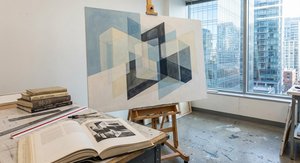
 設置イメージを確認
 送る
送る シェア
シェア
 詳細情報
詳細情報 ガイドを表示

 画像をダウンロード
 似ている作品
 X線調査
X線調査 スライドショー
 統計情報
統計情報Vernazza
 Abstract Expressionism
 47.0 x 70.0 cm
 Paintings
 続きを読む
続きを読む
このページに掲載されている作品は著作権法によって保護されており、当社の許可なく同一の複製物を制作または販売することは法律で禁じられています。この保護は、以下のような国際条約に基づき執行されます。 ベルヌ条約 および、以下の条項に定められたものを含む各国の法律により、 米国著作権法 第17編。
この手法は、著作権で保護された作品の複製や複写を伴わないため、著作権法に完全に準拠しています。これは単なる模倣ではなく、創造的な再解釈です。元の作品からインスピレーションを受けつつも、それとは異なる、全く新しい絵画を生み出すものです。
ジークレー/アートプリント
スピーディーな制作と多彩な仕上げオプションが魅力の、ミュージアムクオリティなジークレー・キャンバスプリント。 ( 手描きの複製画を注文する デジタル画像販売へ切り替え)




































作品のオリジナル比率に合わせた、当店の規定サイズからお選びください。

額縁や壁のスペースに合わせて、ご希望の幅と高さを入力してください。プリントはカットすることは可能ですが、元の画像より大きくすることはできないため、異なる比率のサイズを選択された場合は、画像の一部が欠けることになります。印刷を開始する前に、内容を確認していただくためのデジタルモックアップをお送りいたします。このページに表示されている画像は、実際のカット後の状態を示すものではありません。実際の仕上がりはモックアップにてご確認ください。


 ガラスオプションは、110cm未満のサイズでのみご利用いただけます。

Vernazza
ジークレー/アートプリント
複製画サイズ一覧
-


合計金額
¥ 12650
アーティストについて
Sushila Singh: Echoes of Venice, Visions of India
Sushila Singh (1904-1999) wasn’t merely a painter; she was a translator of landscapes, a weaver of memory and emotion onto canvas. Born in India amidst the burgeoning artistic currents of the early 20th century, her journey – from the vibrant hues of her homeland to the evocative light of Italy – shaped an oeuvre characterized by both a deeply rooted tradition and a strikingly modern sensibility. Singh’s work, often described as “neo-romantic,” possesses a rare ability to capture not just the visual appearance of a place but also the intangible atmosphere, the feeling that clings to stone walls and shimmering water. Her paintings aren't representations; they are invitations into worlds both familiar and subtly surreal.
Singh’s early artistic training at Hornsey School of Art in London provided her with a foundational understanding of technique, while her subsequent studies at the Royal College of Art under William Rothenstein exposed her to the principles of Cubism and Expressionism. This dual influence is particularly evident in her later works, where geometric forms and bold colors coexist with a palpable sense of emotional intensity. However, it’s crucial to recognize that Singh never fully embraced these movements; she retained a distinctly personal voice, infusing her paintings with a unique blend of Indian sensibility and Western artistic vocabulary.
A Journey Through Italian Landscapes
Singh's most celebrated works depict the landscapes of Italy – particularly Vernazza, Rome, and Venice. These aren’t idyllic postcard scenes; they are fragmented glimpses, imbued with a melancholic beauty. In “Vernazza,” for example, the iconic cliffside village is rendered as a series of interlocking planes and broken colors, suggesting both its grandeur and its vulnerability. The painting isn't about precise detail but rather about conveying the *feeling* of being there – the warmth of the sun on stone, the scent of salt air, the distant murmur of voices.
“A View in Rome,” similarly, is a vibrant explosion of color and texture that attempts to capture the chaotic energy of the city. Singh employs thick impasto, layering paint with a palette knife to create a sense of movement and depth. The painting’s Cubist influences are evident in its fractured perspective and flattened forms, yet it retains a distinctly emotional quality, reflecting the artist's personal response to the urban landscape.
Porto Maurizio is another example of her ability to capture the essence of a place through color and texture. Singh’s use of light and shadow creates a sense of depth and atmosphere, while her bold colors evoke the vibrancy of the Italian countryside.
The Influence of Tradition and Personal Experience
Singh's artistic development was profoundly shaped by her Indian heritage. Growing up in India during a period of significant social and political change, she witnessed firsthand the complexities of tradition and modernity. This experience is reflected in her paintings’ evocative use of color and symbolism. The vibrant hues of her palette are reminiscent of traditional Indian textiles and murals, while her fragmented compositions evoke the intricate patterns of ancient architecture.
Furthermore, Singh's personal life – her marriage to fellow artist Arthur Henry Andrews, her exile in Britain, and her eventual return to Italy – all left their mark on her work. Her paintings are not simply landscapes; they are also reflections of her own experiences and emotions. The melancholy that pervades many of her works can be attributed to the challenges she faced as an expatriate artist.
Legacy and Recognition
Despite facing considerable challenges, Sushila Singh’s work gained recognition throughout her career. She exhibited in galleries across Europe, including John Whibley Gallery, Grabowski, and Heal's Mansard Galleries, and her paintings are now held in public collections such as the Atkinson Art Gallery and Russell-Cotes Art Gallery. Her unique style – a blend of neo-romanticism, Cubism, and Indian sensibility – continues to resonate with viewers today.
Singh’s legacy lies not only in her individual works but also in her ability to capture the essence of place and emotion through color and form. She was an artist who defied easy categorization, a visionary whose paintings invite us to contemplate the beauty and complexity of the world around us. Her work stands as a testament to the power of art to transcend cultural boundaries and connect us to our shared human experience.

Sushila Singh
1904 - 1999
アーティスト情報
- Artistic Movement Or Style: Abstract, Surrealist
- Artists Or Movements Influenced By This Artist: ['Neo-Romanticism']
- Artists Who Influenced This Artist: ['William Rothenstein']
- Date Of Birth: 1904
- Date Of Death: 1999
- Full Name: Sushila Singh
- Nationality: Indian
- Notable Artworks:
- Vernazza
- A View in Rome
- Porto Maurizio
- Place Of Birth: India
関連記事

Neo-Abstract Art: The High-Impact Evolution of Modern Visual Energy and Geometric Sophistication
Discover the power of Neo-Abstract art. Explore how bold geometric forms and high-impact visual energy are redefining modern design. Learn to curate sophisticated, high-energy spaces with the latest trends in contemporary abstraction and structural color.
Beyond Form & Color: Geometric Abstraction's Enduring Legacy in Art History
Explore the captivating world of geometric abstraction! Discover its origins, key artists like Malevich & Mondrian, and why this movement remains highly valued by art collectors today. Expert insights at OriginalUniqueArt.

幾何学的抽象絵画を定義した傑作10選|アート、アーティスト、インテリア装飾
モンドリアン、マレーヴィチ…幾何学的抽象絵画を代表する傑作10選。各作品の背景や色彩構成、アーティストの情熱に迫ります。美術館品質の複製画はOriginalUniqueArt.comで。オンラインでアートコレクションをご覧ください。

Kandinsky's Masterpieces: 25 Paintings That Define Abstract Art | OriginalUniqueArt
Journey through Wassily Kandinsky's 25 most iconic abstract paintings. Explore his revolutionary use of color, form & spiritual expressionism. Find museum-quality Kandinsky reproductions and elevate your home decor with OriginalUniqueArt.com. Discover all masterpieces on OriginalUniqueArt.com!

Beyond Form & Color: Geometric Abstraction's Evolution in 20th/21st Century Art
Explore the evolution of geometric abstraction from Cubism to contemporary art. Discover key artists like Malevich & Mondrian, investment insights, and expert collecting advice at OriginalUniqueArt.