

 設置イメージを確認
 送る
送る シェア
シェア
 詳細情報
詳細情報 ガイドを表示

 画像をダウンロード
 似ている作品
 X線調査
X線調査 スライドショー
 統計情報
統計情報Rani

 続きを読む
続きを読む
このページに掲載されている作品は著作権法によって保護されており、当社の許可なく同一の複製物を制作または販売することは法律で禁じられています。この保護は、以下のような国際条約に基づき執行されます。 ベルヌ条約 および、以下の条項に定められたものを含む各国の法律により、 米国著作権法 第17編。
この手法は、著作権で保護された作品の複製や複写を伴わないため、著作権法に完全に準拠しています。これは単なる模倣ではなく、創造的な再解釈です。元の作品からインスピレーションを受けつつも、それとは異なる、全く新しい絵画を生み出すものです。
ジークレー/アートプリント
スピーディーな制作と多彩な仕上げオプションが魅力の、ミュージアムクオリティなジークレー・キャンバスプリント。 ( 手描きの複製画を注文する デジタル画像販売へ切り替え)




































作品のオリジナル比率に合わせた、当店の規定サイズからお選びください。

額縁や壁のスペースに合わせて、ご希望の幅と高さを入力してください。プリントはカットすることは可能ですが、元の画像より大きくすることはできないため、異なる比率のサイズを選択された場合は、画像の一部が欠けることになります。印刷を開始する前に、内容を確認していただくためのデジタルモックアップをお送りいたします。このページに表示されている画像は、実際のカット後の状態を示すものではありません。実際の仕上がりはモックアップにてご確認ください。


 ガラスオプションは、110cm未満のサイズでのみご利用いただけます。

Rani
ジークレー/アートプリント
複製画サイズ一覧
-


合計金額
¥ 12650
よくあるご質問
Subodh Gupta作「Rani」のスライドショーはありますか?
「Rani」のスライドショーは、作品のスライドショーページでご覧いただけます。
Subodh Gupta作「Rani」 の画像はどのようにダウンロードすればよいですか?
Subodh Gupta作「Rani」は、作品のダウンロードページから高解像度デジタル画像のダウンロードとしてダウンロードいただけます。
「Rani」のプレビューはどこで確認できますか?
Subodh Gupta作「Rani」の複製画をプレビューするには、作品のプレビューページを開いてください。
アーティストについて
The Alchemy of the Everyday: The Visionary World of Subodh Gupta
In the quiet, dust-moted landscapes of Khagaul, Bihar, a journey began that would eventually reshape the global perception of contemporary Indian art. Born in 1964, Subodh Gupta’s early life was steeped in the textures of rural India—a world where the rhythms of tradition and the necessity of survival were inextricably linked. His formative years, marked by the loss of his father and a childhood spent navigating the simplicity of village life, instilled in him a profound reverence for the mundane. This deep-seated connection to the elemental is the heartbeat of his mature practice. Before he was an international icon, Gupta was a student of the tangible, finding inspiration in the way light hit a steel plate or how the communal ritual of eating bound a community together. His education at the College of Arts & Crafts in Patna provided the technical foundation, but it was the lived experience of India’s shifting social fabric that provided his true medium.
Gupta’s artistic language is one of transformation, where the humble becomes monumental. He possesses a singular ability to take the ubiquitous—stainless steel tiffin boxes, milk pails, bicycles, and thali pans—and elevate them into profound sculptural statements. These are not merely objects; they are vessels of memory and symbols of a nation in flux. By meticulously arranging mass-produced utensils into sweeping, geometric installations, Gupta invokes the spirit of Minimalism while imbuing it with a heavy, cultural weight. To a viewer in the West, these gleaming steel structures might appear as exotic artifacts of a distant land; yet, to those familiar with the Indian household, they are intimate, domestic echoes of daily life. This duality allows his work to act as a bridge, navigating the complex tensions between local tradition and the relentless tide of globalization.
Symbolism and the Sculptural Narrative
The power of Gupta’s work lies in its capacity to hold contradictory truths simultaneously. His sculptures often function as icons of both sustenance and scarcity, reflecting the economic transformations of modern India. In his most celebrated installations, such as the monumental Untitled (Chimta), the repetition of steel trays creates an imposing visual rhythm that mirrors the sheer scale of India's population and its collective identity. There is a sacredness in his use of materials; by incorporating elements like rice, spices, or even cow dung, he touches upon the ritualistic nature of Indian life, where food and earth are deeply intertwined with faith and survival.
As his career progressed, Gupta’s focus underwent a subtle but significant evolution. While his early fame was built upon the pristine, reflective surfaces of new stainless steel, he began to gravitate toward found objects that bore the scars of previous ownership. This shift introduced a poignant layer of human narrative into his work. The scratches, dents, and patinas on these weathered items serve as traces of lives lived, turning inanimate utensils into vessels of storytelling. Through this lens, his art becomes an exploration of migration and dislocation, capturing the essence of individuals moving through a world that is constantly being redefined by economic and social shifts.
A Global Legacy and Artistic Significance
Subodh Gupta’s ascent to the pinnacle of the contemporary art world has been nothing short of meteoric. Often referred to with reverence as a towering figure in Indian art, his presence in major international institutions—from the Tate Modern in London to the Venice Biennale—has cemented his status as a global messenger. His ability to translate local vernacular into a universal aesthetic has allowed him to transcend cultural boundaries, making him one of the most influential artists of his generation.
The historical significance of Gupta’s contribution can be summarized through several key pillars of his impact:
- Redefining Materiality: He successfully challenged the hierarchy of sculptural materials, proving that the most common, mass-produced objects can carry immense conceptual and aesthetic weight.
- Cultural Translation: His work serves as a vital medium for exploring how Indian identity is negotiated within the context of a globalized, interconnected world.
- The Intersection of Ritual and Modernity: By utilizing everyday objects to evoke ancient rituals, he creates a dialogue between the historical past and the industrial present.
- Global Representation: He has been instrumental in bringing the complexities of contemporary Indian social reality to the forefront of the international art discourse.
Today, as Gupta continues to live and work in New Delhi, his practice remains an ongoing investigation into the soul of the everyday. He remains an artist who does not merely observe the world but reconstructs it, one steel spoon at a time, inviting us all to find the extraordinary within the ordinary.
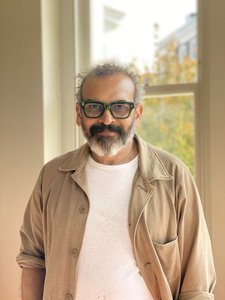
Subodh Gupta
1964 - , India
アーティスト情報
- Full Name: Subodh Gupta
- Nationality: Indian
- Date Of Birth: 1964
- Place Of Birth: Khagol, India
- Notable Artworks:
- Rani
- The Other Thing (Chimta)
- High Life
- Artistic Movement Or Style: Contemporary art
- Artists Or Movements Influenced By This Artist: ['Bharti Kher']