

 設置イメージを確認
 送る
送る シェア
シェア
 詳細情報
詳細情報 ガイドを表示

 画像をダウンロード
 似ている作品
 X線調査
X線調査 スライドショー
 統計情報
統計情報Untitled


 続きを読む
続きを読む
このページに掲載されている作品は著作権法によって保護されており、当社の許可なく同一の複製物を制作または販売することは法律で禁じられています。この保護は、以下のような国際条約に基づき執行されます。 ベルヌ条約 および、以下の条項に定められたものを含む各国の法律により、 米国著作権法 第17編。
敬意を払った法的な代替手段として、私たちはオリジナルにインスピレーションを与えられた、カスタムの手描きアートワークを提供しています。私たちの熟練したプロのアーティストは、元の作品が持つスタイル、情緒、そして芸術的なエッセンスを注意深く研究し、独自の創作物でありながら、同じ感性を呼び起こすような、新しくユニークな作品を作り上げます。
この手法は、著作権で保護された作品の複製や複写を伴わないため、著作権法に完全に準拠しています。これは単なる模倣ではなく、創造的な再解釈です。元の作品からインスピレーションを受けつつも、それとは異なる、全く新しい絵画を生み出すものです。
手描き油彩複製画
当社のアーティストが、お客様のご希望のサイズと額縁に合わせて、キャンバスに手描きで制作する油彩画です。 ( プリント版に切り替え デジタル画像販売へ切り替え)




































作品のオリジナル比率に合わせた、当店の規定サイズからお選びください。

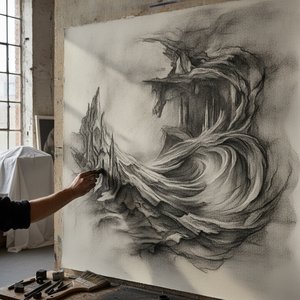
フレームや壁のスペースに合わせて、ご希望の幅と高さを入力してください。本作品は手描きのため、異なる比率のサイズをご希望の場合、絵画の周囲を少し広げて描くか、あるいは端を少しカットして調整することが可能です。お客様のご要望に合わせます。制作を開始する前に、仕上がりを確認するためのデジタルモックアップをお送りいたします。このページに表示されている画像は完成品の実物ではなく、あくまでモックアップによるイメージです。
ご注文後、OriginalUniqueArt.com チームより詳細な指示をお送りするとともに、仕上がりイメージ(モックアップ)をご提供いたします。


 ガラスオプションは、110cm未満のサイズでのみご利用いただけます。

Untitled
再現技法
複製画サイズ一覧
-


合計金額
¥ 47267
アーティストについて
The Witness of Bengal’s Turbulent Century
Somnath Hore (1921–2006) was far more than a mere creator of forms; he was a profound chronicler of the human condition, standing as an unflinching witness to the socio-imaginative upheavals of twentieth-century Bengal. His artistic journey was inextricably linked to the very marrow of social struggle, shaped by the devastating echoes of the 1943 Bengal famine and the defiant spirit of the Tebhaga peasant movement. Born in Chittagong, Hore’s early life was deeply colored by the political currents of his era. His affiliation with the Communist Party during his youth infused his work with a powerful socialist ideology, transforming his practice into a medium for documenting historical trauma and advocating for social justice. He did not merely observe history from the periphery; he translated the hunger, the resistance, and the resilience of the marginalized into a visual language that remains hauntingly relevant today.The Architecture of Suffering and Technique
The technical brilliance of Hore’s oeuvre lies in his ability to translate visceral, often agonizing experiences into delicate, rhythmic textures. As a master of printmaking, he achieved legendary status through his command of lithography and intaglio, using these mediums to explore the depths of human vulnerability. He is perhaps most celebrated for his development of the unique pulp-print technique, a method that allowed him to imbue his work with a raw, tactile quality. This was most notably realized in his critically acclaimed Wounds series, where the very texture of the paper seemed to mirror the physical and emotional scars of the people he depicted. Through meticulous hatching and cross-hatching, Hore sculpted light out of darkness, using fine, rhythmic lines to create a sense of depth that was both aesthetically masterful and emotionally heavy. Whether through the starkness of a charcoal drawing or the intricate layers of an etching, his work captures a profound intimacy—a moment where the artist’s hand becomes a vessel for collective memory.A Sculptural Legacy in Clay and Spirit
As his artistic vision matured, Hore expanded his dialogue with form, moving from the two-dimensional plane into the tactile, three-dimensional world of sculpture. Utilizing stoneware clay and bronze, he brought a contorted, expressive energy to his figures, echoing the tension and endurance found in his earlier prints. This transition allowed him to explore the weight and presence of the human body in space, imbuing his sculptures with a humanist sensibility that was both grounded in realism and elevated by poetic expression. His later years were deeply rooted in the academic and creative community of Santiniketan, where he headed the Graphics and Printmaking Department at Kala Bhavan. Working alongside luminaries such as K.G. Subramanyan and Ramkinkar Baij, Hore helped shape the trajectory of modern Indian art. His legacy remains a testament to the power of art to serve as both a mirror to society’s darkest moments and a celebration of the indomitable human spirit.
Somnath Hore
1921 - 2006 , India
アーティスト情報
- Full Name: Somnath Hore
- Nationality: Indian
- Date Of Birth: 1921
- Date Of Death: 2006
- Place Of Birth: India
- Notable Artworks: ['Untitled']
- Artistic Movement Or Style: Social realism
関連記事
Mastering Charcoal: A Professional Guide to Texture and Depth for Large-Scale Interior Art Commissions
Discover professional techniques for mastering charcoal texture and depth. An expert guide for hotel designers and procurement managers looking to integrate high-impact monochrome art into large-scale hospitality projects with precision and scale.

Mastering Charcoal: The Definitive Expert Guide to Capturing Profound Depth, Texture, and Shadow
Elevate your artistry with this definitive expert guide to mastering charcoal. Designed for art students, learn professional techniques for capturing profound depth, intricate textures, and dramatic shadows through advanced blending and chiaroscuro methods.

Mastering the Line: A Comprehensive Expert Guide to Technical Precision and Expressive Depth in Drawing
Elevate your artistic practice with this expert guide to mastering the line. Discover advanced techniques in graphite, charcoal, and contour drawing designed for art students seeking technical precision and expressive depth in their fine art studies.

Mastering Charcoal: The History, Technique, and Chiaroscuro Power of Black and White Art
Explore the profound history and technical mastery of charcoal art. From prehistoric origins to Renaissance chiaroscuro, learn the essential additive and subtractive techniques used by masters to capture light, shadow, and raw emotional depth in monochrome fine art.

The Eloquent Form: A Historical & Aesthetic Exploration of the Nude in Art
Explore the captivating history of the nude in art! From ancient Greece to modern masters, discover its evolving symbolism, techniques & enduring beauty. Expert insights for collectors and enthusiasts.