Pop Art/Conceptual art · 1962
Objectivity (ソル・ルウィット, 1962)
ソル・ルウィット (1928–2007)による作品『Objectivity』 制作年は1962年です。 Pop Art/Conceptual art運動に属しています。 Mixed Mediaで制作されています。 サイズは128 × 128 cmです。
- 1962
- Mixed Media
- 128 × 128 cm

 設置イメージを表示

 手描き油彩画
 シェアする
 シェアする
 解説シート


 ダウンロード
 似ている作品
 X線調査
 スライドショーを表示
 Q&A

 統計情報
Objectivityの概要
Objectivityには何が描かれていますか?
Objectivity by Sol LeWitt: A Grid of Conceptual Precision
Sol LeWitt's "Objectivity," created in 1962, is a seminal work within the realms of Minimalism and Conceptual Art. This striking piece challenges traditional notions of artistic representation, prioritizing idea and system over subjective expression or illusionistic depiction. Measuring an impressive 128 x 128 cm, it commands attention with its rigorous structure and deliberate repetition.
Composition and Technique: A Three-Dimensional Grid
"Objectivity" presents as a square canvas meticulously divided into a three-dimensional grid of twenty-five squares. Each row contains five squares across and five down. The word "OBJECTIVITY," rendered in bold blue capital letters, is repeated five times across the rows. However, it's not simply a straightforward repetition. Each square displays two letters – “OB,” “JE,” “CT,” and “IV” – with the rightmost squares completing the word “ITY.” A key element of the work lies in its layering: the top row projects outward from the canvas surface, while subsequent rows recede further back, creating a subtle illusion of depth. The background color shifts progressively from orange in the upper row to increasingly darker shades of red as one descends, contributing to a sense of diminishing visibility and an overall darkening effect.
Style and Historical Context: Minimalism and Conceptualism
“Objectivity” emerged during a pivotal period in art history. The late 1950s and early 1960s witnessed the rise of Minimal Art, which rejected Abstract Expressionism’s emphasis on gesture and emotion, favoring instead geometric forms, industrial materials, and a reduction to essential elements. Simultaneously, Conceptual Art began to gain momentum, prioritizing the idea behind the artwork over its physical manifestation. LeWitt's work brilliantly embodies both movements. "Objectivity" exemplifies Minimalism through its grid structure, precise geometry, and serial repetition. It aligns with Conceptualism by foregrounding the underlying concept – in this case, a meditation on objectivity itself – and minimizing the artist’s hand in the final product. The systematic nature of the piece reflects LeWitt's interest in mathematical principles and logical systems.
Symbolism and Emotional Impact: Questioning Perception
The title "Objectivity" is inherently provocative, given the work's visual complexity and layered construction. By repeatedly presenting the word within a receding grid, LeWitt seems to question the very notion of objective truth or perception. The darkening effect as one descends suggests that objectivity becomes increasingly elusive, obscured by layers of interpretation and perspective. The rigid structure can evoke feelings of detachment, artificiality, and even a subtle unease. While seemingly impersonal, "Objectivity" invites viewers to contemplate the complexities of seeing and understanding, prompting reflection on how our perceptions are shaped by context and distance.
Materials and Legacy
LeWitt utilized mixed media in “Objectivity,” primarily employing cardboard or similar rigid material painted with acrylics. The choice of materials reinforces the work's industrial aesthetic and its rejection of traditional artistic techniques. "Objectivity" remains a significant piece within LeWitt’s oeuvre, demonstrating his pioneering approach to artmaking and solidifying his place as a key figure in 20th-century art. Its influence can be seen in subsequent generations of artists exploring conceptual frameworks and systematic processes.
Objectivityの高解像度画像
Protected by copyright: these files are for personal reference, not a licence to republish.
ソル・ルウィット, Objectivity (1962).
Objectivityに関するよくあるご質問
ソル・ルウィット作「Objectivity」の制作年はいつですか?
「Objectivity」は1962年の作品です。この制作年は、ソル・ルウィットのキャリアおよび当時の時代背景において、本作を位置づけるものです。
ソル・ルウィット作「Objectivity」にはどのような技法が用いられていますか?
「Objectivity」の技法はMixed Mediaです。
原画のソル・ルウィット作「Objectivity」のサイズ(寸法)を教えてください。
「Objectivity」の原画のサイズは128 x 128 cmです。原画の寸法は、複製画のサイズをお選びいただく際の参考としてお役立ていただけます。
ソル・ルウィット作「Objectivity」には何が描かれていますか?
ソル・ルウィット作「Objectivity」の描画内容:grid, text, minimalism, conceptual, repetition, objectivity, geometric
ソル・ルウィット作「Objectivity」の画像は自由に複製できますか?
ソル・ルウィット作「Objectivity」は著作権の保護対象ですです。このステータスは、作品画像の複製に関する規定を定めたものです。
「Objectivity」の作者は誰ですか?
「Objectivity」の作者はソル・ルウィットです。この作品はソル・ルウィットの名でカタログに登録されています。
ソル・ルウィット作「Objectivity」は、どの芸術運動に属していますか?
ソル・ルウィット作「Objectivity」に関連する芸術運動はPop Art/Conceptual artです。この分類により、本作は関連する他の芸術家や作品群の中に位置づけられます。
「Objectivity」は、ソル・ルウィットのキャリアにおけるどの時期の作品でしょうか?
「Objectivity」は、ソル・ルウィットの画業におけるMature Periodに属します。この分類は、作品をアーティストの作風の変遷に関連付けるものです。
「Objectivity」が制作されたとき、ソル・ルウィットは何歳でしたか?
ソル・ルウィットは34歳の時に「Objectivity」を制作しました。作家は1928年に生まれ、本作の制作年は1962年です。
アーティスト ソル・ルウィット について

1928–2007, アメリカ合衆国
ソル・ルウィット
思想の建築家:ソル・ルウィットの生涯と遺産 20世紀モダニズムという広大な風景において、ソロモン・ルウィットほど長く、そして知的に深い影を落とした人物は稀です。1928年9月9日、コネチカット州ハートフォードにてロシアからのユダヤ人移民の家庭に生まれたルウィットの歩みは、単なる物理的な実行よりも、純粋な思考の追求によって定義されるものでした。彼の幼少期は、厳格な分析的好奇心によって形作られ、その特性は1945年から1949年にかけてのシラキュース大学での学びによって育まれました。数学と幾何学におけるこの学問的基盤は、後に彼の芸術言語の鼓動そのものとなり、伝統的な芸術が持つ装飾的な過剰さを削ぎ落とし、論理と構造という骨格的な美しさを露わにすることを可能にしたのです。 芸術家としてのルウィットの進化は、突然の断絶ではなく、形あるものから概念的なものへの意図的な移行でした。初期の探求においては、絵画やドローイングの触覚的な性質に触れていましたが、彼はやがて、描かれた線そのものよりも、その線の背後にあるアイデアに強く惹かれるようになっていきました。この転換は、ミニマリズムとコンセプチュアル・アートの溝を埋める先駆者の誕生を告げるものでした。彼は芸術家を、手作業に縛られた職人としてではなく、「指示書の建築家」として捉え始めたのです。完成された物体よりも精神的な設計図を優先することで、ルウィットは作者という定義そのものに挑戦し、ひとたびアイデアが構想されれば、その物理的な具現化は単なる二次的な結果に過ぎないことを示唆しました。 ウォール・ドローイングの革命 1960年代後半、ルウィットの象徴的なウォール・ドローイング(壁画)の登場により、現代美術における最も急進的な変容の一つが起こりました。伝統的な彫刻が持つ永続性や希少性を拒絶し、彼は「構造物(ストラクチャー)」という概念を導入しました。これは、その数学的な本質を強調するために、彼が「彫刻」よりも好んで用いた言葉です。そして、指示に従う訓練を受けた者であれば誰でも実行できる一連の指示書を生み出しました。これらの作品は単なる装飾ではなく、生きた体験そのものでした。精密な幾何学模様、弧、そして組み合わさる形状によって構成され、それらが置かれた建築空間に生命を吹き込んでいたのです。 ルウィットのウォール・ドローイングを目の当たりにすることは、論理が詩へと変容する瞬間を目撃することに他なりません。Black with White Lines, Vertical Not Touchingに見られる峻厳でリズム感のある反復であれ、Wall Drawing #1091: arcs, circles and bandsの鮮やかで溢れんばかりのエネルギーであれ、彼の作品は空間を支配するために線の力を利用していました。これらの作品はしば通り、アシスタントや美術館の設置者に制作を導く、論理的かつ数学的な指示体系に依拠していました。この手法は、創造という行為を民主化すると同時に、コンセプトの重要性を高め、作品が壁に触れる以前に、根本的には知的な火花として存在することを確かなものにしたのです。 現代性に刻まれた不朽の足跡 版画、写真、インスタレーションにおける熟達を含め、数十年にわたる多作なキャリアを通じて、ルウィットは明晰さと精密さへのコミットメントを揺るぎないものとして貫きました。純白の鮮烈なピラミッドや、クレヨンを用いた壁画作品の複雑で色彩豊かなリズムなど、最も単純な形態の中に深い美を見出す彼の能力は、20世紀後半の美学的境界を再定義しました。彼は、芸術からエゴや装飾を取り除いたとしても、秩序と発見を求める人間の欲望に深く共鳴する魂を、なお保持し続けることができるのだと証明したのです。 ソル・ルウィットの歴史的な重要性は、いくら強調してもしすぎることはありません。彼は、思考と物質の境界を探求するための語彙を、後世の芸術家たちに提供しました。彼の遺産は、創造者と実行者の境界が曖昧になり、アイデアの強さが究極の媒体として認められるあらゆる美術館やギャラリーの中で生き続けています。ハートフォードでの始まりから、2007年にニューヨークで迎えた最期まで、彼の生涯を振り返るとき、私たちは単に芸術を作った人物ではなく、思考そのものの深遠な建築を見出す方法を私たちに教えてくれた人物を見出すのです。
ソル・ルウィットのその他の作品
 Serial Project #1 ABCD1966
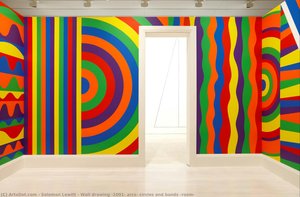 Wall drawing #1091: arcs, circles and bands (room)2003
 Distorted Cubes Bozuk Küpler
 Wall Drawing #3911983
Objectivityに関するエッセイ
 Geometry with Purpose: Distinguishing Suprematism from ConstructivismMaster the differences between Suprematism and Constructivism with our expert guide. Discover the soul of the Russian avant-garde now.
 Beyond the Object: Top 10 Masterpieces of Conceptual ArtExplore 10 iconic works of Conceptual Art by Duchamp and Ono. Discover the power of ideas on OriginalUniqueArt.com.
 Expressionism vs. New Objectivity: Emotion vs. Precision in German ArtMaster the tension between Expressionist emotion and New Objectivity precision. Explore the soul of German modern art now.