Symbolism · 1910
Memory (セルゲイ・ソロムコ, 1910)
セルゲイ・ソロムコ (1867–1928)による作品『Memory』 制作年は1910年です。 Symbolism運動に属しています。 Watercolorで制作されています。
- 1910
- Watercolor

 設置イメージを表示

 手描き油彩画
 シェアする
 シェアする
 解説シート


 ダウンロード
 似ている作品
 X線調査
 スライドショーを表示
 Q&A

 統計情報
Memoryの概要
- 作品名
- Memory
- 作家
- セルゲイ・ソロムコ (1867–1928)
- 生年
- サンクトペテルブルク, ロシア
- 制作年
- 1910
- 技法
- Watercolor
- 制作年代
- 19th Century
- 主題
- ethereal figure, spectral woman, old man wisdom, glowing sun symbol, folklore imagery, romantic landscape
Memoryには何が描かれていますか?
Identification of Memory by Sergey Solomko
The scene unfolds within the work titled Memory, a creation by the artist Sergey Solomko. This piece emerges from 1910, a moment when the artist's hand captures a sense of ethereal presence. The image holds a quiet weight, as if a single breath has been suspended in time. It invites a sense of wonder regarding the figures that inhabit its soft, dreamlike space.
Sergey Solomko brings his unique vision to this composition, drawing from a life that began in 1867 in Saint Petersburg, Russia. His origins in this city shape the very essence of his perspective. The work exists as a window into a world of soft light and subtle shadows. It carries the unmistakable touch of a creator who understands the delicate balance between the seen and the unseen.
Visual Composition and Subject Matter
A seated elderly man, his long white beard catching the light, anchors the scene. Beside him, a young woman appears almost translucent, a spectral presence drifting near the edge of a quiet body of water. The vertical composition draws the eye upward from the figures toward a backdrop of trees and a vast sky. A large, glowing sun hangs in the distance, casting a bright reflection across the surface of the water that seems to bridge the gap between the physical and the ethereal.
The encounter between the old man and this ghostly figure suggests a quiet moment of supernatural visitation. One wonders if she is a spirit guide or a manifestation of the past. This meeting hints at deep themes of mortality and the weight of wisdom. The stillness of the water and the soft light create a sense of intimacy, as if the viewer has stumbled upon a private moment between the living and the remembered.
Artistic Style and Visual Qualities
The scene unfolds through a style that leans toward Romanticism or Symbolism, where the atmosphere carries more weight than strict realism. Every line flows in gentle, organic curves, tracing the edges of the trees and the soft contours of the figures. This rhythmic movement creates a dreamlike quality that pulls the viewer into a quiet, suspended moment. The technique appears to be watercolor or gouache on paper, lending a delicate, painted texture to the entire composition. It feels as though the image is a fragment of a half-remembered dream, preserved through soft brushstrokes and a gentle blending of forms.
Light behaves with a soft, diffused quality in this work. It emanates from the large, glowing sun, casting a warm and even radiance across the landscape. This light does not create harsh shadows but instead bathes the figures and the water in a subtle, pearlescent glow. The colors remain muted and carefully blended, working together to maintain a harmonious and slightly melancholic mood. There is a sense of stillness here, as if the air itself is heavy with the weight of the encounter.
A faded quality permeates the surface, consistent with the age of the piece. This patina adds a layer of nostalgic charm, as if the colors have softened through decades of quiet observation. The shallow perspective keeps the focus intimate, drawing the eye toward the interaction between the elderly man and the spectral woman. Every element, from the organic shapes of the background to the translucent quality of the female figure, contributes to a sense of profound mystery and quietude.
Memoryの高解像度画像
セルゲイ・ソロムコ, Memory (1910). パブリックドメイン
Memoryに関するよくあるご質問
セルゲイ・ソロムコ作「Memory」 の技法(画材)は何ですか?
「Memory」はどのような内容の作品ですか?
「Memory」の著作権の状態は、なぜこのようなものになっているのでしょうか?
「Memory」の著作権の状態について — パブリックドメイン(著作権消滅) — は、作者の没年である1928に基づいています。
アーティスト セルゲイ・ソロムコ について
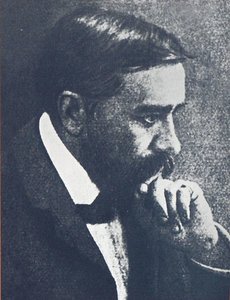
1867–1928, ロシア
セルゲイ・ソロムコ
セルゲイ・ソロムコ:その生涯と遺産 幼少期と教育 生年月日:1867年8月22日、ロシア、サンクトペテルブルクにて。 セルゲイ・セルゲエヴィチ・ソロムコは、大公コンスタンチン・ニコラエヴィチに仕えた大佐(のちに少将)セルゲイ・ソロムコの息子として生まれました。コンスタンチン宮殿の中で育った彼は、幼い頃から貴族的な生活様式や文化に深く触れる機会に恵まれていました。 教育:1883年から188訂年にかけて、モスクワ絵画彫刻建築学校にて研鑽を積みました。その後、帝国芸術アカデミーにて1年間の聴講課程を経て、その芸術的基礎を固めました。 挿絵画家としての黎明期 ソロムコは1888年頃、雑誌の挿絵画家としてのキャリアをスタートさせ、週刊文芸誌『セヴェール(北)』などの出版物に寄稿し始めました。 主要な掲載誌:彼は瞬く間に、当時ロシアで最も人気を博していた雑誌『ニヴァ(穀物畑)』での仕事を得るに至ります。また、『ミール・イスクーストヴァ(芸術世界)』や風刺雑誌『シュト(道化師)』など、数々の重要な媒体でも活躍しました。 プーシキン、チェーホフ、レルモントフといったロシアを代表する文豪たちの作品に、その繊細な筆致で命を吹き込みました。 芸術的発展と多才なプロジェクト 挿絵制作:1901年には、アドルフ・マルクス社から出版されたゴーゴリの傑作『死せる魂』の特別版の挿絵を手掛けました。 デザインの多様性:1900年以降、彼の創造性はさらに広がります。演劇ポスターのデザインから、パリのメゾン・ラピーヌ社を通じて出版された、古き良きロシアを描いた大人気のポストカード・シリーズに至るまで、その活動は多岐にわたりました。 帝政への献身:帝国磁器製作所のためのモデル制作や、ファベルジェ・ハウスとのコラボレーションも果たしました。1903年には、冬宮殿で開催された伝説的な舞踏会のために、本物の宝石をあしらった豪華絢爛な歴史的衣装をデザインし、人々の目を釘付けにしました。 パリ時代と第一次世界大戦 パリへの移住:1910年、ソロムコはパリへと拠点を移しましたが、ロシアでの展示活動やロシアの雑誌への寄稿を絶やすことはありませんでした。 戦争下の活動:第一次世界大戦中、彼はフランスに派遣されたロシア遠征軍の将校たちの肖像画を、戦利品収集を目的とした政府委員会の依頼を受けて描き続けました。 革命後の生活と亡命 政治的激変:ロシア革命後、ソロムコは新たなソビエト政権との相容れない立場となり、自ら亡命の道を選びました。 絶えぬ芸術への情熱:亡命生活においても、名高いダンサーであるマチルダ・クシェシンスカヤやアンナ・パブロヴァのために衣装を制作するなど、その創作意欲は衰えませんでした。また、エミール・ゲブハルト、エルネスト・ルナン、アルベール・サマンといったフランス人作家の書籍の挿絵も手掛けました。 亡命者としての活動:1921年には、旧帝国芸術アカデミー出身の亡命芸術家たちによる展覧会に参加しました。その後、「ロシア芸術産業研究所」の設立にも尽力しました。 埋 晩年と遺産 最期:ソロムコは1928年2月2日、パリ近郊にある白系亡命者のための養老院「メゾン・リュス」にて、療養中にその生涯を閉じました。 歴史的意義:ソビエト時代、彼の作品は退廃的でブルジョワ的であるとして批判の対象となりました。しかし、1990年代に入るとソロムコの芸術への関心は再び高まりを見せます。古きロシア文化を緻密かつ正確に描き出した彼の作品は、今日において極めて高い価値を見出されています。 消えゆく世界を、驚異的な細部描写と芸術性をもって捉え続けたこと――それこそが、彼が遺した真のレガシーなのです。
セルゲイ・ソロムコのその他の作品
 Sketch of the poster. Pillory.1916
 Priestess1915
 Blarney
 Find
Memoryに関するエッセイ
 Russian artworks of the 1900sRussian art from the 1900s features the brilliance of Wassily Kandinsky, Konstantin Korovin, and Boris Kustodiev. Shop museum-quality print…
 Dreams on Canvas: Understanding Automatist and Veristic SurrealismMaster the differences between Automatist and Veristic Surrealism. Explore the works of Dali and Miro to decode the dreamscape today.
 Russian artworks of the 1910sRussian Avant-Garde masterpieces from the 1910s by Wassily Kandinsky, Boris Kustodiev, and Kuzma Petrov-Vodkin. View the collection at Orig…