Art Nouveau
Blarney (セルゲイ・ソロムコ)
セルゲイ・ソロムコ (1867–1928)による作品『Blarney』 Art Nouveau運動に属しています。

 設置イメージを表示

 手描き油彩画
 シェアする
 シェアする
 解説シート


 ダウンロード
 似ている作品
 X線調査
 スライドショーを表示
 Q&A

 統計情報
Blarneyの概要
Blarneyには何が描かれていますか?
Identification of the Artwork Blarney
The scene unfolds within the work titled Blarney, a piece that carries the original title Сладкие речи. This genre painting captures a specific, suspended moment of interaction between figures. Sergey Solomko, the artist behind this composition, brings a sense of narrative to the canvas through his distinct approach to storytelling.
The style of the work belongs to the Art Nouveau (Modern) movement. This aesthetic influence shapes the visual language of the piece, emphasizing the decorative and flowing qualities characteristic of the era. Through the hand of Sergey Solomko, the painting moves beyond simple representation to inhabit a space defined by the elegance of the Art Nouveau style.
Visual Composition and Subject Matter
Two figures occupy the center of the scene, caught in a moment that feels pulled from a forgotten legend or a distant fantasy. On the left, an individual is draped in a blue dress, its surface alive with intricate patterns and shimmering gold trim. A pointed headdress or hat rests upon their head, adding to the sense of a historical or otherworldly setting. Their hands are positioned as if reaching for something just out of sight, perhaps a cluster of flowers, lending a sense of quiet movement to their pose.
Facing them, a second figure reaches out in a gesture of interaction or assistance. This person wears an orange robe adorned with elaborate embroidery and complex patterns, layered over a green vest. A hat that matches the hue of the robe sits atop a short haircut. The interaction between these two souls suggests a narrative unfolding, a silent dialogue held in the space between them. Their costumes, heavy with detail, anchor the viewer in a specific, albeit imagined, era.
The background remains purposefully minimal, consisting of a light beige or off-white expanse. This lack of environmental detail pushes the figures forward, ensuring the eye remains fixed on the textures of the silk, the embroidery, and the subtle tension of their gestures. The simplicity of the surroundings allows the complexity of the attire to speak, turning the composition into a focused study of character and costume within a dreamlike space.
Blarneyの高解像度画像
セルゲイ・ソロムコ, Blarney. パブリックドメイン
Blarneyに関するよくあるご質問
「Blarney」はどのような内容の作品ですか?
セルゲイ・ソロムコ作「Blarney」はパブリックドメインですか?
セルゲイ・ソロムコ作「Blarney」は、どの芸術流派に属していますか?
「Blarney」は、Art Nouveauの作品です。この様式は、その作品が属する芸術的伝統を示しています。
セルゲイ・ソロムコによる「Blarney」はパブリックドメインに含まれますか?また、その理由は何ですか?
「Blarney」は、セルゲイ・ソロムコのテーマやスタイルとどのように結びついているのでしょうか?
アーティスト セルゲイ・ソロムコ について

1867–1928, ロシア
セルゲイ・ソロムコ
セルゲイ・ソロムコ:その生涯と遺産 幼少期と教育 生年月日:1867年8月22日、ロシア、サンクトペテルブルクにて。 セルゲイ・セルゲエヴィチ・ソロムコは、大公コンスタンチン・ニコラエヴィチに仕えた大佐(のちに少将)セルゲイ・ソロムコの息子として生まれました。コンスタンチン宮殿の中で育った彼は、幼い頃から貴族的な生活様式や文化に深く触れる機会に恵まれていました。 教育:1883年から188訂年にかけて、モスクワ絵画彫刻建築学校にて研鑽を積みました。その後、帝国芸術アカデミーにて1年間の聴講課程を経て、その芸術的基礎を固めました。 挿絵画家としての黎明期 ソロムコは1888年頃、雑誌の挿絵画家としてのキャリアをスタートさせ、週刊文芸誌『セヴェール(北)』などの出版物に寄稿し始めました。 主要な掲載誌:彼は瞬く間に、当時ロシアで最も人気を博していた雑誌『ニヴァ(穀物畑)』での仕事を得るに至ります。また、『ミール・イスクーストヴァ(芸術世界)』や風刺雑誌『シュト(道化師)』など、数々の重要な媒体でも活躍しました。 プーシキン、チェーホフ、レルモントフといったロシアを代表する文豪たちの作品に、その繊細な筆致で命を吹き込みました。 芸術的発展と多才なプロジェクト 挿絵制作:1901年には、アドルフ・マルクス社から出版されたゴーゴリの傑作『死せる魂』の特別版の挿絵を手掛けました。 デザインの多様性:1900年以降、彼の創造性はさらに広がります。演劇ポスターのデザインから、パリのメゾン・ラピーヌ社を通じて出版された、古き良きロシアを描いた大人気のポストカード・シリーズに至るまで、その活動は多岐にわたりました。 帝政への献身:帝国磁器製作所のためのモデル制作や、ファベルジェ・ハウスとのコラボレーションも果たしました。1903年には、冬宮殿で開催された伝説的な舞踏会のために、本物の宝石をあしらった豪華絢爛な歴史的衣装をデザインし、人々の目を釘付けにしました。 パリ時代と第一次世界大戦 パリへの移住:1910年、ソロムコはパリへと拠点を移しましたが、ロシアでの展示活動やロシアの雑誌への寄稿を絶やすことはありませんでした。 戦争下の活動:第一次世界大戦中、彼はフランスに派遣されたロシア遠征軍の将校たちの肖像画を、戦利品収集を目的とした政府委員会の依頼を受けて描き続けました。 革命後の生活と亡命 政治的激変:ロシア革命後、ソロムコは新たなソビエト政権との相容れない立場となり、自ら亡命の道を選びました。 絶えぬ芸術への情熱:亡命生活においても、名高いダンサーであるマチルダ・クシェシンスカヤやアンナ・パブロヴァのために衣装を制作するなど、その創作意欲は衰えませんでした。また、エミール・ゲブハルト、エルネスト・ルナン、アルベール・サマンといったフランス人作家の書籍の挿絵も手掛けました。 亡命者としての活動:1921年には、旧帝国芸術アカデミー出身の亡命芸術家たちによる展覧会に参加しました。その後、「ロシア芸術産業研究所」の設立にも尽力しました。 埋 晩年と遺産 最期:ソロムコは1928年2月2日、パリ近郊にある白系亡命者のための養老院「メゾン・リュス」にて、療養中にその生涯を閉じました。 歴史的意義:ソビエト時代、彼の作品は退廃的でブルジョワ的であるとして批判の対象となりました。しかし、1990年代に入るとソロムコの芸術への関心は再び高まりを見せます。古きロシア文化を緻密かつ正確に描き出した彼の作品は、今日において極めて高い価値を見出されています。 消えゆく世界を、驚異的な細部描写と芸術性をもって捉え続けたこと――それこそが、彼が遺した真のレガシーなのです。
セルゲイ・ソロムコのその他の作品
 Memory1910
 Sketch of the poster. Pillory.1916
 Priestess1915
 Glowworm
Blarneyに関するエッセイ
 Russian artworks of the 1910sRussian Avant-Garde masterpieces from the 1910s by Wassily Kandinsky, Boris Kustodiev, and Kuzma Petrov-Vodkin. View the collection at Orig…
 Ukrainian artworks of the 1910sUkrainian artworks from the 1910s featuring Kazimir Malevich, Ilya Repin, and Zinaida Serebryakova. View the full collection at OriginalUni…
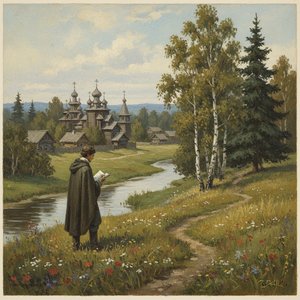 Sergey Solomko: Rediscovering the Poetic Landscape of Old RussiaExplore the captivating world of Sergey Solomko (1867-1928), a master of Russian Art Nouveau. Discover his stunning paintings, illustration…