
 プレビュー
プレビュー
 プリントを購入
 シェアする
シェアする シェアする
シェアする
 詳細を見る
詳細を見る

 ダウンロード
 似ている作品
 X線調査
X線調査 スライドショー
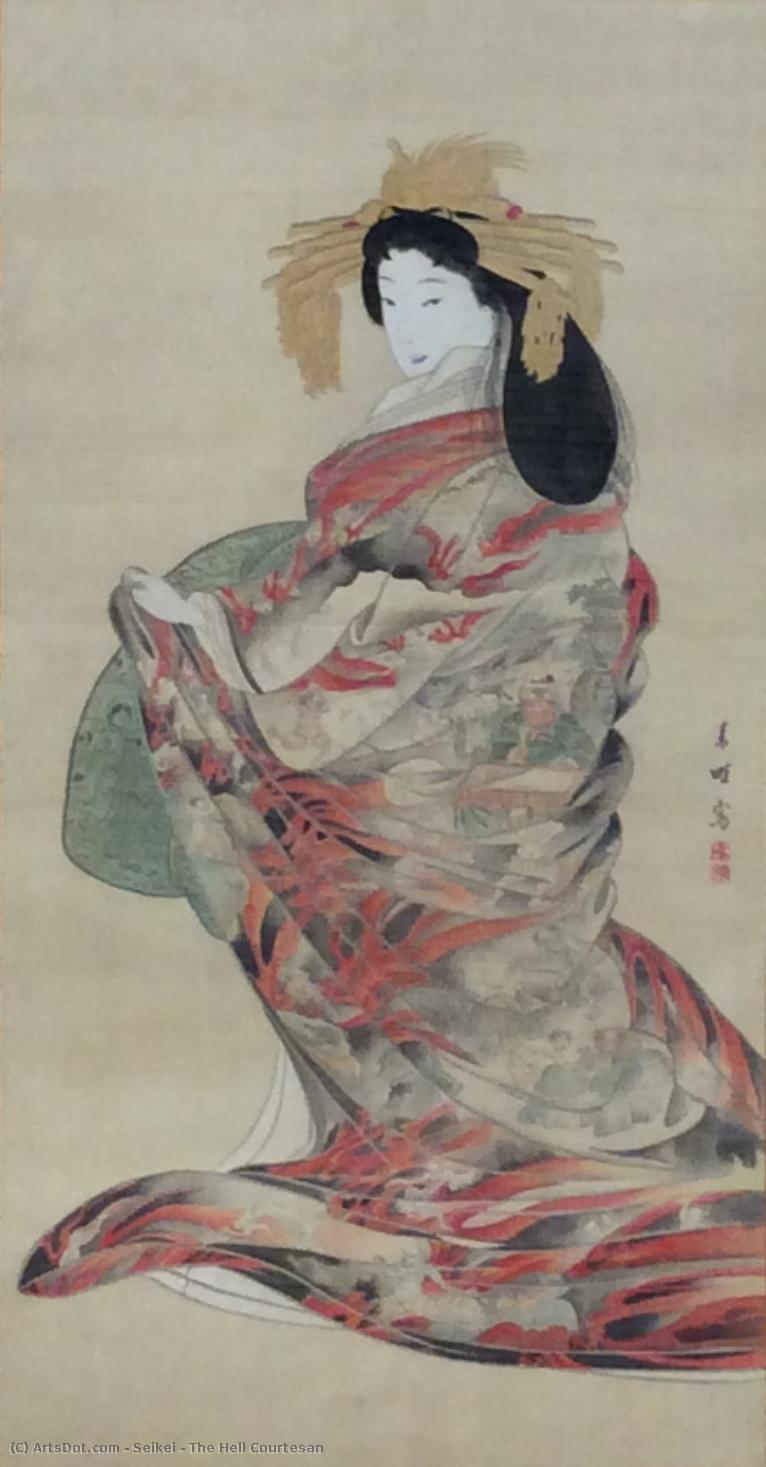
The Hell Courtesan
 801
801 99.0cm x 51.0cm
 詳細を見る
詳細を見る




































作品のオリジナル比率に合わせた、当店の規定サイズからお選びください。

特定のフレームやスペースに合わせて、ご希望のサイズをご入力いただけます。選択されたサイズが元の画像の比率と異なる場合、アートワークをトリミングするか、手描きで要素を追加して絵画を拡張いたします。デジタルモックアップ を制作し、制作開始前にご確認(承認)をいただきます。
画面上のプレビューは、実際のトリミングや拡張を正確に反映しているものではありません。最終的な構図は、モックアップによってのみ正確にご確認いただけます。
カスタムサイズもご利用いただけますが、元の比率を維持するためには、あらかじめ用意されたリストからサイズを選択することをお勧めいたします。
ご注文後、OriginalUniqueArt.com チームより詳細な指示をお送りするとともに、仕上がりイメージ(モックアップ)をご提供いたします。


 ガラスオプションは、110cm未満のサイズでのみご利用いただけます。

The Hell Courtesan
複製技法
複製画のサイズ
-


合計金額
$ 300
アーティストの略歴
The Architect of Light: The Life and Legacy of Seikei
In the transformative landscape of Meiji-era Japan, few figures cast as long or as luminous a shadow as Seikei, known to history by his birth name, Kuroda Seiki. Born in 1866 into the prestigious Shimazu clan of Kagoshima, he was a child of the samurai class, yet his destiny lay far beyond the traditional boundaries of his lineage. His journey was one of profound cultural synthesis, acting as a bridge between the ancient traditions of the East and the burgeoning modernism of the West. As a pioneer of the Yōga movement, Seikei did not merely adopt foreign techniques; he breathed new life into Japanese painting by infusing it with the light, color, and atmosphere of European Impressionism, forever altering the trajectory of Japanese art history.
The seeds of this artistic revolution were sown during his formative years in Japan, where a rigorous education under the guidance of his adoptive uncle, a key advisor to Emperor Meiji, provided him with both the discipline of a warrior and the curiosity of a scholar. His early mastery of English served as a gateway to the intellectual currents of the West, eventually leading him to Paris in 1884. While he initially traveled to France to study law, the magnetic pull of the Parisian art scene proved irresistible. Enrolling in the atelier of Louis-Joseph-Raphaël Collin, Seikei immersed himself in the traditions of academic painting while simultaneously being captivated by the radical innovations of the Impressionists. This period of apprenticeship was transformative; he moved away from rigid classical conventions toward a more fluid, plein air approach, learning to capture the ephemeral qualities of light and the subtle textures of the natural world.
A Synthesis of Styles and the Birth of Japanese Impressionism
Seikei’s time in France was marked by an intense period of experimentation and growth. Settling in the international artists' colony at Grez-sur-Loing, he found a community of expatriate painters that encouraged his exploration of light and color. His works from this era, such as the delicate Woman Reading and the vibrant Girl of Bréhat, reveal an artist finding his unique voice—one that balanced the meticulousness of French academic training with a newfound appreciation for spontaneous brushwork and atmospheric depth. He absorbed the philosophies of masters like Monet and Bastien-Lepage, integrating their use of vibrant palettes into a style that felt both modern and deeply personal.
Upon his return to Japan, Seikei faced the monumental task of introducing these Western concepts to a nation undergoing rapid modernization. He became a central figure in the development of Yōga (Western-style painting), championing the use of oil on canvas as a legitimate medium for high art. His courage was perhaps most evident in his presentation of the nude, a subject that challenged the social mores of the time but was essential to the Western artistic canon he sought to establish. Through his teaching and his leadership in various art societies, he nurtured a new generation of painters, ensuring that the techniques of light and shadow would become a permanent part of the Japanese visual vocabulary.
Historical Significance and Enduring Influence
The legacy of Seikei is not found merely in individual canvases, but in the very foundation of modern Japanese art education. Often revered as the "father of Western-style painting" in Japan, his influence permeated the institutions he helped shape, from the Tokyo School of Fine Arts to the broader cultural consciousness of the Meiji and Taisho periods. His ability to navigate the complexities of identity—being both a descendant of the samurai and a student of Paris—allowed him to create an art form that was uniquely Japanese yet globally relevant.
Reflecting on his life, several key pillars define his historical importance:
- Cultural Mediation: He successfully translated Western Impressionist techniques into a context that resonated with the Japanese aesthetic sensibility.
- Institutional Leadership: Through his roles in the House of Peers and various art academies, he provided the structural support necessary for the Yōga movement to flourish.
- Technical Innovation: He introduced the concept of plein air painting and a more painterly approach to texture and light, breaking away from the flat planes of traditional Japanese styles.
- A Lasting Legacy: His work remains a testament to the power of artistic cross-pollination, proving that true innovation often occurs at the intersection of disparate worlds.
Though he passed away in 1924, the brilliance of Seikei’s vision continues to illuminate the halls of art history. He remains an icon of transformation, a painter who looked toward the horizon of the West to bring a new dawn of light to the East.

seikei
Japan
基本情報
- Artistic Movement Or Style: Yōga
- Artists Or Movements Influenced By This Artist: ['Impressionism']
- Artists Who Influenced This Artist: ['Louis-Joseph-Raphaël Collin']
- Date Of Birth: August 9, 1866
- Date Of Death: July 15, 1924
- Full Name: Kuroda Kiyoteru
- Nationality: Japanese
- Notable Artworks:
- The Hell Courtesan
- Lakeside
- Place Of Birth: Takamibaba, Satsuma Domain (present day Kagoshima Prefecture)

