
 プレビュー
プレビュー
 プリントを購入
 シェアする
シェアする シェアする
シェアする
 詳細を見る
詳細を見る

 ダウンロード
 似ている作品
 X線調査
X線調査 スライドショー
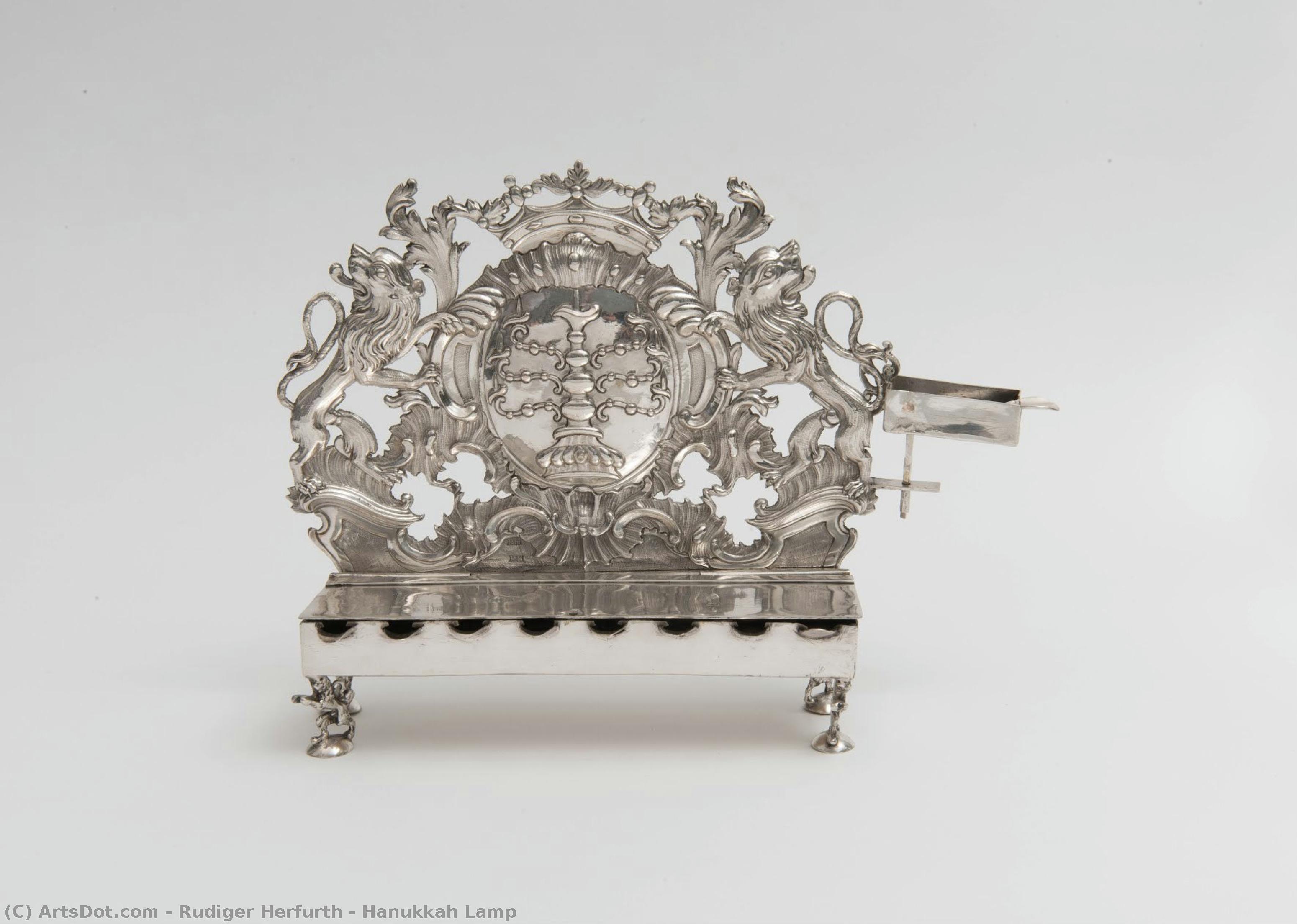
Hanukkah Lamp


 詳細を見る
詳細を見る




































作品のオリジナル比率に合わせた、当店の規定サイズからお選びください。

特定のフレームやスペースに合わせて、ご希望のサイズをご入力いただけます。選択されたサイズが元の画像の比率と異なる場合、アートワークをトリミングするか、手描きで要素を追加して絵画を拡張いたします。デジタルモックアップ を制作し、制作開始前にご確認(承認)をいただきます。
画面上のプレビューは、実際のトリミングや拡張を正確に反映しているものではありません。最終的な構図は、モックアップによってのみ正確にご確認いただけます。
カスタムサイズもご利用いただけますが、元の比率を維持するためには、あらかじめ用意されたリストからサイズを選択することをお勧めいたします。
ご注文後、OriginalUniqueArt.com チームより詳細な指示をお送りするとともに、仕上がりイメージ(モックアップ)をご提供いたします。


 ガラスオプションは、110cm未満のサイズでのみご利用いただけます。

Hanukkah Lamp
複製技法
複製画のサイズ
-


合計金額
$ 300
作品解説
アーティストの略歴
A Master Silversmith of the Rococo: The Life and Legacy of Rötger Herfurth
Rötger Herfurth, born in Frankfurt in 1722, stands as a compelling figure within the world of eighteenth-century decorative arts. Though not a household name like some of his contemporaries, his contribution to the field of Judaica—ceremonial objects used in Jewish religious practice—is profoundly significant. He wasn’t merely crafting silver; he was shaping symbols of identity and continuity for a community navigating complex social and political landscapes. Herfurth's story is one interwoven with the economic realities of his time, the artistic currents of the Rococo period, and the specific needs of Frankfurt’s Jewish population following a devastating fire that spurred a demand for new ritual items.
Early Life and Apprenticeship in Frankfurt
Frankfurt in the early eighteenth century was a bustling center of trade and craftsmanship. The city held a unique position as a home to a substantial Jewish community, yet one subject to restrictions that limited their participation in many trades. Herfurth entered this world as an aspiring silversmith, becoming a master craftsman in 1748. He joined the established workshop of the Leschhorn family, a name synonymous with silver production in Frankfurt for nearly a century. This apprenticeship proved crucial, providing him with both technical expertise and access to a network of patrons—including the Jewish community who would become his primary clientele.
The Rise of Judaica Production
A pivotal event shaped Herfurth’s career trajectory: a major fire in Frankfurt's Jewish ghetto earlier in the century. This catastrophe destroyed countless homes and, crucially, a wealth of communal ritual objects. The resulting need for replacements created an opportunity for silversmiths like Herfurth to specialize in Judaica. Because of legal restrictions preventing Jews from entering the silver trade themselves, they relied on Christian artisans such as Herfurth to fulfill their needs. This dynamic—a blend of artistic skill, economic necessity, and religious commission—defined much of his output.
Distinctive Style and Iconic Designs
Herfurth’s work is immediately recognizable for its embrace of the Rococo aesthetic. Characterized by ornate detailing, asymmetrical curves, and a playful lightness, the style perfectly suited the ceremonial objects he created. He became particularly renowned for his Kiddush cups, used in the sanctification of wine on Shabbat and holidays, and his Hanukkah lamps. The Hanukkah lamps, often referred to as the “Frankfurt type,” are perhaps his most enduring legacy. These feature a distinctive backplate adorned with elaborate Rococo motifs—scrollwork, shells, and floral designs—and prominently display lion rampant supports. This design wasn’t merely decorative; it became a symbol of Jewish identity in itself, replicated by other artisans well into the nineteenth century.
Historical Significance and Enduring Influence
Rötger Herfurth's significance extends beyond his artistic skill. He represents a fascinating intersection of religious communities and economic forces. His willingness to cater specifically to Jewish needs—and to do so with such artistry—helped preserve and revitalize ritual traditions in the wake of hardship. The “Frankfurt type” Hanukkah lamp, born from his workshop, became a widespread emblem of Jewish life, demonstrating the power of art to embody cultural memory and resilience. While he died in 1776, his influence continued for generations, solidifying his place as a master silversmith whose work continues to be admired and studied today.

rudiger herfurth
1722 - 1776 , Germany
基本情報
- Artistic Movement Or Style: Rococo silverware
- Date Of Birth: 1722
- Date Of Death: 1776
- Full Name: Rötger Herfurth
- Nationality: German
- Notable Artworks:
- Kiddush cups
- Hanukkah lamps
- Place Of Birth: Frankfurt, Germany

