プリント版に切り替え
 続きを読む
続きを読む







































 いずれかの辺が105 cm(約41インチ)を超えるアートワークまたは複製画の場合、フレームは分解されたキットの状態でお届けいたします。この方法は、輸送中の破損を防ぎ、安全に配送するために採用しております。


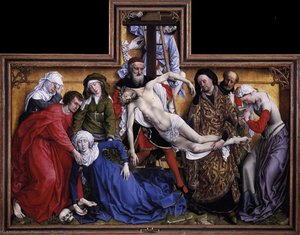
A Masterpiece of Emotion: Exploring Rogier van der Weyden’s ‘The Last Judgment Polyptych’
Rogier van der Weyden (c. 1399 – 1464), a Flemish painter whose legacy continues to inspire awe and admiration, stands as one of the foremost figures in Early Netherlandish art. Born in Tournai, Belgium—a city steeped in medieval tradition—van der Weyden’s artistic journey began not with brushes but with the meticulous craft of goldsmithing, an apprenticeship that instilled within him a profound understanding of detail and precision – qualities which would become inseparable from his distinctive visual language.
- Subject Matter: The monumental ‘Last Judgment Polyptych,’ completed around 1443-1451, depicts the apocalyptic scene described in the Book of Revelation. It portrays Christ presiding over Heaven, flanked by Mary Magdalene and Saint John the Evangelist, overseeing the judgment of humanity – a dramatic representation of divine justice and salvation.
- Style: Van der Weyden’s style is characterized by its unparalleled realism and psychological depth. Departing from the stylized conventions of his predecessors, he embraced a humanist approach, prioritizing expressive emotion and capturing nuanced facial expressions to convey profound spiritual contemplation.
The Polyptych itself—a complex arrangement of panels depicting scenes from the Gospels and culminating in the Judgment Day—represents a pinnacle of artistic innovation. Van der Weyden’s technique involved layering thin glazes of oil paint over meticulously prepared gesso, achieving astonishing luminosity and textural richness. This painstaking process allowed him to render fabrics with breathtaking accuracy, capturing folds and creases that seemed to breathe with life.
Symbolism: Beyond its narrative depiction, the artwork is laden with symbolic significance. The rainbow—a symbol of God’s covenant—represents divine mercy amidst judgment. The figures themselves embody archetypal roles representing faith, repentance, and redemption. Notably, the central figure of Christ embodies compassion and solemn authority simultaneously – a masterful portrayal reflecting the theological concerns of the period.
Historical Context: Created during the Burgundian Renaissance, ‘The Last Judgment’ reflects the burgeoning humanist spirit that questioned medieval dogma while retaining its reverence for Christian faith. It stands as testament to Van der Weyden's ability to synthesize artistic innovation with spiritual contemplation—a feat that cemented his place among the greatest painters of his time.
- Smarthistory Link: Explore Smarthistory’s Analysis
- Beaune Altarpiece Reference: Consider the influence of similar monumental altarpieces on Van der Weyden's approach to composition and storytelling.
よくあるご質問
学生向けのロジェ・ヴァン・デル・ウェイデン作「The Last Judgment Polyptych (detail)」に関するファクトシートはありますか?
ロジェ・ヴァン・デル・ウェイデン作「The Last Judgment Polyptych (detail)」のガイドページでは、印刷して活用できる2枚構成のファクトシートを提供しています。これには、作品とその詳細情報をまとめたデータテーブル、アーティストの生涯における時代背景を示す年代チャート、同アーティストによる他の作品、測定されたカラーパレット、そしてそのままコピーして使用できる4つの形式の引用文献情報が含まれています。
ロジェ・ヴァン・デル・ウェイデン作「The Last Judgment Polyptych (detail)」の構図を主導している色は何ですか?
ロジェ・ヴァン・デル・ウェイデン作「The Last Judgment Polyptych (detail)」の主色(メインカラー)はPutty (#dbb69d)です。
ロジェ・ヴァン・デル・ウェイデン作「The Last Judgment Polyptych (detail)」は、どのような感情を伝えていますか?
ロジェ・ヴァン・デル・ウェイデン作「The Last Judgment Polyptych (detail)」に記録された情緒的なトーンはDramaticです。これは、作品が表現している感情を要約したものです。
More about this painting
 設置イメージを確認
 送る
送る シェア
シェア
 詳細情報
詳細情報 ガイドを表示

 画像をダウンロード
 似ている作品
 X線調査
X線調査 スライドショー
 Q&A
Q&A 統計情報
統計情報