Expressionism
Centaure (Robert Tatin)
Robert Tatin (1902–1983)による作品『Centaure』 Expressionism運動に属しています。

 設置イメージを表示

 手描き油彩画
 シェアする
 シェアする
 解説シート


 ダウンロード
 似ている作品
 X線調査
 スライドショーを表示
 Q&A

 統計情報
Centaureの概要
- 作品名
- Centaure
- 作家
- Robert Tatin (1902–1983)
- 作家の生年
- Laval, France
- 主題
- fragmented figure, nude art expression, emotional vulnerability, textured painting style, abstract human form, earthy color palette
Centaureの高解像度画像
Robert Tatin, Centaure.
Robert Tatin (1902–1983), Centaure. 画像:OriginalUniqueArt.com
Centaureに関するよくあるご質問
Robert Tatin作「Centaure」にはどのような主題が描かれていますか?
Robert Tatin作「Centaure」の描画内容:fragmented figure, nude art expression, emotional vulnerability, textured painting style, abstract human form, earthy color palette, dynamic composition
「Centaure」はパブリックドメインですか?
Robert Tatin作「Centaure」 の著作権について:本作品は著作権の保護対象ですです。これにより、画像の複製が自由に行えるかどうかが決まります。
「Centaure」の作者は誰ですか?
「Centaure」はRobert Tatinによる作品です。このページでは、Robert Tatinのオリジナル作品についてご紹介しています。
「Centaure」はどの様式に属していますか?
Robert Tatin作「Centaure」はExpressionismに属しています。このムーブメントは、本作の様式的な背景を形作るものです。
「Centaure」は、Robert Tatinのキャリアにおけるどの時期の作品でしょうか?
「Centaure」は、Robert Tatinの画業におけるMature Periodに属します。この分類は、作品をアーティストの作風の変遷に関連付けるものです。
「Centaure」の著作権の状態は、なぜこのようなものになっているのでしょうか?
Robert Tatinによる「Centaure」は著作権の保護対象ですです。著作権の保護期間は作者の没年から起算されますが、Robert Tatinは1983年に亡くなっています。
「Centaure」は、Robert Tatinのテーマやスタイルとどのように結びついているのでしょうか?
「Centaure」はRobert TatinによるExpressionismの作品であり、その描かれたテーマにはexploration of form, emotional intensity, shift in style, expressionism, distortion, abstracted figuration, gestural brushwork, vulnerability & angstが含まれます。
「Centaure」の主題は、Robert Tatinが普段扱うテーマとどのように関連していますか?
「Centaure」はfragmented figure, nude art expression, emotional vulnerability, textured painting style, abstract human form, earthy color palette, dynamic compositionを描いていますが、Robert Tatinのこれまでの主要なテーマはexploration of form, emotional intensity, shift in style, expressionism, distortion, abstracted figuration, gestural brushwork, vulnerability & angstです。この二つを比較することで、本作が作家の恒常的な主題とどのように結びついているかが浮き彫りになります。
アーティスト Robert Tatin について
1902–1983, France
Robert Tatin
Robert Tatin: A Surrealist Vision of the Rural and the Primitive Born in Laval, Mayenne, in 1902, Robert Tatin’s life was a remarkable confluence of seemingly disparate passions – construction, carpentry, ceramics, painting, sculpture, and architecture. He wasn't merely an artist; he was a builder of worlds, both tangible and imagined, driven by a profound desire to translate the rhythms of nature and the echoes of ancient myths into a singular, deeply personal visual language. His story is one of quiet revolution, a rejection of academic constraints in favor of intuitive creation, and ultimately, the establishment of a unique artistic sanctuary – his ‘Maison des Champs’ – that continues to bewilder and enchant visitors today. Tatin's early years were shaped by a modest upbringing.
Robert Tatinのその他の作品
 Maryvonne Fille de Lune
 Le Cirque
 Les Mystères de la Femme
 Arcane VI
Centaureをめぐるエッセイ
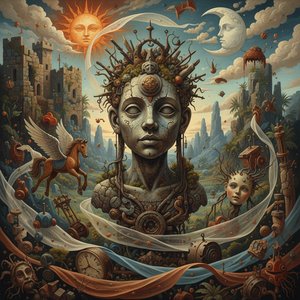 Robert Tatin: A Surrealist Vision of Childhood & the PrimitiveExplore the captivating world of Robert Tatin, a French Surrealist artist blending childhood memories, tribal art & Art Brut. Discover his …
 Spontaneity and Matter: Distinguishing CoBrA from Art InformelJean Dubuffet mixed sand, tar, and gravel into his 1947 works to create sculptural surfaces. Why did post-war artists reject traditional or…
 Impressionism vs. Expressionism: Capturing Light and EmotionImpressionism captures the eye's sensation while Expressionism records the soul's intensity. Compare Monet's 1872 light to Munch's 1893 ang…