Minimalism · 1968
Untitled (Robert Morris, 1968)
Robert Morris (1931–2018)による作品『Untitled』 制作年は1968年です。 Minimalism運動に属しています。 Acrylicで制作されています。 ロンドン, イギリスのテート・モダンに所蔵されています。
- 1968
- Acrylic
- テート・モダン, ロンドン

 設置イメージを表示

 手描き油彩画
 シェアする
 シェアする
 ガイドを表示


 ダウンロード
 似ている作品
 X線調査
 スライドショーを表示
 Q&A

 統計情報
Untitled:基本情報
- 作品名
- Untitled
- 作家
- Robert Morris (1931–2018)
- 生年
- Kansas City, United States
- 制作年
- 1968
- 技法
- Acrylic
- 展示場所
- テート・モダン, ロンドン, イギリス
- 主題
- sculpture, minimalism, organic, form, space, suspension
Untitledには何が描かれていますか?
Robert Morris’s “Untitled”: A Meditation on Absence and Form
Robert Morris’s “Untitled,” created in 1968, stands as a cornerstone of Minimalism and a profound exploration into the very nature of perception within art. More than simply a sculpture, it's an invitation to contemplate the space between object and viewer, a deliberate rejection of representational imagery in favor of pure form and process. The piece, often realized in cast concrete or resin – though variations exist – presents a single, elongated form suspended from the ceiling, seemingly adrift within a stark white void. This simplicity is deceptive; it’s precisely this lack of overt narrative that generates such a powerful emotional response.
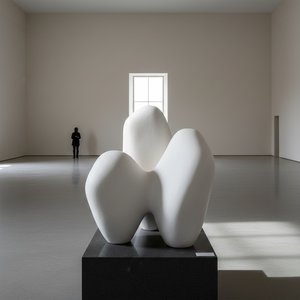
The sculpture's design deliberately avoids any immediately recognizable reference. It’s an organic curve, reminiscent perhaps of a fossilized stone or the attenuated form of a stretched root system – a subtle nod to the natural world without resorting to direct depiction. The surface is rarely smooth; instead, it bears the marks of its creation: subtle undulations, slight variations in tone, and even traces of the casting process itself. These imperfections aren’t flaws but integral elements of the work's philosophy, emphasizing the inherent materiality of the object and rejecting the illusionistic qualities of traditional sculpture. The deliberate roughness invites a tactile engagement, prompting us to consider the physicality of the piece and its relationship to our own bodies within the space.
The Philosophical Undercurrents of Minimalism
“Untitled” is deeply rooted in the burgeoning philosophical currents of the late 1960s. Minimalist artists like Morris were reacting against the perceived excesses of Abstract Expressionism, rejecting subjective emotion and personal expression in favor of a more objective approach to art-making. They sought to strip away all unnecessary elements – color, texture, narrative – leaving only the essential form and its relationship to space. Morris’s work directly engages with questions of perception: how do we see? How does our mind construct meaning from visual information? The sculpture's stark simplicity forces us to confront our own assumptions about art and representation.
Crucially, Morris wasn’t simply creating a visually pleasing object. He was interested in the *experience* of seeing – the way the form interacts with the surrounding space, the effect it has on the viewer’s perception of reality. The work's placement within a white room is deliberate; it isolates the sculpture and forces us to focus entirely on its shape and presence. This creates a sense of quiet contemplation, inviting viewers to slow down and engage with the artwork in a more mindful way.
Materiality and Process: A Key to Understanding
The choice of materials – typically cast concrete or resin – is significant. These durable, industrial substances lend an air of solidity and permanence to the sculpture, yet their inherent imperfections subtly undermine this sense of stability. The casting process itself becomes part of the artwork’s narrative; the marks left by the mold are not concealed but deliberately revealed, emphasizing the labor involved in its creation. This transparency – a key characteristic of Minimalism – invites us to consider the artist's hand and the physical processes that shaped the final form.
Morris often experimented with different casting techniques, manipulating the pour to create variations in texture and surface quality. These subtle differences contribute to the sculpture’s overall sense of ambiguity and complexity. The work is not about achieving a perfect, idealized form; it's about exploring the possibilities inherent within the materials and processes themselves.
Symbolism and Emotional Resonance
While “Untitled” resists easy interpretation, it evokes a powerful sense of stillness and contemplation. The elongated form suggests a reaching gesture – perhaps towards an unknown horizon or a deeper understanding – while its suspended position conveys a feeling of vulnerability and precariousness. The work’s simplicity can be surprisingly unsettling, prompting us to confront our own anxieties about the world and our place within it.
Ultimately, “Untitled” is not a statement but an experience. It's a reminder that art doesn't always need to tell a story; sometimes, its power lies in its ability to simply *be* – a quiet meditation on form, space, and the mysteries of perception. It remains a profoundly influential work, continuing to challenge our assumptions about what constitutes art and how we engage with it.
Untitledは、どの美術館に所蔵されていますか?
テート・モダン
ロンドン, イギリス
テート・モダン:その歴史と起源 イギリス、ロンドンの空に刻まれたサザークのスカイライン。その産業史の記憶に深く根ざしているのが、テート・モダンです。かつてこの場所には、バンクサイド発電所がそびえ立っていました。30年間にわたり街にエネルギーを供給し続けたこの巨大な構造物は、経済情勢の変化、とりわけ石油価格の高騰という荒波にさらされ、1981年10月31日、その役目を終えました。その後、この巨大な建築物は長い間、新たな使命を待つ間、都市の景観の一部として静かに佇む、忘れ去られた存在となっていました。 しかし、1990年代に入ると、この産業遺産を近代美術とコンテンポラリー・アートの聖地へと変貌させる壮大な計画が本格的に動き出します。1992年に新しいギャラリーの開設が発表されて以来、敷地は劇的な転換期を迎えました。そして2000年5月11日、テート・モダンはついにその扉を一般に開放したのです。かつての製造の場は、20世紀以降の芸術的表現の進化を体現する、新たな創造の空間へと生まれ変わりました。かつての発電所の建築美 バンクサイド発電所が芸術のための空間へと生まれ変わる過程では、産業遺産としての歴史と現代的な実用性との間に、極めて繊細な均衡が求められました。ヘルツォーク&ド・ムートンによって設計されたこの構造体は、ブルータリズム様式のコンクリートと煌めくガラスという劇的な対比を通じて、自らの過去との対話を続けています。建築家たちは、建物の歴史的な存在感を損なうことなく、現代的なパブリックスペースを創出するために、軽やかな感性でこの変容へと向き合いました。このアプローチによって、重厚な石造りの構造と、屋上に設置された光のビームのような現代的な介入が共存しています。この光の筋は、煙突の垂直性に対して水平なコントラストを添えています。 建物のシルエットは、かつての用途への建築的なオマージュによって形作られています。のこぎり屋根は、発電所としての機能的な幾何学形態を維持するために、あえてオリジナルのデザインを継承したものです。テムズ川の対岸にそびえる発電所の煙突は、セント・ポール大聖堂のドームと対をなす存在として立っています。この産業的なスカイラインと歴史的な都市との関係性は、独特の視覚的な緊張感を生み出しています。この建築は、自らの起源を隠そうとはしません。むしろ、既存のフォルムを活かすことで、その内部で体験される芸術をより鮮やかに際立たせているのです。タービン・ホールとボイラー・ハウス タービン・ホールは、ロンドンの製造業の遺産を今に伝える力強い記憶の装置です。かつて発電所の産業の心臓部であったこの広大な空間は、現在、没入型のインスタレーションが繰り広げられるダイナミックな舞台へと変貌を遂げています。その圧倒的なスケール感は、虚空を占拠するような記念碑的な作品を可能にし、純粋な物理的存在感を通じて鑑賞者の知覚を揺さぶります。ここでは、建築そのものが持つ巨大なボリュームが、その壁の中に宿る芸術のインパクトを決定づけているのです。 この広大なホールとは対照的に、ボイラー・ハウスはまた異なる体験を私たちに提供してくれます。かつて発電所のボイラーが鎮座していたこのエリアは、現在ではより親密な展示空間となっています。タービン・ホールの巨大で開放的なスケールから、ボイラー・ハウスのより凝縮された環境へと移り変わることで、芸術との向き合い方にも変化が生まれます。ホールがそのスケール感ゆえに強烈な反応を強いる場所であるならば、ボイラー・ハウスは、展示された作品をより間近から、より静かに観察することを促してくれる場所なのです。国際的なモダン・アートとコンテンポラリー・アートのコレクション テート・モダンは、1900年代以降に生み出された作品を中心に、イギリスのナショナル・コレクションとして、世界中のモダン・アートとコンテンポラリー・アートを擁しています。ここにある作品群が何よりも重んじているのは、革新性、実験精神、そして社会への批評性です。その領域は、伝統的な絵画や彫刻の枠組みを軽々と越え、写真、映画、パフォーマンス・アート、さらにはデジタルメディアにまで及びます。こうした多様性こそが、数十年の歳月を経て芸術的表現がいかに変容を遂げてきたのかを、壮大なスケールで描き出しているのです。 館内には、抽象芸術、構成主義、そしてオーストラリアのモダニズムといった重要な芸術運動が、確かな足跡として刻まれています。コレクションは戦後の美術や多種多様な彫刻作品も網羅しており、これらの作品が集うことで、現代を形作った様式の進化をパノラマのように俯瞰することが可能となります。ここに並ぶオブジェクトたちは、20世紀から21世紀にかけて起きた形式的な変革を、私たちにダイレクトに突きつけてくるのです。 泉(Fountain)、1917年 - マルセル・デュシャン マリリン・ディプティク、1962年 - アンディ・ウォーホル 踊り手、1949年 - アンリ・マティス マルーンに黒、1959年 - マーク・ロスコ 常設コレクションの傑作たち この壁の中に存在する特定の作品たちは、「芸術とは何か」という私たちの認識を根底から変えてしまう力を持っています。ピカソのアヴィニョンの娘たちは、今なお重要な出発点であり続けており、キュビスムというレンズを通して、形態と遠近感の捉え方に劇的な転換をもたらしました。そのすぐ傍らでは、ロスコによるカラーフィールド・ペインティングが静かな熱量を放ち、観る者を深い思索と精神性へと誘います。巨大なキャンバスが持つ色彩の深淵は、鑑賞者をその中へと飲み込んでいくかのようです。これらの作品は単に空間を占有しているのではなく、その空間そのものを支配しているのです。 また、このコレクションは、芸術の定義そのものに挑んだオブジェクトたちも収蔵しています。マルセル・デュシャンの泉(1917年)は、日常的な品々とファイン・アートの境界を問い直す、極めて重要な存在として鎮座しています。同様に、ウォーホルのキャンベルのスープ缶や、1962年のマリリン・ディプティクは、大量生産品とハイカルチャーが交差する地点を観る者に突きつけます。これらの作品が放つ独特の重みは、抗いがたいほどに私たちの視線を釘付けにするのです。 ラ・ダンサーズ、1949年 - アンリ・マティス ロブスター電話、1938年 - サルバドール・ダリ ブラック・オン・マルーン、1959年 - マーク・ロスコ 展示と芸術的対話 テート・モダンでは、空間を流動的に移動する大規模な回顧展やテーマ別のグループ展が、絶え間ないリズムを刻んでいます。これらの展示は、社会的な問題や政治的な議論を呼び起こすことが多く、美術館を単なる鑑賞の場ではなく、活発な対話が生まれる場へと変貌させます。近年のプログラムでは、アイデンティティの探求や気候変動の複雑な諸問題に焦点が当てられてきました。サイト・スペシフィックなインスタレーションを通じて、この美術館は現代的な懸念事項と直接的に向き合い、芸術が常に「今、この瞬間」に結びついていることを確かなものにしています。 また、「ユニリーバ・シリーズ」は、その広大な内部空間に大規模な作品をもたらし、空間そのものの知覚をしばしば変容させます。特筆すべき存在は、タービン・ホールの大気を一変させたオラファー・エリアソンのThe Weather Projectでした。このようなインスタレーションは、額縁や台座といった伝統的な境界を超え、芸術との身体的な出会いをもたらしてくれるのです。拡張と未来への展望 テート・モダンが歩んできた進化の軌跡は、刻々と変化する時代の要請に応えるべく、現在進行中の拡張プロジェクトを通じて、今なお未来へと紡がれています。その中心的な柱となるのが、サザン・エクステンション(南側拡張)の完成に向けた計画です。この野心的な開発は、5,000平方メートルもの新たな展示空間を創出し、膨大なコレクションとのさらなる深い対話を可能にすることを目指しています。このプロジェクトには、当初2億1,500万ポンドという巨額の予算が投じられました。 この拡張建築が目指すのは、美術館を単なる展示施設ではなく、多様な価値観が交差する「十字路」へと変貌させることです。新たなエントランスを設けることで、建物自体を周囲の都市の営みへとより密接に、そして有機的に溶け込ませる意図が込められています。こうした変革は、アーティストと観客の双方に対し、常に進化し続ける空間を提供し続けるという強い意志の表れであり、この美術館がアートの未来において、常に能動的な主役であり続けるための確かな歩みなのです。


高解像度版 Untitled

Robert Morris, Untitled (1968), テート・モダン.
Untitledに関するご質問
「Untitled」のスタイルは、作者が生きた時代とどのように関わっていますか?
「Untitled」はMinimalismの様式に属しており、その作者はModernの時代に活動していました。
Minimalismの作品「Untitled」は、どの国のものですか?
Minimalismの作品「Untitled」は、United States出身のアーティストによって制作されました。
「Untitled」の著作権の状態は、なぜこのようなものになっているのでしょうか?
「Untitled」の著作権の状態について — 著作権の保護対象です — は、作者の没年である2018に基づいています。
「Untitled」は、どのような感情を連想させますか?
Robert Morris作「Untitled」に表現されている情緒的なトーンはReflectiveです。これは、作品が描き出す感情を要約したものです。
「Untitled」を特徴づける配色と、主役となる色は何でしょうか?
Robert Morris作「Untitled」はNeutralsのパレットを使用しており、Celadon (#b3b5a7)が基調となっています。
Robert Morris作「Untitled」を異なる照明の下で見ることはできますか?
「Untitled」のプリントは、どのような用途でのご利用がおすすめですか?
Robert Morris作「Untitled」の推奨される用途はReflectiveですが、それ以外の使い道でもお楽しみいただけます。
「Untitled」は、Robert Morrisの作品群の中でどのような位置を占めているのでしょうか?
Robert Morrisの作品群において、「Untitled」はMinimalism様式に属しており、minimalist abstraction, process-oriented, conceptual space, perceptual inquiry, deconstructed form, reduced elements, systematic approach, formal explorationというテーマを共有しています。
アーティスト Robert Morris について

1931–2018, United States
Robert Morris
The Architect of Perception: The Life and Legacy of Robert Morris In the vast, often turbulent landscape of twentieth-century American art, few figures cast as long or as intellectually profound a shadow as Robert Morris. Born in 1931 in Kansas City, Missouri, Morris did not merely participate in the movements of his time; he provided the theoretical and physical scaffolding upon which much of contemporary art was built. His journey began with a rigorous multidisciplinary foundation, blending the precision of engineering with the expressive potential of fine art. This unique duality—the ability to dissect a form through a technical lens while simultaneously questioning its philosophical essence—became the hallmark of his career.
Robert Morrisのその他の作品
 Document
 Bull Wall
Untitledに関するエッセイ
 The Triadic Resonance of Artistic Choice: Exploring Emotional Response to Multiple Interpretations of a Singular ConceptExplore the emotional power of art & discover how skilled artists create lasting masterpieces. Custom paintings, expert consultations, & mu…
 The Subtlety of Form: Exploring Minimalism’s Evolution & Enduring InfluenceExplore the evolution of Minimalism with OriginalUniqueArt. Discover key artists like Judd & Martin, core principles, collecting insights, …
 The Subtlety of Form: Exploring Emotional Resonance in Minimalist ArtExplore the emotional depth of minimalist art with OriginalUniqueArt. Discover key artists like Agnes Martin & Donald Judd, investment pote…