設置イメージを確認
 送る
送る シェア
シェア
 詳細情報
詳細情報 ガイドを表示

 画像をダウンロード
 似ている作品
 X線調査
X線調査 スライドショー
 統計情報
統計情報Les amoureux de l


 続きを読む
続きを読む
このページに掲載されている作品は著作権法によって保護されており、当社の許可なく同一の複製物を制作または販売することは法律で禁じられています。この保護は、以下のような国際条約に基づき執行されます。 ベルヌ条約 および、以下の条項に定められたものを含む各国の法律により、 米国著作権法 第17編。
この手法は、著作権で保護された作品の複製や複写を伴わないため、著作権法に完全に準拠しています。これは単なる模倣ではなく、創造的な再解釈です。元の作品からインスピレーションを受けつつも、それとは異なる、全く新しい絵画を生み出すものです。
ジークレー/アートプリント
スピーディーな制作と多彩な仕上げオプションが魅力の、ミュージアムクオリティなジークレー・キャンバスプリント。 ( 手描きの複製画を注文する デジタル画像販売へ切り替え)




P118B ¥10

P118H ¥10

P118W ¥10

P438Z ¥10

P508JH ¥12

P508YH ¥12

P805H ¥10

P805Z ¥10

P919BZ ¥10

P919G ¥10

P919XJ ¥10

P959ZH ¥10

P968JZ ¥12

W106C ¥8

W218G ¥10

W218JH ¥8

W218Y ¥10

W307PJ ¥10

W316G ¥10

W316PJ ¥8

W316Y ¥10

W398PJ ¥8

W4111J ¥10

W500HY ¥15

W500JH ¥15

W692G ¥12

W849H ¥8

W940BG ¥15

W953PJ ¥8




作品のオリジナル比率に合わせた、当店の規定サイズからお選びください。

額縁や壁のスペースに合わせて、ご希望の幅と高さを入力してください。プリントはカットすることは可能ですが、元の画像より大きくすることはできないため、異なる比率のサイズを選択された場合は、画像の一部が欠けることになります。印刷を開始する前に、内容を確認していただくためのデジタルモックアップをお送りいたします。このページに表示されている画像は、実際のカット後の状態を示すものではありません。実際の仕上がりはモックアップにてご確認ください。


 ガラスオプションは、110cm未満のサイズでのみご利用いただけます。

Les amoureux de l
ジークレー/アートプリント
複製画サイズ一覧
-


合計金額
¥ 12582
ロバート・ドゥイソネウ「愛情の瞬間を捉えたパリの風景」について
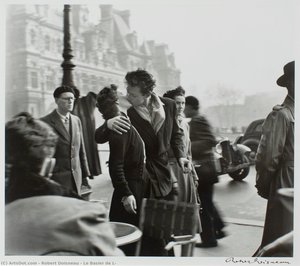
ロバート・ドゥイソネウの「愛情の瞬間を捉えたパリの風景」は単なる写真撮影を超え、戦後のパリ精神を体現しています。1950年に撮影されたこのアイコン的な作品は、市庁舎の階段でキスをする若いカップルを描き、柔らかい光がシーン全体に神秘的な雰囲気を与えています。この作品はフランスのロバート・ドゥイソネウによって制作され、ストリートフォトグラフィーというジャンルを代表する傑作として知られています。
ドゥイソネウは、戦後の社会変化の中で芸術家としての活動を開始しました。彼は人間の経験と感情を真実かつ共感的に表現することを目的としたドキュメンタリー写真の分野で重要な役割を果たしました。彼の作品は人間主義的なリアリズムという動きに影響を受け、日常生活や日常的な体験を捉える手段としてドキュメンタリー写真が採用されました。
構成と視覚的要素
この作品の中心となるのは市庁舎の階段でキスをする若いカップルです。カップルの位置はフレームの中でわずかにオフセットされており、市庁舎の広大なファサードと複数の窓を持つ建築物が背景として機能しています。階段が市庁舎に向かって斜めに伸びており、視線を上に引き込む線となり、構図にダイナミズムを与えています。写真家の視点は少し低く設定され、市庁舎の高さと壮大さを強調しています。
特に注目すべきは、ドゥイソネウが採用した技術的な手法です。彼は遅いシャッター速度を使用し、「動きのある効果」と呼ばれるテクニックを駆使しました。この手法により、背景にいる人物は光のストライプのように動きを捉え、イメージに immediacy と美しさの感覚を高めています。
色彩とテクスチャ
「愛情の瞬間を捉えたパリの風景」はモノクロで構成されており、深い黒から明るい白まで幅広いグレーの色調を使用しています。この色の範囲は光と影の変化を示唆しており、写真全体に微妙なトーンを設定しています。市庁舎の石階段は滑らかな表面を持ち、カップルの衣服は柔らかいテクスチャを持っています。これらの要素が組み合わさり、作品に深みと触覚的な興味を加えるとともに、見る人に感動を呼び起こします。
歴史的背景と芸術スタイル
ドゥイソネウの作品は、第二次世界大戦後のフランス社会における重要な変化の中で制作されました。彼は人間主義的なリアリズムという動きに影響を受けました。この動きは人間の主題を正直かつ共感的に描写することを目的とし、特に疎外されたコミュニティに焦点を当てています。ドゥイソネウのスタイルはストリートフォトグラフィーでありながら芸術的な要素を含んでいます。
象徴性と感情的インパクト
"愛情の瞬間を捉えたパリの風景" は愛、親密さ、そして脆弱さを象徴しています。カップルのキスは都市生活の中でつながりを表現しており、孤独の中で人間の関係が生き残ることを思い出させる感動的なメッセージです。ドゥイソネウは動きのある効果を使って時間と経験の儚さを強調し、見る人に美しさを見出すための招待をしています。
遺産と影響
この作品はパリの魅力とロマンチックな理想主義の象徴となっています。「愛情の瞬間を捉えたパリの風景」は現代美術における重要な作品であり続け、ドゥイソネウが日常的なシーンを忘れられないイメージに変える能力を証明しています。その永続的な人気は芸術家としての彼のビジョンと人間の感情を捉える能力を反映しています。
よくあるご質問
私の部屋には、"Les amoureux de l" のどのプリントサイズが適していますか?
Robert Doisneau作「Les amoureux de l」 におすすめの組み合わせ:リビングルーム に飾る Large サイズのプリント。
Robert Doisneau作「Les amoureux de l」の明るさはどのように感じられますか?
全体として、「Les amoureux de l」の明るさはbalancedと記録されています。知覚的な明るさとは、作品がどの程度明るく、あるいは暗く感じられるかを表すものです。
Robert Doisneau作「Les amoureux de l」は、どの芸術運動、およびどの時代に位置づけられますか?
「Les amoureux de l」はDocumentary Photographyの様式に属しており、その作者はModernの時代に活動していました。
アーティストについて
A Parisian Chronicler: The Life and Legacy of Robert Doisneau
Robert Doisneau, born in Gentilly, France, in 1912, wasn’t merely a photographer; he was a visual poet of the streets, a chronicler of everyday life who captured the heart and soul of post-war Paris with an unparalleled blend of humanism, irony, and playful observation. His journey began amidst personal hardship – orphaned at a young age, raised by an unloving aunt – yet it blossomed into a career that celebrated the resilience and charm of the human spirit. Initially drawn to the technical arts, Doisneau trained in engraving and lithography at the École Estienne, skills that would later inform his compositional eye. However, it was the allure of the streets, the spontaneous narratives unfolding before him, that truly ignited his artistic passion. He began tentatively, reportedly photographing cobblestones to overcome initial shyness, gradually building confidence to capture the lives of children and adults in their natural environment.From Advertising to Artistic Vision
Doisneau’s early career was a pragmatic blend of necessity and opportunity. He navigated the world of advertising, working first as a draughtsman at Atelier Ullmann and later as a photographer for Renault. While these roles provided financial stability, they also fueled his growing interest in people and their interactions. His time at Renault, though ultimately cut short by his habitual tardiness, proved formative, exposing him to the possibilities of photography beyond mere commercial application. The late 1930s saw him join the Rapho photographic agency, a pivotal moment that allowed him to pursue street photography more seriously. This period coincided with the looming shadow of World War II, and Doisneau’s life took on another layer of complexity as he served in the French army and actively participated in the Resistance, utilizing his skills to forge documents for those fleeing persecution. It was a time of immense risk and moral responsibility, shaping his commitment to documenting the lives of ordinary people with dignity and respect.The Humanist Lens: Style and Influences
Doisneau’s photographic style is instantly recognizable – a masterful blend of candid observation, carefully composed framing, and a gentle, often ironic, perspective. He wasn't interested in grand narratives or dramatic events; instead, he found beauty and meaning in the mundane, the fleeting moments of everyday life. Influenced by masters like André Kertész, Eugène Atget, and Henri Cartier-Bresson, Doisneau developed his own unique voice, one that prioritized human connection over technical perfection. He possessed an extraordinary ability to anticipate and capture decisive moments, often with a touch of humor or whimsy. His work frequently features amusing juxtapositions, contrasting social classes, and eccentric characters, all set against the backdrop of bustling Parisian streets and cafes. Le Baiser de l'Hôtel de Ville (The Kiss by the Town Hall), his most iconic image from 1950, perfectly encapsulates this approach – a spontaneous moment of intimacy amidst the chaos of city life, an enduring symbol of love and freedom. He famously stated, “The marvels of daily life are so exciting; no movie director can arrange the unexpected that you find in the street.”A Legacy of Empathy and Observation
Throughout his career, Doisneau consistently championed the overlooked and marginalized. He had a particular fondness for children, portraying their play with seriousness and respect, recognizing their inherent dignity and freedom from adult constraints. His photographs offer a poignant glimpse into a post-war Paris rebuilding itself, grappling with social change, yet retaining its unique charm and spirit. While he briefly experimented with fashion photography for Vogue, his heart remained on the streets, capturing the authentic pulse of Parisian life. Despite receiving an invitation to join Magnum Photos from Henri Cartier-Bresson, Doisneau chose to remain with Rapho, valuing the agency’s independence and allowing him greater creative freedom. He was appointed a Chevalier (Knight) of the Legion of Honour in 1984, a testament to his significant contribution to French culture. Robert Doisneau passed away in 1994, leaving behind a vast body of work that continues to inspire and captivate audiences worldwide. His photographs are not simply records of a time and place; they are enduring celebrations of the human condition, reminding us to find beauty and meaning in the everyday moments that shape our lives.
Robert Doisneau
1922 - 1994 , France
アーティスト情報
- Full Name: Robert Doisneau
- Nationality: French
- Date Of Birth: 1922
- Date Of Death: 1994
- Place Of Birth: Gennevilliers, France
- Notable Artworks: ["Le Baiser de l'hôtel de ville"]
- Artistic Movement Or Style: Humanist photography
- Artists Who Influenced This Artist:
- André Kertész
- Eugène Atget
- Henri Cartier-Bresson
関連記事
Shadow & Soul: Why Black & White Photography Remains the Ultimate Power Move in Modern Art
Discover why black & white photography remains a powerful force in contemporary art. Explore the impact of light, shadow, and texture through a visual journey of monochrome mastery and learn how to elevate your space with timeless grayscale aesthetics.
Timeless Shadows: The Artistry, History, and Emotional Resonance of Black and White Photography
Explore the profound artistry of black and white photography. From historical mastery to the interplay of light and shadow, discover how monochrome captures timeless emotion and form through a sophisticated lens of art history.

Monochrome Visions: Exploring the Aesthetic & Historical Significance of Black & White Photography
Explore the rich history & artistic power of black and white photography. From early techniques to iconic masters like Ansel Adams, discover why monochrome continues to captivate art lovers today. Expert insights for collectors.
Beyond Color: The Timeless Power and Artistry of Black and White Photography
Explore the profound artistry of black and white photography. From the chemistry of gelatin silver to the chiaroscuro of the Old Masters, discover how monochrome captures the eternal essence of light, form, and emotion for the discerning art collector.

White on Canvas: 10 Masterpieces & Timeless Elegance for Your Home Decor
Explore 10 iconic white paintings by Monet, Whistler & Rothko! Discover the stories behind these serene masterpieces and their impact on art history. Find museum-quality reproductions for your home decor at .