油彩画を購入
 Rythmの詳細







































 いずれかの辺が105 cm(約41インチ)を超えるアートワークまたは複製画の場合、フレームは分解されたキットの状態でお届けいたします。この方法は、輸送中の破損を防ぎ、安全に配送するために採用しております。


The Composition of Form and Color
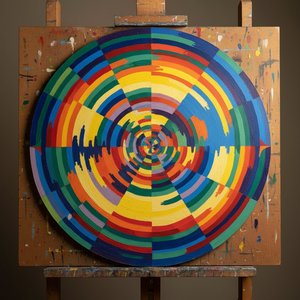
The painting Rythm, dated 1939, presents a central circular structure composed of intersecting geometric shapes and varied color segments. This primary circle is divided into multiple sections, each containing distinct patterns and internal designs. Smaller circles are nested within the larger circular framework, creating a layered effect of concentricity. Two additional circles appear in the periphery: one in the upper right corner and another in the lower left corner. The arrangement of these shapes suggests a spiral or a swirling motion. The surface is characterized by a variety of hues that interact through their proximity, creating a sense of movement across the canvas.
The technique relies on the application of color to define form rather than using line to outline recognizable objects. The artist utilizes the principles of Orphism, focusing on the interaction of light and chromatic intensity. The shapes are not static; they are organized to create a visual rhythm through the interplay of curves and counter-curves. This method uses the physical action of looking to activate the vision, as the eye moves between the contrasting colors and the varying thicknesses of the circular discs.
Historical Context and Artistic Intent
Created in 1939, this work belongs to a period when the artist had moved toward a more radical, non-objective form of abstraction. This phase of production followed a return to the circular forms that characterized earlier explorations of harmony. The composition reflects a departure from figurative subjects, focusing instead on the expressive potential of color alone. The organization of these shapes and their spatial relationships determine the visual tempo of the piece.
The work is situated within the School of Paris movement. It reflects a theoretical interest in how color functions as an active force capable of shaping perception. By utilizing contrasting complementary colors, such as red and green or blue and orange, the painting creates a synchromic effect. This approach seeks to move beyond the representation of the physical world, aiming instead to establish a direct connection between the viewer's eye and the agitation of light and color.
Q&A
Rythmは手描きですか、それともプリントですか?
手描きによる制作:熟練した画家が、リネンキャンバスに油彩でRythmを模写します。
Rythmのサイズはどれを選べばよいですか?
サイズは30.2 x 33.2 cm (¥31567)から218.9 x 240.7 cm (¥302251)まで展開しております。こちらのページ内の表に、主な工程とそれぞれの価格を記載しています。
配送にはどのくらいの時間がかかりますか?
配送には4〜5週間を要し、世界中どこでも速達便にて無料でお届けいたします。また、本ページではお急ぎの方向けの特急制作オプションもご用意しております。商品は、理由を問わず100日以内であれば全額返金での返品が可能です。
Rythmの原画はどこにありますか?
作品のオリジナルは、パリにあるパリ市立近代美術館の所蔵です。
ロベール・ドローネーはRythmの制作にどのような画材(メディア)を使用しましたか?
Oil On Canvas
 設置イメージを表示

 シェアする
 シェアする
 詳細を見る
 解説シート


 ダウンロード
 似ている作品
 X線調査
 スライドショーを表示
 Q&A

 統計情報