 設置イメージを表示
 シェアする
シェアする シェアする
シェアする
 詳細を見る
詳細を見る ガイドを表示

 ダウンロード
 似ている作品
 X線調査
X線調査 スライドショーを表示
 Q&A
Q&A 統計情報
統計情報Gargantuan Crawler

 詳細を表示
詳細を表示
このページに掲載されている作品は著作権法によって保護されており、当社の許可なく同一の複製物を制作または販売することは法律で禁じられています。この保護は、以下のような国際条約に基づき執行されます。 ベルヌ条約 および、以下の条項に定められたものを含む各国の法律により、 米国著作権法 第17編。
この手法は、著作権で保護された作品の複製や複写を伴わないため、著作権法に完全に準拠しています。これは単なる模倣ではなく、創造的な再解釈です。元の作品からインスピレーションを受けつつも、それとは異なる、全く新しい絵画を生み出すものです。
ジークレー/アートプリント
スピーディーな制作と多彩な仕上げオプションが魅力の、ミュージアムクオリティなジークレー・キャンバスプリント。 ( 手描き複製画を注文する デジタル画像販売へ切り替え)




































作品のオリジナル比率に合わせた、当店の規定サイズからお選びください。

額縁や壁のスペースに合わせて、ご希望の幅と高さを入力してください。プリントはカットすることは可能ですが、元の画像より大きくすることはできないため、異なる比率のサイズを選択された場合は、画像の一部が欠けることになります。印刷を開始する前に、内容を確認していただくためのデジタルモックアップをお送りいたします。このページに表示されている画像は、実際のカット後の状態を示すものではありません。実際の仕上がりはモックアップにてご確認ください。


 ガラスオプションは、110cm未満のサイズでのみご利用いただけます。

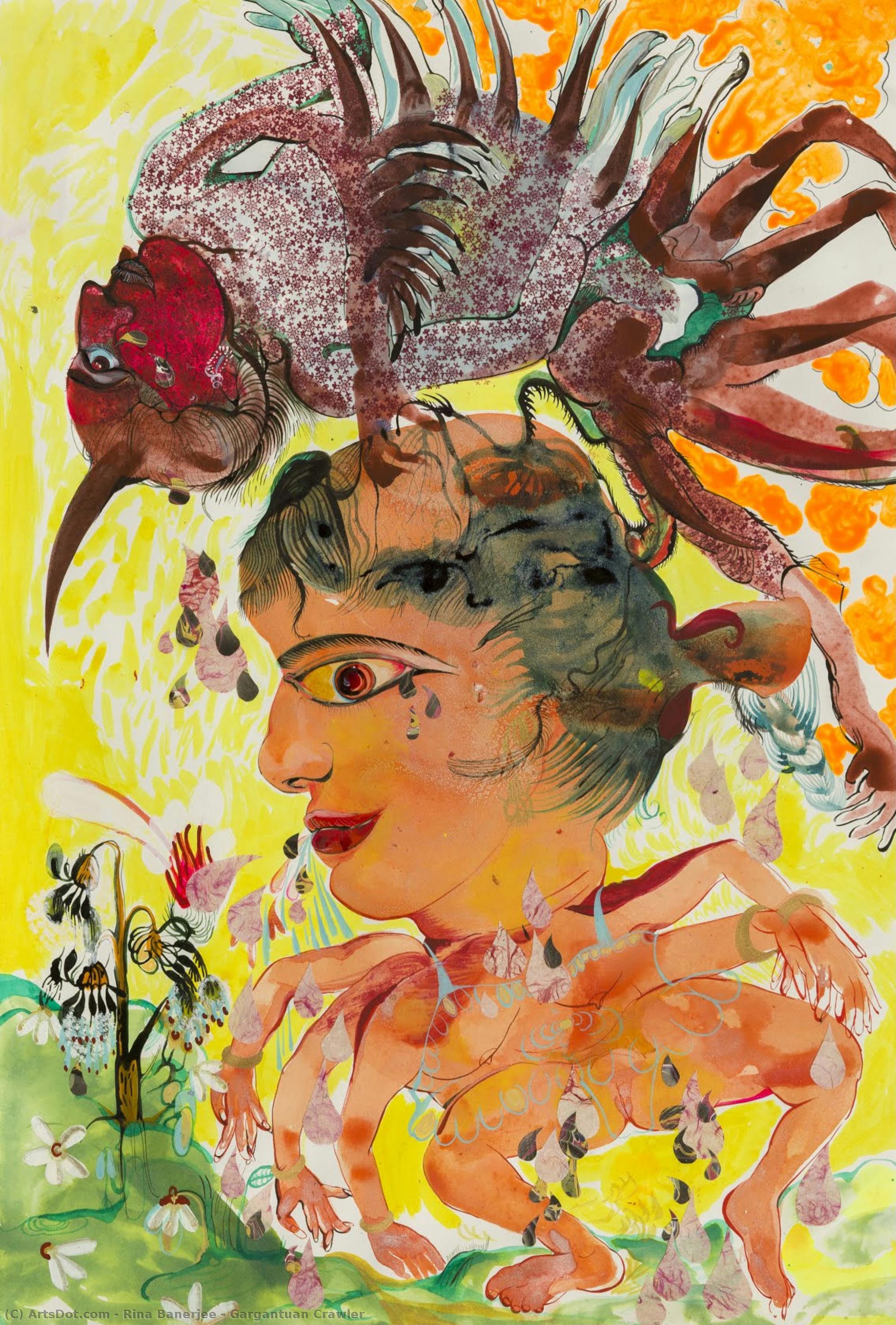
Gargantuan Crawler
ジークレー/アートプリント
複製画サイズ一覧
-


合計金額
¥ 12795
作家プロフィール
The Alchemist of Assemblage: The Transnational Vision of Rina Banerjee
In the sprawling, sensory-rich landscapes of contemporary sculpture, few voices resonate with as much intricate complexity as that of Rina Banerjee. Born in 1963 in the vibrant, historic city of Kolkata, India, Banerjee’s life and art are defined by a profound sense of movement and the beautiful, often turbulent, intersections of disparate worlds. Her journey—stretching from the cultural heart of Bengal to the cosmopolitan energy of London and eventually to New York City—has gifted her with a unique perspective on what it means to exist within the post-colonial diaspora. This biographical tapestry is not merely a personal history but the very foundation of an artistic practice that seeks to map the splintered experiences of identity, migration, and memory.
Before she became a master of sculptural assemblage, Banerjee’s intellectual path was marked by a rigorous scientific curiosity; she earned a degree in Polymer Engineering and worked as a research chemist. This background in the structural and the molecular perhaps informs the meticulous way she deconstructs and reconstructs her materials. Her formal artistic training at the College of Santa Fe and later at the Pratt Institute provided the technical scaffolding for her burgeoning vision, but it was her MFA from Yale University that truly refined her ability to weave complex narratives through medium and form. In her hands, the act of creation becomes a form of alchemy, where the discarded and the precious are fused into something entirely new.
A Material Language of Memory and Displacement
To encounter a work by Rina Banerjee is to enter a dreamscape where the boundaries between the organic and the manufactured, the ancient and the contemporary, begin to dissolve. Her primary method—assemblage—is far more than a technical choice; it is a conceptual necessity. She gathers a vast, eclectic array of materials: textiles, feathers, beads, epoxy horns, glass bottles, and antique porcelain dolls. By juxtaposing mass-produced trinkets from the tourist trade with rare ethnographic specimens and colonial artifacts, she creates a tension that mirrors the friction of globalized commerce and historical power dynamics.
Her sculptures are often described as hyper-ornamented and lushly seductive, yet beneath this surface of beauty lies a deeper, more unsettling exploration of trauma and transformation. Through her use of layered fabrics and found objects, she evokes the physical and emotional residue of colonialism. Her work does not merely represent migration; it embodies the very sensation of being "disrobed, torn, or ripped by wind," reflecting the precariousness of the expatriated experience. In her paintings and drawings, this theme continues through chimerical landscapes where female figures float in states of metamorphosis, often blending with the features of birds or beasts to suggest a fluid, ever-changing sense of self.
Global Recognition and Artistic Legacy
The significance of Banerjee’s contribution to contemporary art is reflected in her monumental presence on the international stage. Her career has been marked by prestigious exhibitions that have brought her complex narratives to the world's most esteemed institutions. Notable achievements include:
- Major Retrospectives: Her mid-career retrospective at the Pennsylvania Academy of the Fine Arts (PAFA), which traveled to the Frist Art Museum in Nashville and the San Jose Museum of Art, solidified her status as a leading figure in contemporary sculpture.
- Biennale Participation: Her inclusion in the 55th and 57th Venice Biennales placed her work at the epicenter of global art discourse, showcasing her ability to engage with universal themes of climate change, femininity, and identity.
- Institutional Presence: Her works are held and exhibited in premier collections including the Centre Pompidou in Paris, the Whitney Museum of American Art, and the Metropolitan Museum of Art in New York.
Ultimately, Rina Banerjee’s legacy lies in her ability to reject the hierarchies of material and culture. By treating a cheap piece of plastic with the same reverence as an antique textile, she challenges the viewer to reconsider what we value and how we remember. Her art serves as a vital bridge between East and West, creating a language that is both deeply personal and profoundly universal—a summary of a world that is constantly being unmade and remade.

Rina Banerjee
1963 - , India
プロフィール概要
- Artistic Movement Or Style: Mixed media sculpture
- Artists Who Influenced This Artist:
- Louise Bourgeois
- Marcel Duchamp
- Date Of Birth: 1963
- Full Name: Rina Banerjee
- Nationality: Indian-American
- Notable Artworks:
- Make me a summary of the world
- Disrobed, torn, ripped by wind
- Place Of Birth: Kolkata, India