プレビュー
プレビュー
 シェアする
シェアする シェアする
シェアする
 詳細を見る
詳細を見る ガイド
ガイド

 ダウンロード
 似ている作品
 X線調査
X線調査 スライドショー
 統計情報
統計情報The glass key
 Acrylic On Canvas
- WallArt
- Surrealism
 1959
1959 162.0 x 129.0 cm
 詳細を見る
詳細を見る
手描き油彩複製画
当社のアーティストが、お客様のご希望のサイズと額縁に合わせて、キャンバスに手描きで制作する油彩画です。 ( プリント版に切り替え デジタル画像販売へ切り替え)




P118B $10

P118H $10

P118W $10

P438Z $10

P508JH $12

P508YH $12

P805H $10

P805Z $10

P919BZ $10

P919G $10

P919XJ $10

P959ZH $10

P968JZ $12

W106C $8

W218G $10

W218JH $8

W218Y $10

W307PJ $10

W316G $10

W316PJ $8

W316Y $10

W398PJ $8

W4111J $10

W500HY $15

W500JH $15

W692G $12

W849H $8

W940BG $15

W953PJ $8




作品のオリジナル比率に合わせた、当店の規定サイズからお選びください。

特定のフレームやスペースに合わせて、ご希望のサイズをご入力いただけます。選択されたサイズが元の画像の比率と異なる場合、アートワークをトリミングするか、手描きで要素を追加して絵画を拡張いたします。デジタルモックアップ を制作し、制作開始前にご確認(承認)をいただきます。
画面上のプレビューは、実際のトリミングや拡張を正確に反映しているものではありません。最終的な構図は、モックアップによってのみ正確にご確認いただけます。
カスタムサイズもご利用いただけますが、元の比率を維持するためには、あらかじめ用意されたリストからサイズを選択することをお勧めいたします。
ご注文後、OriginalUniqueArt.com チームより詳細な指示をお送りするとともに、仕上がりイメージ(モックアップ)をご提供いたします。


 ガラスオプションは、110cm未満のサイズでのみご利用いただけます。

The glass key
複製技法
複製画のサイズ
-


合計金額
$ 300
A Surrealist Enigma: Unpacking René Magritte’s “The Glass Key”
René Magritte's "The Glass Key," painted in 1959, isn’t merely a depiction of a mountain landscape; it’s an invitation to question the very nature of perception and representation – a cornerstone of the surrealist movement. This oil on canvas, now residing within The Menil Collection in Houston, Texas, presents a deceptively simple scene: a towering, almost monolithic mountain dominates the composition, punctuated by a large, smooth rock seemingly floating above its peak. Perched atop this improbable stone rests a solitary, gleaming glass key – an object utterly incongruous with its surroundings, yet undeniably central to the painting’s enigmatic power.
Magritte's work during this period—often referred to as his “Mature Period”—shifted away from the more overtly dreamlike imagery of his earlier surrealist collaborations and leaned into a quieter, more contemplative style. He was increasingly interested in exploring the relationship between language and image, and how our understanding of reality is shaped by the conventions we’ve learned to accept. "The Glass Key" exemplifies this fascination; it's not about shocking or unsettling the viewer with bizarre juxtapositions, but rather prompting a slow, deliberate consideration of what we *think* we see.
Symbolism and the Language of Objects
The symbolism within “The Glass Key” is layered and deliberately ambiguous. The mountain itself can be interpreted as representing the immutable, the solid, or perhaps even the unconscious – a grounding force against which the floating rock and key are set in stark contrast. The rock, suspended without visible means of support, embodies instability, uncertainty, and the potential for disruption. It’s a visual metaphor for ideas that defy easy explanation, concepts that hover just beyond our grasp.
Crucially, the glass key is the painting's focal point. Keys, traditionally symbols of access, knowledge, and secrets, are presented in an utterly unexpected context. The polished surface of the key reflects the light, drawing attention to its materiality and suggesting a potential for unlocking something – perhaps not a physical door, but rather a deeper understanding or a hidden truth. The fact that it’s glass further emphasizes this fragility and ephemerality; it's a key that seems destined to shatter, mirroring the precariousness of perception itself.
Technique and the Magritte Aesthetic
Magritte’s technique in “The Glass Key” is characterized by its meticulous realism. He employs smooth brushstrokes and precise detailing, creating an almost photographic quality despite the surreal subject matter. This careful rendering enhances the painting's unsettling effect – the more realistically it appears, the more jarring the incongruities become. The muted color palette—primarily blues, grays, and browns—contributes to a sense of stillness and detachment, further emphasizing the painting’s contemplative mood.
Interestingly, the title itself, “The Glass Key,” derives from Dashiell Hammett's 1930 novel of the same name. Magritte was drawn to the story's exploration of deception and hidden motives, mirroring his own interest in exposing the artifice underlying everyday reality. He wasn’t simply replicating a scene; he was translating a narrative into a visual language, inviting viewers to engage with both the image and the story it evokes.
A Timeless Reflection on Perception
“The Glass Key” remains a powerfully resonant work of art decades after its creation. It’s not a painting that offers easy answers; instead, it encourages us to question our assumptions about what is real and how we perceive the world around us. Its enduring appeal lies in its ability to tap into fundamental human anxieties—the fear of uncertainty, the desire for knowledge, and the awareness that reality itself may be more elusive than it seems. A high-quality reproduction captures the subtle nuances of Magritte’s masterful technique and invites viewers to lose themselves in this captivating surrealist landscape.
アーティストの略歴
ルネ・マグリット:日常に潜む謎と、現実を揺さぶる視覚的パラドックス
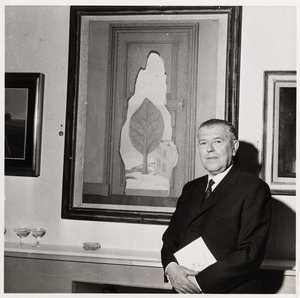
1898年11月21日、ベルギーのレシーヌで生まれたルネ・マグリットは、20世紀美術史における最も重要なシュルレアリストの一人として、その名を刻みました。幼少期のトラウマ的な出来事——母親の自殺——は、彼の芸術的探求に深く影を落とし、隠された現実、喪失感、そして見えないものへの執着というテーマを作品全体に織り込みました。マグリットの初期は印象派の影響を受けましたが、すぐに独自の視覚言語を確立し、日常的なオブジェクトを予期せぬ文脈で配置することで、私たちの認識と現実に対する固定観念を揺さぶるようになりました。
ジョルジュ・ド・キリコとの出会いとシュルレアリスムへの傾倒
マグリットの芸術的転換点となったのは、1922年にジョルジュ・ド・キリコの絵画『愛の歌』に出会った瞬間でした。ド・キリコの夢幻的な風景と不条理な組み合わせは、マグリットに新たな視覚的可能性を提示し、シュルレアリスムへの道を切り開きました。しかし、マグリットのシュルレアリスムは、他の多くの芸術家とは一線を画していました。彼は無意識からの自動的な表現や夢の解釈といった手法を避け、むしろ緻密な描写と論理的な構成を用いて、現実の矛盾を浮き彫りにすることに焦点を当てました。彼の作品は、まるで精密な写真のように見える一方で、その配置や組み合わせによって、見る者を混乱させ、思考を刺激するのです。
象徴主義と視覚的トリック:マグリット独自のシュルレアリスム
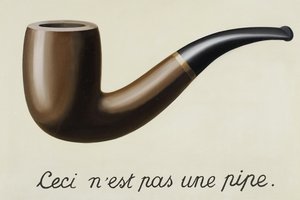
マグリットの作品における象徴性は、単なる装飾ではなく、彼の哲学的な探求の中心です。パイプが「これはパイプではありません」と宣言する『イメージの裏切り』は、最も有名な例の一つであり、表現と現実の関係について深く考えさせられます。また、『愛人たち』に見られるベールで顔を覆われた人物は、隠蔽、秘密、そして人間関係における不可解さを暗示しています。マグリットは、日常的なオブジェクトを組み合わせることで、視覚的トリックを生み出し、私たちの認識を欺きます。『時の停止』では、機関車が壁を突き破り、時間と空間の概念を混乱させます。これらの作品は、単なる奇抜なイメージではなく、現実の本質に対するマグリットの深い問いかけなのです。
晩年と遺産:シュルレアリスムを超えた影響力
マグリットは生涯を通じて、自身の芸術的探求を深め続けました。1960年代には、反復や錯覚、そして言語の力をテーマにした作品を発表し、その表現はますます洗練されていきました。1967年8月15日、マグリットは68歳でこの世を去りましたが、彼の遺産は美術界に深く刻まれています。ポップアート、ミニマリズム、そしてコンセプチュアルアートなど、20世紀の様々な芸術運動に影響を与え、現代においても多くのアーティストにインスピレーションを与え続けています。現在では、ブリュッセルの王立美術館内にマグリット博物館が設立され、彼の作品を包括的に展示しています。ルネ・マグリットは、日常の中に潜む謎を解き明かし、現実の境界線を揺さぶる視覚的パラドックスを通して、私たちに新たな視点を与え続けているのです。
主要な作品
- イメージの裏切り (Ceci n'est pas une pipe): 表現と現実の関係を問いかける象徴的な作品。
- 愛人たち (Les Amants): 隠蔽、秘密、そして人間関係における不可解さを暗示する作品。
- 時の停止 (Time Transfixed): 時間と空間の概念を混乱させる視覚的トリックが特徴的な作品。
- 人間の状態 (The Human Condition): 表現と現実の境界線を曖昧にする作品。
マグリット
1898 - 1967 , ベルギー
基本情報
- Artistic Movement Or Style: Surrealism
- Artists Who Influenced This Artist: ['Giorgio de Chirico']
- Date Of Birth: November 21, 1898
- Date Of Death: August 15, 1967
- Full Name: René François Ghislain Magritte
- Nationality: Belgian
- Notable Artworks:
- Les Amants
- The Treachery of Images
- Time Transfixed
- Place Of Birth: Lessines, Belgium
関連記事

Oil on Canvas: A Historical & Technical Exploration of a Timeless Artistic Medium
Explore the rich history & enduring techniques of oil painting on canvas. Discover the science behind its longevity, conservation practices, and contemporary relevance. Expert insights for art enthusiasts.
The Treachery of Images: Decoding René Magritte’s Surrealist Philosophy and the Paradox of Representation
Explore the profound mystery of René Magritte’s 'The Treachery of Images.' Dive into an expert analysis of his Surrealist philosophy, the paradox of representation, and how he challenged reality through the interplay of language and visual perception.

The Enduring Power of Painting: A Historical & Contemporary Exploration of Form and Emotion
Explore the rich history & enduring techniques of oil painting with OriginalUniqueArt. Discover masterpieces, learn about art collecting, and find authentic handmade reproductions crafted by skilled artists.

The Enduring Legacy of Oil on Canvas: Technique, History & Aesthetic Impact
Explore the rich history & techniques of oil painting – from Renaissance masters to Impressionism. Discover pigments, layering methods, and why this timeless medium endures. Expert insights for artists & art enthusiasts.

油彩のキャンバス:技法、歴史、そして現代の実践 - 古典美術愛好家へ
油彩の技法、歴史、巨匠たちの秘密を徹底解説。古典美術愛好家向けに、初期フランドル絵画から現代の実践まで深く掘り下げます。OriginalUniqueArtで高品質な複製画やカスタムオーダーも承ります。