

 設置イメージを確認
 送る
送る シェア
シェア
 詳細情報
詳細情報 ガイドを表示

 画像をダウンロード
 似ている作品
 X線調査
X線調査 スライドショー
 統計情報
統計情報風景」
 キャンバスにアクリル絵具
- ウォールアート
- Catalan Landscape Painting
 1875
1875 143.0 x 107.0 cm
 Vil·la Casals-Museu Pau Casals
 続きを読む
続きを読む
ジークレー/アートプリント
スピーディーな制作と多彩な仕上げオプションが魅力の、ミュージアムクオリティなジークレー・キャンバスプリント。 ( 手描きの複製画を注文する デジタル画像販売へ切り替え)




P118B $10

P118H $10

P118W $10

P438Z $10

P508JH $12

P508YH $12

P805H $10

P805Z $10

P919BZ $10

P919G $10

P919XJ $10

P959ZH $10

P968JZ $12

W106C $8

W218G $10

W218JH $8

W218Y $10

W307PJ $10

W316G $10

W316PJ $8

W316Y $10

W398PJ $8

W4111J $10

W500HY $15

W500JH $15

W692G $12

W849H $8

W940BG $15

W953PJ $8




作品のオリジナル比率に合わせた、当店の規定サイズからお選びください。

特定のフレームやスペースに合わせて、ご自身でサイズを指定することも可能です。選択されたサイズが元の画像の比率と一致しない場合、作品をトリミングするか、鏡面反射または単色での塗りつぶしによって画像を拡張いたします。制作を開始する前に、ご確認用のデジタルモックアップをお送りいたします。
画面上のプレビューには、実際のトリミングや拡張は反映されませんのでご注意ください。最終的な構図を正確に確認できるのは、モックアップのみとなります。
カスタムサイズも承っておりますが、元の比率を維持するためには、あらかじめ用意されたリストからサイズを選択することをお勧めいたします。


 ガラスオプションは、110cm未満のサイズでのみご利用いただけます。

風景」
ジークレー/アートプリント
複製画サイズ一覧
-


合計金額
$ 80
ラモンのマルティ・アルシナの風景画:イタリア統一への情熱と自然観察の美しさ
この作品は、イタリア統一を目指す時代の芸術家たちに影響を与えたスペイン生まれの画家、ラモンのマルティ・アルシナによる傑作です。1826年にローマで生まれた彼は、イタリア美術界における重要な人物として知られ、特に彼の風景画はイタリアの美しい自然を捉え、その情熱的な表現が特徴です。この作品は、イタリア統一への強い思いと、芸術家としての観察力に基づいた独自の美しさを凝縮した芸術的遺産と言えるでしょう。- 主題: この風景画は、イタリアの都市街並みを舞台にしています。人々が歩き回る様子が詳細に描かれ、傘が立ち並び、活気あふれる雰囲気を醸し出しています。さらに、犬が散歩をする姿も印象的です。
- スタイル: ラモンのマルティ・アルシナは、イタリアの風景画運動であるマチャイアオリ運動の影響を受けました。この運動は、絵画技法における革新を求めるものであり、特に「plein air」と呼ばれる屋外での制作手法が特徴です。彼はこの技法を用いて、自然の色合いと光を忠実に再現し、その美しい景観を表現しました。
- 技術: マルティ・アルシナは、イタリアのマチャイアオリ運動の代表的な画家の一人であり、彼の作品は鮮やかな色彩と大胆な筆致で知られています。彼は特に、光の移ろいを捉えるための技法に優れており、この風景画においてもその特徴がよく現れています。
- 歴史的背景: この作品が制作された1875年は、イタリア統一に向けた動きが活発だった時期です。マルティ・アルシナは、この時代の政治情勢と芸術家の役割を意識し、イタリアの美しい自然を愛護する姿勢を表現しました。
- 象徴性: この風景画における傘は、イタリア統一への希望と未来への明るさを象徴しています。また、犬は忠誠心と友情を表しており、この作品全体に温かい情感が込められています。
アーティストについて
Giovanni Costa (Nino Costa): A Pioneer of Italian Landscape and Patriotic Vision
Giovanni Costa, often known as Nino Costa, was a pivotal figure in 19th-century Italian art, particularly recognized for his evocative landscapes and fervent commitment to national unity. Born in Rome in 1826, he navigated the tumultuous political landscape of Italy’s unification while simultaneously developing a distinctive artistic voice rooted in observation and a deep connection to the Italian countryside. His life was inextricably linked with the burgeoning Macchiaioli movement, and his work served as both an inspiration and a reflection of the era's spirit of reform and patriotic fervor. Costa’s early artistic education laid the foundation for his future success. Introduced to Baron Vincenzo Camuccini at the tender age of twelve, he was encouraged to embrace *vedute* – views of urban landscapes – and to capture nature directly from observation. This emphasis on direct experience would become a hallmark of his style. Following Camuccini’s guidance, Costa spent time at the Jesuit college in Montefiascone, honing his drawing skills before returning to Rome and enrolling in the prestigious Accademia di San Luca. There, he studied under masters like Francesco Coghetti, Francesco Podesti, and Filippo Agricola, absorbing the classical techniques and compositional principles of the time. However, it was during the 1848 revolutions that Costa truly found his purpose – not merely as an artist, but as a participant in Italy’s struggle for independence. He enthusiastically joined Garibaldi's volunteer army, demonstrating his unwavering patriotism through direct action, famously leading the assault on the Porta Pia during Rome’s liberation in 1870. Costa’s artistic style evolved significantly throughout his career. Initially influenced by Neoclassicism, particularly through Camuccini’s teachings, he gradually embraced a more expressive and spontaneous approach. He became deeply involved with the Macchiaioli movement, a group of Florentine artists who rejected academic conventions in favor of capturing the fleeting effects of light and color on canvas. The Macchiaioli's technique of using *macchie* – dabs or strokes of pure pigment – to create an impressionistic effect resonated strongly with Costa’s own desire to convey immediacy and emotional resonance. His landscapes, often depicting rural scenes of shepherds and cattle grazing in the rolling hills of Tuscany and Umbria, are characterized by a remarkable sensitivity to light and atmosphere. He wasn't interested in idealized beauty; instead, he sought to capture the authentic essence of the Italian countryside, imbued with its history, traditions, and the spirit of its people. Works like *Donne sulla spiaggia di Porto d’Anzio* (1862) exemplify this shift – a seemingly simple depiction of women on a beach becomes a powerful meditation on light, color, and the beauty of everyday life. Costa's international recognition grew throughout the latter half of his career. He cultivated relationships with artists from England and America, including Elihu Vedder and Matthew Ridley Corbet, who were captivated by his unique approach to landscape painting. These connections exposed his work to a wider European audience and further solidified his reputation as a leading figure in Italian art. His paintings weren’t merely representations of scenery; they were imbued with a strong sense of national identity and a passionate belief in the potential of Italy. His dedication extended beyond the canvas, actively promoting artistic independence from outdated traditions and championing a return to direct observation of nature – principles that profoundly influenced subsequent generations of Italian artists. Costa’s legacy extends far beyond his individual paintings. He served as an important mentor and inspiration for many younger artists, particularly those associated with the Macchiaioli movement. His commitment to patriotic ideals and his willingness to engage in political action alongside his artistic pursuits cemented his place as a symbol of Italian unification and national pride. Giovanni Costa (Nino Costa) died in Rome in 1903, leaving behind a body of work that continues to captivate viewers with its beauty, sincerity, and profound connection to the heart of Italy.Costa’s Artistic Techniques and Influences
Costa's artistic development reveals a fascinating interplay between traditional training and innovative influences. His early exposure to Camuccini instilled in him a solid understanding of classical composition and *vedute*, but it was his engagement with the Macchiaioli that truly shaped his style. The Macchiaioli’s emphasis on capturing fleeting moments, using pure colors applied in small dabs or strokes (the *macchie*), profoundly impacted Costa's approach to landscape painting. He adopted this technique, not as a mere stylistic choice, but as a means of conveying the immediacy and emotional intensity of his observations. Furthermore, Costa’s time at the Accademia di San Luca exposed him to the works of masters like Coghetti, Podesti, and Agricola, who instilled in him a deep appreciation for anatomical accuracy and classical principles. However, he skillfully integrated these influences with his own unique vision, creating landscapes that were both technically proficient and emotionally resonant. His use of light and color was particularly noteworthy – he masterfully captured the subtle shifts of atmosphere and the interplay of shadows, imbuing his paintings with a sense of depth and realism. Beyond the Macchiaioli, Costa’s work also reflects the influence of Romanticism, particularly in its emphasis on dramatic landscapes and emotional intensity. However, unlike many Romantic painters, he avoided sentimentalizing nature or imposing moralistic narratives onto his scenes. Instead, he focused on capturing the beauty and power of the Italian countryside with a sense of detached observation and quiet reverence. His paintings are not simply depictions of scenery; they are invitations to contemplate the relationship between humanity and the natural world.- Neoclassicism: Early influence from Baron Vincenzo Camuccini.
- Macchiaioli Movement: Adoption of *macchie* technique for capturing fleeting light and color.
- Romanticism: Evident in dramatic landscapes and emotional intensity, but without sentimentality.
Costa’s Patriotic Engagement
Giovanni Costa's artistic career was inextricably linked to Italy’s struggle for unification. His fervent patriotism manifested not only through his subject matter – depicting scenes of rural life and the Italian landscape – but also through his active participation in political events. He joined Garibaldi’s volunteer army during the 1848 revolutions, demonstrating his commitment to national independence. His most significant act of patriotic engagement occurred during the assault on the Porta Pia in Rome in 1870, where he famously led the charge, symbolizing the triumph of Italian unity and the end of papal rule. This willingness to put himself at risk for the cause of Italy cemented his status as a national hero. His paintings became powerful symbols of patriotic fervor, inspiring others to embrace the ideals of unification and self-determination. Costa’s commitment extended beyond the battlefield; he actively promoted artistic independence from outdated traditions, advocating for a return to direct observation of nature – principles that aligned perfectly with Italy's burgeoning sense of national identity. His life serves as a testament to the intersection of art and politics in 19th-century Italy, demonstrating how artistic expression can be used to shape public opinion and advance political goals.
ramon marti alsina
1826 - 1894
アーティスト情報
- Artistic Movement Or Style: Landscape painting
- Artists Or Movements Influenced By This Artist: ['Macchiaioli']
- Artists Who Influenced This Artist: ['Vincenzo Camuccini']
- Date Of Birth: 15 Oct 1826
- Date Of Death: 31 Jan 1903
- Full Name: Giovanni Costa (Nino Costa)
- Nationality: Italian
- Notable Artworks: ["Donne sulla spiaggia di Porto d'Anzio"]
- Place Of Birth: Rome, Italy
関連記事
The Allure of Open Airs: Exploring Representations of Outdoors in Art History
Explore the rich history of outdoor painting! From Romantic landscapes to Impressionism's revolution, discover key artists, techniques & the enduring legacy of capturing light and nature in art. Learn more at OriginalUniqueArt.
Concrete Narratives: Exploring Urban Life in Modern & Contemporary Art
Explore the evolution of cityscape painting with OriginalUniqueArt. Discover key artists from Realism to contemporary movements & invest in timeless urban visions. Expert guidance, museum-quality reproductions.
Capturing Ephemeral Light: A Comprehensive Exploration of Plein Air Painting's History & Enduring Legacy
Explore the rich history of plein air painting, from its origins to Impressionism & beyond. Discover key artists, techniques, and the enduring legacy of capturing light in landscape art. Find museum-quality reproductions at OriginalUniqueArt.
Capturing Ephemeral Light: A Comprehensive Exploration of Plein Air Painting's History & Enduring Legacy
Explore the rich history of plein air painting, from its origins with Constable & Corot to Impressionism's revolution. Discover techniques, key artists, and the enduring legacy of capturing light outdoors. Learn more at OriginalUniqueArt.
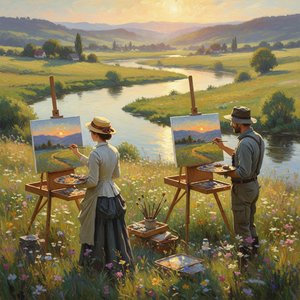
Capturing Ephemeral Light: Plein Air Painting from Impressionism to Today
Explore the history of plein air painting, from its origins with the Barbizon school to Impressionism's revolution & contemporary practice. Discover techniques, artists like Monet & Renoir, and find museum-quality reproductions at OriginalUniqueArt.
