
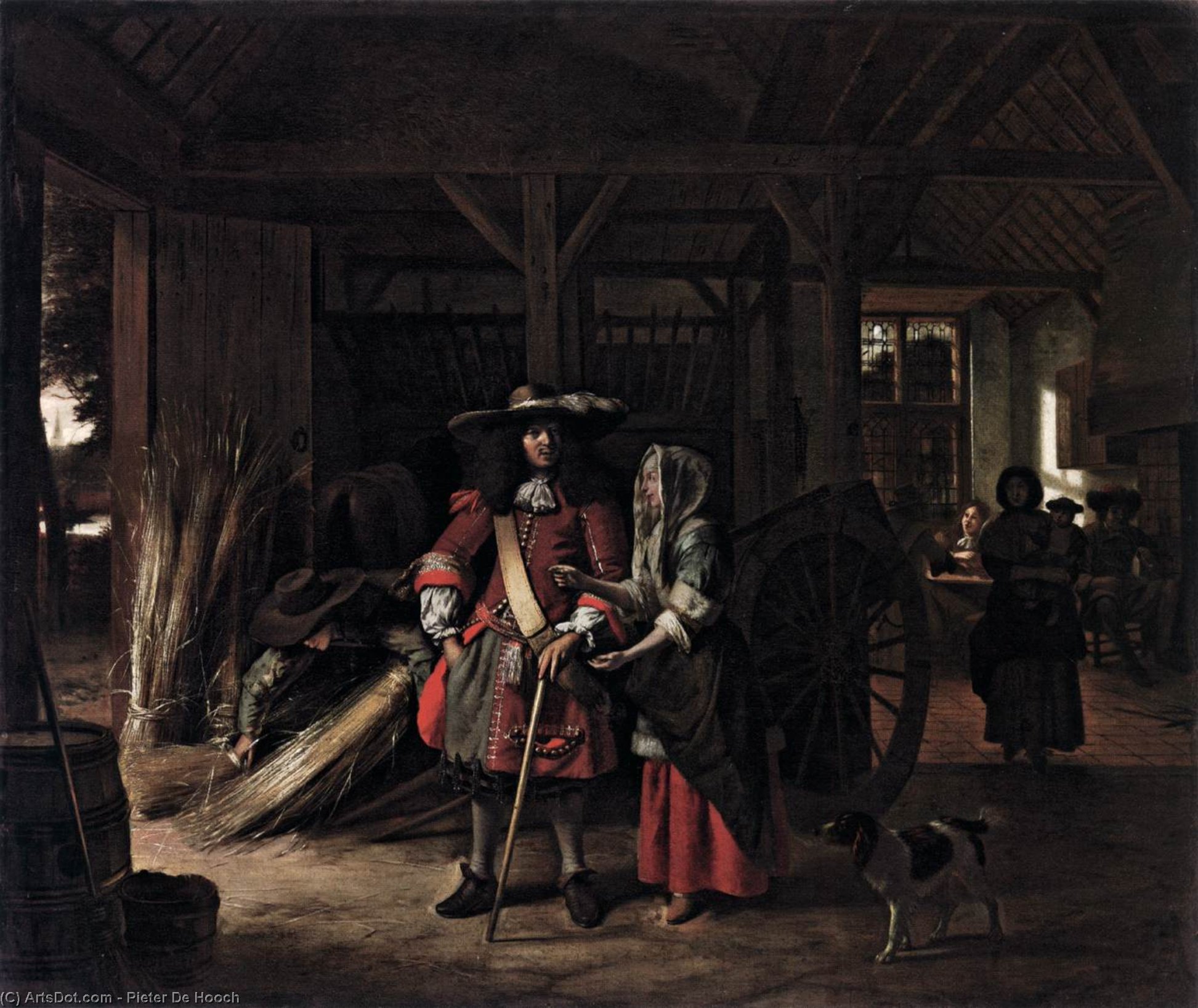
 プレビュー
プレビュー
 シェアする
シェアする シェアする
シェアする
 詳細を見る
詳細を見る

 ダウンロード
 似ている作品
 X線調査
X線調査 スライドショー
Paying the Hostess
 Oil On Canvas
- WallArt
- Dutch Golden Age
 1670
1670 95.0 x 111.0 cm
 メトロポリタン美術館
 詳細を見る
詳細を見る
ジークレー/アートプリント
迅速な制作と多彩な仕上げオプションを備えた、ミュージアムクオリティのジークレーまたはキャンバスプリント。 ( 手描きの絵画を購入 画像を購入)




































作品のオリジナル比率に合わせた、当店の規定サイズからお選びください。

特定のフレームやスペースに合わせて、ご自身でサイズを指定することも可能です。選択されたサイズが元の画像の比率と一致しない場合、作品をトリミングするか、鏡面反射または単色での塗りつぶしによって画像を拡張いたします。制作を開始する前に、ご確認用のデジタルモックアップをお送りいたします。
画面上のプレビューには、実際のトリミングや拡張は反映されませんのでご注意ください。最終的な構図を正確に確認できるのは、モックアップのみとなります。
カスタムサイズも承っておりますが、元の比率を維持するためには、あらかじめ用意されたリストからサイズを選択することをお勧めいたします。


 ガラスオプションは、110cm未満のサイズでのみご利用いただけます。

Paying the Hostess
ジークレー/アートプリント
複製画のサイズ
-


合計金額
$ 80
作品詳細説明
A Window Into Delft’s Commerce: Pieter de Hooch's “Paying the Hostess”
Delft, 1670 – Pieter de Hooch’s “Paying the Hostess,” housed in a private collection today, offers more than just a glimpse into the bustling port city of Delft during its golden age; it presents a meticulously crafted tableau that speaks volumes about social dynamics and artistic innovation. Painted circa 1658, this monumental canvas transcends mere depiction, immersing viewers in an atmosphere thick with observation and imbued with subtle symbolic resonance. The scene unfolds within a dimly lit warehouse or storage facility—a space deliberately chosen by De Hooch to convey both the physicality of Delft’s economic activity and the psychological complexities of human interaction. At its core is a wealthy gentleman and his wife seated upon a cart laden with goods, their presence dominating the composition. Around them move several laborers diligently unloading crates and transporting materials – figures rendered with remarkable realism, capturing not just physical postures but also expressions of quiet contemplation and purposeful action. This isn’t simply a record of trade; it's an exploration of how individuals navigate social hierarchies within a community striving for prosperity. De Hooch’s artistic style exemplifies the hallmark characteristics of Dutch Golden Age painting: painstaking detail combined with masterful use of light. Unlike many contemporaries who favored grand narratives and theatrical gestures, De Hooch opted for a restrained aesthetic focused on capturing the nuances of domestic life—a deliberate choice that aligns perfectly with the burgeoning interest in portraying everyday realities during this period. The artist’s technique is characterized by meticulous brushwork, utilizing oil paint on canvas to achieve luminous effects and subtle tonal variations. Notice particularly how light streams through an open doorway, illuminating the faces of the figures and casting dramatic shadows across the warehouse floor—a compositional device that elevates the scene beyond mere representation, inviting contemplation about solitude and connection. The color palette is deliberately muted – dominated by deep browns, reds, and blacks – reflecting not only the materiality of the setting but also a prevailing mood of solemnity and introspection. However, De Hooch skillfully employs highlights of ochre and crimson to draw attention to key elements within the composition, subtly emphasizing the dignity of the gentleman and his wife while simultaneously underscoring the industriousness of their companions. The geometric precision of the architectural framework—straight lines delineating the walls and beams—contrasts with the organic curves of the cart wheels and fabric folds, creating a dynamic interplay between structure and fluidity. Beyond its visual beauty, “Paying the Hostess” carries significant symbolic weight. The open doorway represents access to both physical space and spiritual contemplation – suggesting that even amidst the demands of commerce, there remains room for introspection and reflection. Furthermore, the positioning of the figures—seated prominently on the cart—underscores the importance of social status within Delft society. De Hooch’s masterful rendering captures not just a moment in time but also an enduring portrait of human experience – a testament to his ability to transform observation into artful storytelling. This painting continues to inspire interior designers seeking to evoke a sense of understated elegance and historical gravitas, reminding us that true beauty resides in the quiet contemplation of everyday life.アーティストの略歴
生い立ちと修行時代
ピーテル・デ・ホーホは、オランダ黄金時代を代表する巨匠の一人として、1629年12月20日、ネーデルラントのロッテルダムに生を受けました。煉瓦職人のヘンドリック・ヘンドリックスス・デ・ホーホと、助産師のアネット・ピータースの間に生まれた五人兄弟の長男です。彼の若き日の詳細については謎に包まれている部分も多いものの、ロッテルダム、デルフト、そしてアムステルダムといった都市で活動していたことが知られています。デ・ホーホの芸術的な研鑽は、風景画家ニコラス・ベルヘムのもと、ハールレムにてヤコブ・オハテルヴェルトと共に受けられました。この修行時代こそが、後に彼が代名詞とする、開かれた扉の向こうへと視線を誘うような、静謐な室内風景を描き出すための揺るぎない礎となったのです。芸術的スタイルと主題
デ・ホーホの作品を語る上で欠かせないのは、細部への徹底したこだわり、自然主義的な描写、そして光の魔法のような使い手であることです。彼の絵画はしばしば日常の営みを捉え、台頭しつつあった中産階抹階級の価値観や憧憬を映し出していました。その卓越したスタイルの象徴とも言えるのが、「デルフトの家の中庭」(1658年)です。この作品には、ありふれた日常の細かな機微を捉える彼の類まれな才能が凝縮されています。また、デ・ホーホの作品はエマニュエル・デ・ウィッテと主題や構図において共通点を持っていますが、人物とその間に流れる人間関係に焦点を当てる点において、彼は独自の地位を確立しています。その情熱は、「乳児に授乳する女」(1658年)や「膝に赤ん坊を乗せた女」(1658年)といった、家庭的な情景への深い洞察に満ちた作品群からも鮮明に見て取ることができます。代表作とその遺産
デ・ホーホの輝かしい業績の中でも、特に特筆すべき作品には以下のようなものがあります:- 「陽気な飲み手」(1650年頃)
- 「陽光差し込む部屋でのカード遊び」(1658年)
- 「少年のためにパンとバターを用意する女」(1661年)
美術館とコレクション
デ・ホーホの傑作は世界各地の美術館に収蔵されています。その中には、15世紀から20世紀に至るまでの膨大なヨーロッパ美術を誇るベルギーのアントワープ、王立美術館(Koninklijk Museum voor Schone Kunsten)も含まれています。ピーテル・デ・ホーホとその作品について、OriginalUniqueArtでさらに詳しく探索しましょう: [https://OriginalUniqueArt.com/@/pieter-de-hooch](https://OriginalUniqueArt.com/@/pieter-de-hooch) /ja/art/show/art-d3b4kt-ja/ (ベルギー王立美術館の至宝を体験する)
ピーテル・デ・ホーホ
1629 - 1694 , オランダ
基本情報
- Artistic Movement Or Style: デルフト派、オランダ黄金時代
- Artists Or Movements Influenced By This Artist: ['ヤン・フェルメール']
- Artists Who Influenced This Artist: ['ニコラス・ベルヘム']
- Date Of Birth: 1629年12月20日
- Full Name: ピーテル・ヘンドリックスス・デ・ホーホ
- Nationality: オランダ
- Notable Artworks:
- 空のグラス
- 手紙を読む女
- 陽光の差し込む部屋のカード遊びをする人々
- パンとバターを用意する女性
- Place Of Birth: オランダ、ロッテルダム
関連記事
Pieter de Hooch: Illuminating Dutch Domestic Life & Golden Age Charm
Explore the captivating world of Pieter de Hooch, a master of Dutch Golden Age painting. Discover his innovative use of light, intimate domestic scenes, and lasting influence on art history. Learn more at OriginalUniqueArt.

Golden Light & Dutch Skies: The Timeless Magic of Dutch Golden Age Landscapes
Discover the breathtaking beauty of Dutch Golden Age landscapes. Explore the mastery of light, chiaroscuro, and 17th-century realism through an expert art history lens, celebrating the enduring legacy of the Dutch Masters for discerning collectors and art lovers.

Demandes Commerciales
APS ofrece reproducciones de bellas artes y encargos personalizados desde 2004. Confían en nosotros corporaciones, hoteles y coleccionistas selectos para obras de arte de calidad museística, servicio discreto y soluciones artísticas completas. ¡Póngase en contacto con nosotros para obtener un presupuesto personalizado!

黄金世紀の巨匠たち:バロック絵画が彩る10選|OriginalUniqueArt
オランダ黄金時代の10大傑作を紐解く!レンブラント、フェルメール…バロック絵画の魅力と時代背景を深く探求。OriginalUniqueArtで、至高のアートコレクションと空間演出のヒントを見つけよう。高品質なアートプリントで、お部屋を華やかに。

Mastering Light & Shadow: A Journey Through the Dutch Golden Age's Luminous Legacy
Embark on a cultural journey through the Dutch Golden Age. Explore the masterful interplay of light and shadow in 17th-century masterpieces, from Rembrandt to Vermeer, and discover how this era of profound realism continues to inspire fine art collectors today.


