

 設置イメージを確認
 送る
送る シェア
シェア
 詳細情報
詳細情報 ガイドを表示

 画像をダウンロード
 似ている作品
 X線調査
X線調査 スライドショー
 統計情報
統計情報The Seamstress
 Acrylic On Canvas
- WallArt
- Dutch Golden Age
 1671
1671 26.0 x 20.0 cm
 エルミタージュ美術館
 続きを読む
続きを読む
手描き油彩複製画
当社のアーティストが、お客様のご希望のサイズと額縁に合わせて、キャンバスに手描きで制作する油彩画です。 ( プリント版に切り替え デジタル画像販売へ切り替え)




P118B ¥10

P118H ¥10

P118W ¥10

P438Z ¥10

P508JH ¥12

P508YH ¥12

P805H ¥10

P805Z ¥10

P919BZ ¥10

P919G ¥10

P919XJ ¥10

P959ZH ¥10

P968JZ ¥12

W106C ¥8

W218G ¥10

W218JH ¥8

W218Y ¥10

W307PJ ¥10

W316G ¥10

W316PJ ¥8

W316Y ¥10

W398PJ ¥8

W4111J ¥10

W500HY ¥15

W500JH ¥15

W692G ¥12

W849H ¥8

W940BG ¥15

W953PJ ¥8




作品のオリジナル比率に合わせた、当店の規定サイズからお選びください。

特定のフレームやスペースに合わせて、ご希望のサイズをご入力いただけます。選択されたサイズが元の画像の比率と異なる場合、アートワークをトリミングするか、手描きで要素を追加して絵画を拡張いたします。デジタルモックアップ を制作し、制作開始前にご確認(承認)をいただきます。
画面上のプレビューは、実際のトリミングや拡張を正確に反映しているものではありません。最終的な構図は、モックアップによってのみ正確にご確認いただけます。
カスタムサイズもご利用いただけますが、元の比率を維持するためには、あらかじめ用意されたリストからサイズを選択することをお勧めいたします。
ご注文後、OriginalUniqueArt.com チームより詳細な指示をお送りするとともに、仕上がりイメージ(モックアップ)をご提供いたします。


 ガラスオプションは、110cm未満のサイズでのみご利用いただけます。

The Seamstress
再現技法
複製画サイズ一覧
-


合計金額
¥ 46847
A Glimpse into Domesticity: Philips de Koninck’s “The Seamstress”
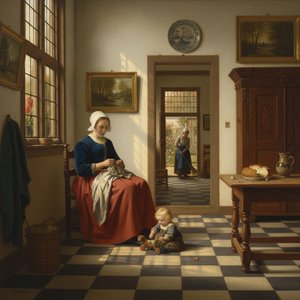
Philips de Koninck's "The Seamstress," painted in 1671, is more than just a portrait; it’s a carefully constructed tableau of Dutch life during the Golden Age. This intimate scene, measuring a modest 26 x 20 cm, offers a rare and compelling window into the daily existence of a woman engaged in her craft – a profession often overlooked in the grand narratives of European art history. De Koninck, a relatively enigmatic figure despite his prolific output, masterfully captures not just a likeness but also a palpable sense of quiet industry and understated dignity.
The painting immediately draws the eye to its subject: a woman seated before a table laden with tools – needles, thread spools, and a partially completed garment. Her posture is relaxed yet purposeful, her hands deftly manipulating fabric. The lighting, characteristic of de Koninck’s style, is dramatic and directional, casting deep shadows that emphasize the textures of the cloth and the folds of her garments. This chiaroscuro technique – a hallmark of Rembrandt's influence – imbues the scene with a sense of depth and realism, transforming a simple domestic activity into a moment of profound visual interest.
A Study in Light and Texture
De Koninck’s technical skill is evident in his meticulous rendering of detail. The fabric itself appears almost tactile, its folds and wrinkles rendered with astonishing precision. He employs a layering technique, building up the image through numerous thin glazes of paint, creating a luminous surface that seems to shimmer with reflected light. The artist's use of color is restrained yet effective; muted browns, grays, and creams dominate the palette, reflecting the practicality and simplicity of the subject’s world. However, subtle variations in tone – particularly in the highlights on the woman’s hands and clothing – add visual interest and draw the viewer’s attention to key elements within the composition.
Beyond the technical mastery, “The Seamstress” reveals a keen understanding of spatial relationships. The room itself is subtly suggested through architectural details – a chair positioned near the right side, another further back – creating a sense of depth and grounding the subject within her environment. The two books on the table, alongside the bowl, contribute to a feeling of domestic comfort and routine, hinting at a life centered around work and contemplation.
Historical Context and Symbolic Resonance
Painted during the Dutch Golden Age, “The Seamstress” reflects the burgeoning mercantile prosperity and social mobility of the era. While portraiture was traditionally reserved for the wealthy elite, artists like de Koninck increasingly catered to a broader clientele, depicting scenes of everyday life – including those of skilled tradeswomen. The seamstress herself represents a significant segment of Dutch society; women were often responsible for producing clothing for their families and selling it in local markets. Her presence in this painting is therefore not merely decorative but also serves as a subtle commentary on the economic realities of the time.
The inclusion of the books suggests an appreciation for learning and perhaps even a desire to improve her craft. The bowl, a symbol of abundance and nourishment, hints at the simple pleasures of domestic life. Together, these elements contribute to a nuanced portrayal of a woman’s role within her community – one that was both practical and dignified.
A Timeless Portrait of Quiet Strength
“The Seamstress” endures as a captivating example of Dutch Golden Age portraiture. It's not a grand, heroic depiction but rather a quietly intimate study of a woman engaged in her work. De Koninck’s masterful use of light and shadow, combined with his meticulous attention to detail, creates an image that is both visually stunning and emotionally resonant. It invites us to pause and consider the lives of ordinary people – those who often remain unseen but whose contributions shaped the fabric of society. Reproductions of this remarkable painting offer a beautiful addition to any collection, bringing a touch of Dutch history and artistic elegance into your home.
よくあるご質問
フィリップス・デ・コニンク作「The Seamstress」は、どのような空間に飾るのがおすすめですか?
フィリップス・デ・コニンク作「The Seamstress」にふさわしい空間はLiving Roomです。もちろん、お客様のインテリアに合わせて調整していただくことも可能です。
「The Seamstress」が制作されたとき、フィリップス・デ・コニンクは何歳でしたか?
フィリップス・デ・コニンクは、1671年に「The Seamstress」を制作した際、52歳でした。この年齢は、アーティストの誕生年である1619年から算出されています。
フィリップス・デ・コニンク作「The Seamstress」に関する統計情報はどこで確認できますか?
フィリップス・デ・コニンク作「The Seamstress」の統計情報ページでは、公開されている閲覧統計をご覧いただけます。この作品の月間閲覧数、アーティストのなかで最も閲覧されている作品との比較、そして訪問者の地域情報などが掲載されています。
フィリップス・デ・コニンク作「The Seamstress」の色調は、鮮やかですか、それとも落ち着いていますか?
フィリップス・デ・コニンク作「The Seamstress」の色調は、Mutedな彩度を持っています。彩度とは、色の鮮やかさや落ち着きの度合いを表すものです。
「The Seamstress」はいつ制作されましたか?
フィリップス・デ・コニンク作「The Seamstress」の制作年は1671年です。
実物のフィリップス・デ・コニンク作「The Seamstress」のサイズはどのくらいですか?
フィリップス・デ・コニンク作「The Seamstress」の記録されている寸法は26 x 20 cmです。複製画は、同じ比率を維持したまま他のサイズで注文することが可能です。
「The Seamstress」を手がけたアーティストは誰ですか?
「The Seamstress」を手がけたアーティストはフィリップス・デ・コニンクです。この作品はフィリップス・デ・コニンクの名でカタログに登録されています。
関連記事

ゴヤ傑作25選:スペインの魂を揺さぶる、深遠な芸術の世界 | OriginalUniqueArt
ゴヤ傑作25選:ロマン主義を代表するスペインの巨匠、フランシスコ・デ・ゴヤの世界へ。黒衣の女からマハまで、魂を揺さぶる絵画の物語と技法を紐解きます。OriginalUniqueArtで高品質なアートレプリカを見つけ、インテリアに深みと風格を。今すぐコレクションをご覧ください。
Pieter de Hooch: Illuminating Dutch Domestic Life & Golden Age Charm
Explore the captivating world of Pieter de Hooch, a master of Dutch Golden Age painting. Discover his innovative use of light, intimate domestic scenes, and lasting influence on art history. Learn more at OriginalUniqueArt.

黄金世紀の巨匠たち:バロック絵画が彩る10選|OriginalUniqueArt
オランダ黄金時代の10大傑作を紐解く!レンブラント、フェルメール…バロック絵画の魅力と時代背景を深く探求。OriginalUniqueArtで、至高のアートコレクションと空間演出のヒントを見つけよう。高品質なアートプリントで、お部屋を華やかに。

Willem van de Velde the Elder: Master of Maritime Painting & Chronicler of the Dutch Golden Age
Discover the captivating maritime paintings of Willem van de Velde the Elder, a master chronicler of the Dutch Golden Age. Explore his unparalleled realism and lasting influence on naval art history.

Golden Light & Dutch Skies: The Timeless Magic of Dutch Golden Age Landscapes
Discover the breathtaking beauty of Dutch Golden Age landscapes. Explore the mastery of light, chiaroscuro, and 17th-century realism through an expert art history lens, celebrating the enduring legacy of the Dutch Masters for discerning collectors and art lovers.