

 プレビュー
プレビュー
 プリントを購入
 シェアする
シェアする シェアする
シェアする
 詳細を見る
詳細を見る

 ダウンロード
 似ている作品
 X線調査
X線調査 スライドショー
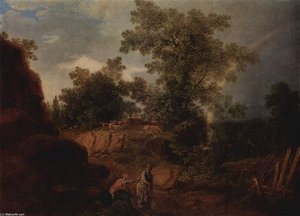
Landschaft Mit Regenbogen

 詳細を見る
詳細を見る




































作品のオリジナル比率に合わせた、当店の規定サイズからお選びください。

特定のフレームやスペースに合わせて、ご希望のサイズをご入力いただけます。選択されたサイズが元の画像の比率と異なる場合、アートワークをトリミングするか、手描きで要素を追加して絵画を拡張いたします。デジタルモックアップ を制作し、制作開始前にご確認(承認)をいただきます。
画面上のプレビューは、実際のトリミングや拡張を正確に反映しているものではありません。最終的な構図は、モックアップによってのみ正確にご確認いただけます。
カスタムサイズもご利用いただけますが、元の比率を維持するためには、あらかじめ用意されたリストからサイズを選択することをお勧めいたします。
ご注文後、OriginalUniqueArt.com チームより詳細な指示をお送りするとともに、仕上がりイメージ(モックアップ)をご提供いたします。


 ガラスオプションは、110cm未満のサイズでのみご利用いただけます。

Landschaft Mit Regenbogen
複製技法
複製画のサイズ
-


合計金額
$ 325
アーティストの略歴
The Master of Light and Shadow: The Life of Philipp Hieronymus Brinckmann
In the heart of the mid-18th century, amidst the flourishing Baroque landscape of Germany, the name Philipp Hieronymus Brinckmann emerged as a symbol of artistic grandeur and technical mastery. Born in 1709 in the historic city of Speyer, Brinckmann was destined to become much more than a mere painter; he was a polymath of the visual arts—a Jesuit Brother, architect, stage designer, and art theoretician whose work bridged the gap between the earthly beauty of nature and the divine theatricality of the heavens. His journey began under the watchful eye of Johann Georg Dathan, a prominent figure in Mannheim’s vibrant art scene, whose mentorship provided Brinckmann with the foundational tools to navigate the complex aesthetics of the Baroque era.
Brinckmann's artistic evolution was marked by a profound ability to inhabit multiple roles within the cultural fabric of his time. While many artists of his era remained tethered to a single medium, he moved seamlessly between the delicate precision of etching and the sweeping, monumental scale of fresco painting. His early training instilled in him a deep respect for chiaroscuro, a technique he would later refine to evoke the dramatic emotional intensity reminiscent of Rembrandt. This pursuit of light and shadow allowed him to breathe life into his subjects, whether they were the quiet, pastoral figures of a landscape or the imposing, historical figures of a courtly commission.
A Legacy Written in Landscape and Light
The true essence of Brinckmann’s genius is perhaps most visible in his command over the natural world. He possessed an uncanny ability to capture the atmospheric depth of the European wilderness, particularly through his celebrated landscapes. His works, such as the 'Swiss Landscape' executed in 1745, serve as windows into a world where the ethereal glow of Alpine vistas meets the grounded reality of the terrain. In these canvases, one can observe a meticulous layering of pigments, a technique used to achieve luminous textures that seem to vibrate with the moisture of the air and the warmth of the sun.
Beyond the serene beauty of his landscapes, Brinckmann’s repertoire included ambitious historical narratives and portraits that captured the psychological nuance of his sitters. His technical prowess extended into the realm of printmaking, where he utilized the aquatint and burr technique to create tonal variations that mirrored the dramatic lighting effects found in his oil paintings. This dedication to versatility ensured that his influence was felt not only on canvas but also within the very architecture of the churches and palaces he decorated.
Architectural Grandeur and the Jesuit Spirit
One of the most breathtaking chapters of Brinckmann's career lies in his contributions to sacred spaces, specifically his work within the Jesuit Church in Mannheim. Here, he demonstrated his mastery of quadratura—an illusionistic technique designed to dissolve the physical boundaries of architecture and replace them with a theatrical, infinite sky. His Spandrel Painting stands as a testament to this period, where he utilized the side-panels of triptychs to create a sense of divine expansion, blending architectural precision with fanciful, heavenly imagery.
His rise within the social and political hierarchies of the time further solidified his historical significance. Serving as the Painter to the Court of Mannheim under Elector Charles Philipp, Brinckmann was granted unprecedented access to the cultural treasures of the era. His appointment as Director of the Malereikabinett and his role as an advisor to the library of Electress Elisabeth Augusta placed him at the very center of intellectual and artistic discourse in the Electoral Palatinate. Through these roles, Brinckmann did not merely observe the Baroque movement; he actively shaped its direction, leaving behind a legacy of light, shadow, and architectural wonder that continues to captivate the modern eye.
Philipp Hieronymus Brinckmann
1709 - 1760 , Germany
基本情報
- Artistic Movement Or Style: Baroque
- Artists Or Movements Influenced By This Artist: ['Rembrandt']
- Artists Who Influenced This Artist: ['J. G. Dathan']
- Date Of Birth: 1709
- Full Name: Philipp Hieronymus Brinckmann
- Nationality: German
- Notable Artworks:
- Swiss Landscape
- Landschaft Mit Regenbogen
- Zwickelbild
- Place Of Birth: Speyer, Germany
関連記事

Idyllic Visions: Exploring the Pastoral Scene in Art History – From Arcadia to Modern Interpretations
Explore the captivating history of pastoral art from classical Arcadia to modern masterpieces. Discover key artists like Millet & Cole at OriginalUniqueArt. Find serene landscape paintings for your home.

Drama in Nature: The Captivating Grandeur of Baroque Landscapes and the Art of Emotional Spectacle
Explore the breathtaking drama of Baroque landscapes. From Rubens's grand vistas to the mastery of chiaroscuro, discover how 17th-century artists transformed nature into a theatrical stage of emotion and light. A deep dive for true art enthusiasts.
Beyond the Horizon: 10 Landscape Masterpieces for Your Home Decor
Journey through 10 breathtaking landscape paintings by Monet, Van Gogh & more! Explore iconic artworks, artistic techniques & find inspiration for your home decor. Museum-quality reproductions at OriginalUniqueArt.com. Discover all masterpieces on OriginalUniqueArt.com
Idyllic Visions: Exploring the Pastoral Tradition in Western Art – Themes, Techniques & Enduring Appeal
Explore the rich history of pastoral art from classical Arcadia to contemporary interpretations. Discover key artists, themes & collecting tips at OriginalUniqueArt.
Epic Drama & Dark Vibes: The Ultimate Collector's Guide to Baroque Landscapes
Master the art of drama with our ultimate guide to Baroque landscapes. Discover the power of chiaroscuro, explore legendary masters, and learn how to curate epic, dark-vibe masterpieces for your collection with expert insights from OriginalUniqueArt.

