プリント版に切り替え
 詳細を表示
詳細を表示







































 いずれかの辺が105 cm(約41インチ)を超えるアートワークまたは複製画の場合、フレームは分解されたキットの状態でお届けいたします。この方法は、輸送中の破損を防ぎ、安全に配送するために採用しております。


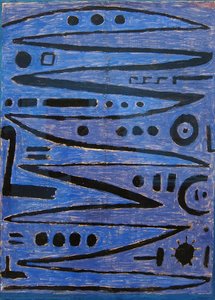
Decoding Color and Form: An Exploration of Paul Klee’s “A B C for a Muralist”
Paul Klee's "A B C for a Muralist," painted sometime between 1937 and 1940, isn’t merely an alphabet; it’s a meticulously crafted meditation on artistic process itself. This deceptively simple composition—a sprawling expanse of red and yellow punctuated by the stylized letters of the English alphabet—holds layers of meaning that resonate far beyond its visual surface. Examining this iconic piece reveals insights into Klee's groundbreaking approach to abstraction and his profound engagement with the challenges faced by muralists tasked with conveying complex ideas through monumental canvases.- The Expressionist Palette: The dominant hues—a fiery crimson interwoven with a luminous ochre—immediately establish an emotional tenor characteristic of Klee’s Expressionist sensibilities. Rather than striving for photographic realism, he prioritized conveying feeling and intuition, believing that color could communicate ideas more powerfully than representational imagery.
- Geometric Precision Amidst Organic Flow: Despite the apparent randomness of letter placement, Klee employs geometric forms—circles, squares, triangles—that subtly counterbalance the organic contours of the alphabet. This juxtaposition reflects his fascination with reconciling opposing forces – order and chaos – a recurring motif throughout his oeuvre.
- A Muralist’s Dilemma: Created during the tumultuous years leading up to World War II, “A B C for a Muralist” speaks directly to the difficulties faced by artists attempting to communicate grand narratives on a massive scale. The fragmented letters symbolize the breakdown of traditional communication methods and suggest that conveying complex concepts requires embracing unconventional approaches.
Symbolism Beyond Alphabetical Order
The alphabet isn’t simply arranged haphazardly; it possesses symbolic significance. Each letter is treated as an independent element—a miniature universe of color and form—suggesting that individual components contribute to the overall message. Furthermore, Klee's use of specific colors – red representing passion and vitality, yellow symbolizing optimism and enlightenment – reinforces this thematic exploration. The repetition of shapes contributes to a sense of rhythm and balance, mirroring the harmonious principles underlying musical composition.- Musical Influence: As Klee himself acknowledged, his artistic vision was profoundly shaped by music. He likened painting to arranging notes on a stave, emphasizing that both disciplines strive for expressive coherence.
- The Challenge of Monumental Art: The painting serves as a poignant reminder that conveying complex ideas effectively requires overcoming obstacles inherent in large-scale art projects. Klee’s approach—embracing abstraction and prioritizing emotional resonance—represents a bold assertion of artistic autonomy.
Emotional Resonance & Artistic Legacy
Ultimately, “A B C for a Muralist” transcends its formal elements to evoke a feeling of wonder and contemplation. The painting’s luminous colors and textured surface captivate the viewer's gaze, inviting them to engage in an imaginative dialogue with the artwork itself. Klee’s pioneering exploration of abstraction continues to inspire artists today, demonstrating that true artistic innovation lies in rejecting convention and embracing the transformative power of color and form—a legacy beautifully encapsulated within this deceptively simple masterpiece.Q&A
パウル・クレー作「A B C for a Muralist」の色彩構成はどのように成り立っていますか?
パウル・クレー作「A B C for a Muralist」の色彩構成は、SereneなコントラストとStrong Color Unityな調和を併せ持っています。
「A B C for a Muralist」の作者は誰ですか?
「A B C for a Muralist」の作者はパウル・クレーです。この作品はパウル・クレーの名でカタログに登録されています。
パウル・クレー作「A B C for a Muralist」の手描き複製画はどこで購入できますか?
パウル・クレー作「A B C for a Muralist」の手描き複製画は、本サイトの手描き油彩複製画ページよりリネンキャンバスに手描きされた油彩複製画にてご購入いただけます。
この絵画の詳細を見る
 設置イメージを表示
 シェアする
シェアする シェアする
シェアする
 詳細を見る
詳細を見る ガイドを表示

 ダウンロード
 似ている作品
 X線調査
X線調査 スライドショーを表示
 Q&A
Q&A 統計情報
統計情報