

 設置イメージを確認
 送る
送る シェア
シェア
 詳細情報
詳細情報 ガイドを表示

 画像をダウンロード
 似ている作品
 X線調査
X線調査 スライドショー
 統計情報
統計情報Venus and Adonis
 Oil On Canvas
- WallArt
- Baroque
 1586
1586 68.0 x 52.0 cm
 Kunsthistorisches Museum
 続きを読む
続きを読む
ジークレー/アートプリント
スピーディーな制作と多彩な仕上げオプションが魅力の、ミュージアムクオリティなジークレー・キャンバスプリント。 ( 手描きの複製画を注文する デジタル画像販売へ切り替え)




P118B ¥10

P118H ¥10

P118W ¥10

P438Z ¥10

P508JH ¥12

P508YH ¥12

P805H ¥10

P805Z ¥10

P919BZ ¥10

P919G ¥10

P919XJ ¥10

P959ZH ¥10

P968JZ ¥12

W106C ¥8

W218G ¥10

W218JH ¥8

W218Y ¥10

W307PJ ¥10

W316G ¥10

W316PJ ¥8

W316Y ¥10

W398PJ ¥8

W4111J ¥10

W500HY ¥15

W500JH ¥15

W692G ¥12

W849H ¥8

W940BG ¥15

W953PJ ¥8




作品のオリジナル比率に合わせた、当店の規定サイズからお選びください。

額縁や壁のスペースに合わせて、ご希望の幅と高さを入力してください。プリントはカットすることは可能ですが、元の画像より大きくすることはできないため、異なる比率のサイズを選択された場合は、画像の一部が欠けることになります。印刷を開始する前に、内容を確認していただくためのデジタルモックアップをお送りいたします。このページに表示されている画像は、実際のカット後の状態を示すものではありません。実際の仕上がりはモックアップにてご確認ください。


 ガラスオプションは、110cm未満のサイズでのみご利用いただけます。

Venus and Adonis
ジークレー/アートプリント
複製画サイズ一覧
-


合計金額
¥ 12591
A Venetian Rhapsody: Paolo Veronese’s “Venus and Adonis”
Paolo Veronese's "Venus and Adonis," painted in 1586, is more than simply a mythological scene; it’s a dazzling immersion into the heart of 16th-century Venice. This opulent masterpiece, now housed in the Museo del Prado in Madrid, captures the spirit of a city brimming with wealth, artistic innovation, and a profound appreciation for classical beauty. Veronese, born Paolo Caliari in Verona in 1528, skillfully transformed his humble beginnings into a career defined by lavishness and theatrical grandeur – a hallmark that would forever cement his place as one of Venice’s most celebrated Renaissance artists.
The painting depicts the legendary encounter between Venus, goddess of love, and Adonis, a youthful hunter. The composition is immediately arresting: a pyramidal structure anchors the scene, with the figures—Venus, her beloved Adonis, and a cherubic child—forming the apex. Surrounding them is a dense, dark forest, meticulously rendered to create an atmosphere of secluded romance and dramatic intensity. Notice how Veronese masterfully employs atmospheric perspective; the background trees fade into a hazy darkness, drawing the viewer’s eye directly to the central figures bathed in a rich, golden light. This deliberate use of light and shadow is characteristic of Baroque painting, adding depth and emotional resonance.
The Language of Form and Color
Veronese's technical prowess is immediately apparent upon close inspection. The artist’s command of oil paint is breathtaking – layers are built up with painstaking detail to achieve a remarkable sense of texture. Observe the smooth, almost luminous quality of Venus’ skin, contrasted with the rougher bark of the trees and the intricate folds of Adonis' clothing. Lines define the muscular form of the man, while the drapery flows with an elegant fluidity, demonstrating Veronese’s ability to balance geometric precision with organic forms. The color palette is equally impressive – a riot of rich reds, blues, golds, and greens creates a visually sumptuous experience, echoing the opulence of Venetian society at the time.
The use of perspective is subtly flattened, a characteristic of earlier Baroque styles that prioritizes illusionistic space over strict mathematical accuracy. However, this choice doesn’t diminish the painting's impact; instead, it contributes to the overall sense of drama and theatricality. The meticulous layering of paint, combined with his masterful understanding of light and shadow, creates an incredibly realistic – yet undeniably idealized – depiction of these mythological figures.
Symbolism and Venetian Grandeur
“Venus and Adonis” is laden with symbolic meaning, reflecting the prevailing cultural values of 16th-century Venice. Venus, representing beauty, fertility, and love, is portrayed as a goddess of unparalleled allure. Adonis, though youthful and vulnerable, embodies strength and virility. The cherubic child likely symbolizes new life and hope – perhaps even the future heir to Venetian power. The setting itself—a dense forest—suggests both danger and romance, mirroring the passionate nature of their love story.
Furthermore, the inclusion of a lavish banquet in the background (visible in detail if you examine the painting closely) is a deliberate nod to Venice’s status as a major commercial center. These scenes of feasting and celebration were common in Veronese's work, showcasing the city’s wealth and prosperity – often commissioned by wealthy patrons eager to display their influence and taste. The backdrop subtly incorporates elements reminiscent of Basilica dei Santi Giovanni e Paolo (San Zanipolo), a significant church in Venice, further grounding the scene within the artist’s immediate environment.
A Timeless Masterpiece: Reproduction Possibilities
Paolo Veronese's “Venus and Adonis” remains one of the most captivating works of the Venetian Renaissance. OriginalUniqueArt offers meticulously crafted hand-painted reproductions that capture the essence of this iconic painting, allowing you to bring its beauty into your home or office. Our skilled artists faithfully recreate Veronese’s masterful use of color, texture, and composition, ensuring a stunningly authentic representation. Whether you're an art enthusiast, collector, or simply seeking a touch of Venetian elegance, our reproductions provide a remarkable opportunity to own a piece of art history.
Explore the full details and dimensions of this exceptional artwork on our website: Venus and Adonis (Veronese, Madrid)
よくあるご質問
「Venus and Adonis」にはどのような色が使われていますか?
「Venus and Adonis」の色調は、Earthyなパレットを構成しています。この分類は、主要な色相のグループを表しています。
パオロ・ヴェロネーゼは何歳の時に「Venus and Adonis」を制作しましたか?
パオロ・ヴェロネーゼは58歳の時に「Venus and Adonis」を制作しました。作家は1528年に生まれ、本作の制作年は1586年です。
Venus and Adonisは、パオロ・ヴェロネーゼのキャリアにおけるどの時期の作品にあたりますか?
「Venus and Adonis」は、パオロ・ヴェロネーゼのキャリアにおけるMature Periodに属します。この分類は、作品をアーティストの画業の変遷に関連付けるものです。
アーティストについて
ヴェネツィアの幻影:パオロ・ヴェロネーゼの生涯と芸術
パオロ・カリャリ、世に知られるパオロ・ヴェロネーゼは、16世紀のヴェネツィアという輝かしい芸術都市から現れ、色彩、構成、そして豪華絢爛なスペクタクルを極めた巨匠である。1528年、ヴェローナで石工の息子として生まれた彼は、幼少期から古典建築、彫刻、そして地域に花開いた人文主義思想といった視覚的な豊かさに浸っていた。アントニオ・バディレやジョヴァンニ・フランチェスコ・カロートの下での初期の訓練は伝統的な技法を身につけさせたが、1550年代のヴェネツィアへの移住こそが彼の芸術的天才に火をつけた。都市そのものが彼のミューズとなり、賑やかな市場、壮麗な宮殿、きらめく運河が彼の作品のスケールとドラマ性を形作った。彼はティツィアーノのような確立されたヴェネツィア派巨匠の影響を吸収し、その色彩感覚はヴェロネーゼのパレットに深く影響を与えた。しかしながら、彼は比類のない劇性と壮大さを特徴とする独自のスタイルを築き上げた。饗宴と壮大な物語を描く画家
ヴェロネーゼの名声は、豪華な饗宴や聖書の場面をヴェネツィアの生活の鮮やかな描写へと変貌させた巨大な絵画に支えられている。1563年にサン・ジョルジョ・マッジョーレ修道院のために完成した『カナの婚礼』はその技量の証である。この壮大なキャンバスは単なる奇跡のイラストレーションではなく、優雅な衣装をまとった人物、音楽家、息を呑むほど正確に描かれた建築的ディテールで満ち溢れた16世紀社会の鮮やかなパノラマである。絵画はカナで何が起こったかを描いているだけでなく、それがヴェロネーゼの時代にヴェネツィアで起こったらどうだったかを表現しているのだ。同様に、『レビの家での饗宴』(元々は『最後の晩餐』と題されていた)は、同時代の人物や一見不謹慎な雰囲気を描いたことで異端審問当局からの論争を巻き起こした。ヴェロネーゼは芸術的自由を擁護し、画家には詩人や道化師と同じ創造の自由が認められるべきだと主張した。これは神聖な物語を解釈し、再構築する芸術の力に対する彼の信念を反映した大胆な声明であった。これらの作品は単なる宗教的な描写ではなく、生活、富、そしてヴェネツィア自体の壮大さを祝うものであった。彼は禁欲的な精神性に関心はなく、むしろ存在の喜びと豊かさを捉えることに情熱を注いだ。影響と芸術的発展
ティツィアーノがヴェロネーゼの色彩感覚に与えた影響は否定できないが、彼の芸術的発展は様々な要素が複雑に絡み合ったものであった。彼が構成にもたらした建築的な正確さは、彼の形成期にヴェローナで蔓延していた古典主義の伝統に負うところが大きい。特にミケーレ・サンミケリのような建築家の作品から影響を受けている。ラファエロやパルミジャニーノのような中部イタリア派巨匠からの要素も、彼の絵画に見られる優雅な線と調和のとれた配置の中に見て取ることができる。しかし、ヴェロネーゼはこれらの影響を単に模倣するのではなく、光の劇的な使い方、鮮やかな色彩、そして細部への徹底的な注意によって特徴づけられる独自のヴェネツィア様式へと昇華させた。彼は空間と奥行きの錯覚を作り出すことに長けており、遠近法を用いて観客を彼の壮大な場面の中心へと引き込んだ。油彩の技術に対する彼の習熟度は、比類のない輝きと豊かなテクスチャを実現した。 彼は大規模な工房を運営し、弟ベネデットや息子ガブリエーレ、カルロも貢献しており、彼の死後も彼のスタイルが発展し続けることを保証した。遺産と歴史的意義
パオロ・ヴェロネーゼの影響はルネサンス美術の領域をはるかに超えている。彼の作品は数世紀にわたり共鳴し続け、バロック絵画から現代映画まで様々な分野の芸術家たちにインスピレーションを与えてきた。彼はティツィアーノやティントレットとともに「ヴェネツィア派三大巨匠」の一人として知られ、それぞれが都市の芸術的遺産に独特な貢献をした。しかし、ヴェロネーゼはしばしばその純粋な活気と世俗的な喜びの祝典によって際立っている。彼の絵画は壮大さとスペクタクルで観客を魅了し続け、16世紀のヴェネツィアの世界への一瞥を提供している。- 彼は同時代の生活を織り交ぜることで歴史画を再定義した。
- 彼の色使いは今日でも芸術家たちに影響を与え続けている。
- 彼の作品はルネサンス人文主義の精神と世俗的な美しさの祝典を体現している。

パオロ・ヴェロネーゼ
1528 - 1588 , イタリア
アーティスト情報
- Artistic Movement Or Style: ルネサンス、マニエリスム
- Artists Or Movements Influenced By This Artist:
- ルーベンス
- ヴァトー
- Artists Who Influenced This Artist: ['ティツィアーノ']
- Date Of Birth: 1528年
- Date Of Death: 1588年
- Full Name: パオロ・ヴェロネーゼ
- Nationality: イタリア人
- Notable Artworks (List Of Titles):
- カナの婚礼
- レビの家の晩餐
- Place Of Birth (City And Country): イタリア、ヴェローナ
関連記事

バロックのドラマ:現代のインテリアに壮麗さと情感を取り込む
バロック様式の歴史、絵画、家具の魅力をご紹介。OriginalUniqueArtでは、高品質な油絵複製やカスタムポートレートをご提供し、現代のインテリアに壮麗さと情感を取り入れます。アートコンサルテーションも承ります。
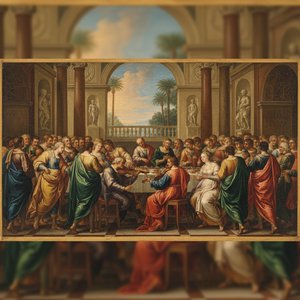
Paolo Veronese: A Renaissance Master of Color, Composition, and Venetian Splendor
Explore the vibrant world of Paolo Veronese, a Renaissance master renowned for his opulent compositions, masterful use of color, and dramatic Venetian scenes. Discover key artworks & legacy.

バロック美術を極めた至宝:時代を彩る10大名作の世界
バロック美術の華!カラヴァッジョ、ベルニーニら巨匠が創り上げた10大名作を徹底解剖。ドラマチックな色彩と豪華絢爛の世界観に触れ、至宝のアートプリントで空間を彩ろう。OriginalUniqueArt.comで美術館品質の複製と洗練されたインテリアを見つけましょう!
Simon Vouet: A Baroque Master's Journey from Italian Influence to French Classicism
Explore the life & art of Simon Vouet, a pivotal French Baroque painter who introduced Italian styles to France. Discover his masterpieces and lasting influence on 17th-century art.

Italian Baroque Unlocked: High-Drama Art That Hits Hard
Dive into the high-drama world of Italian Baroque art. Discover how chiaroscuro, intense emotion, and theatrical lighting redefined aesthetics. Explore the visceral power of the Counter-Reformation through a modern lens with expert insights from OriginalUniqueArt.com.


