プリント版に切り替え
 詳細を表示
詳細を表示







































 いずれかの辺が105 cm(約41インチ)を超えるアートワークまたは複製画の場合、フレームは分解されたキットの状態でお届けいたします。この方法は、輸送中の破損を防ぎ、安全に配送するために採用しております。


Knight, Page and Monk: A Fragmented Vision of Medieval Ideals
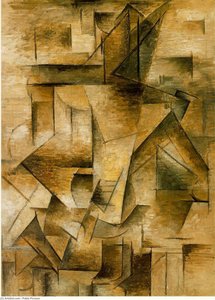
Pablo Picasso’s “Knight, Page and Monk” stands as a cornerstone of Cubist art—a daring departure from traditional representation that continues to fascinate viewers today. Painted sometime between 1946 and 1947, this monochrome masterpiece embodies the spirit of intellectual experimentation characteristic of Picasso's later years, reflecting his profound engagement with philosophical concepts and challenging conventional notions of perspective.
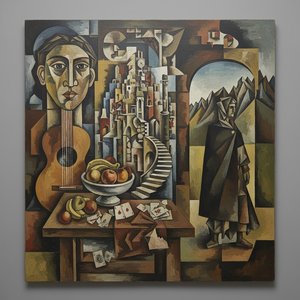
- Subject Matter: The painting depicts a knight, accompanied by a page and a monk, positioned within a stylized architectural space. These figures represent archetypal roles—power, youth, and piety—but Picasso dismantles their solidity through geometric abstraction, presenting them as fractured planes rather than recognizable individuals.
- Style & Technique: Picasso’s masterful application of oil paint on canvas exemplifies the Cubist method. He meticulously breaks down objects into constituent shapes – triangles, squares, rectangles – layering these forms to create a composite image that simultaneously reveals multiple viewpoints. The deliberate flattening of space contributes to an unsettling feeling of disorientation, mirroring the artist's own exploration of existential themes.
- Historical Context: Created during Picasso’s prolific period following World War II, “Knight, Page and Monk” speaks to anxieties about societal upheaval and the questioning of established values. The artwork aligns with Cubism’s broader critique of Western artistic conventions and its embrace of abstraction as a tool for conveying complex ideas.
- Symbolism: The inclusion of skulls in the lower left corner serves as a stark reminder of mortality—a recurring motif throughout Picasso's oeuvre—and underscores the painting’s preoccupation with themes of death and decay alongside notions of honor and faith. Similarly, the bird perched atop the building symbolizes aspiration and freedom, juxtaposed against the rigid geometry of the composition.
- Emotional Impact: “Knight, Page and Monk” evokes a palpable sense of unease and intellectual stimulation. Picasso’s masterful manipulation of light and shadow enhances the dramatic effect, emphasizing the geometric forms while simultaneously conveying an underlying melancholy. It compels viewers to confront questions about identity, perception, and the human condition—a testament to Picasso's enduring ability to provoke contemplation and inspire artistic dialogue.
A reproduction of this iconic artwork offers a captivating glimpse into Picasso’s groundbreaking vision—allowing collectors and interior designers alike to appreciate not only its aesthetic beauty but also its intellectual depth.
Q&A
パブロ・ピカソ作「Knight, Page and Monk」は、どのような主題と情緒を融合させているのでしょうか?
パブロ・ピカソ作「Knight, Page and Monk」は、medieval figures, fragmentation, geometric shapes, skull symbolism, darkness, perspective distortion, picasso styleとDramaticな雰囲気を融合させています。
「Knight, Page and Monk」のCubistには、どの国のルーツが反映されているのでしょうか?
「Knight, Page and Monk」は、スペイン出身のパブロ・ピカソによって、Cubistの潮流の中で制作されました。アーティストの出自は、この作品をスペインの作家たちが実践したCubistへと結びつけています。
「Knight, Page and Monk」の推奨されるプリント方法について教えてください。サイズや向きはどうするのが良いでしょうか?
「Knight, Page and Monk」の推奨プリント設定は、サイズLarge、向きLandscapeです。
More about this painting
 設置イメージを表示
 シェアする
シェアする シェアする
シェアする
 詳細を見る
詳細を見る ガイドを表示

 ダウンロード
 似ている作品
 X線調査
X線調査 スライドショーを表示
 Q&A
Q&A 統計情報
統計情報