

 送る
送る シェア
シェア
 詳細情報
詳細情報 ガイドを表示

 画像をダウンロード
 似ている作品
 スライドショー
 統計情報
統計情報Connection I
 Sculpture
- Sculpture
- Contemporary Realism
 1996
1996- Modern
 50.0 x 55.0 cm
 Paintings in Hospitals
 続きを読む
続きを読む
オンラインプレビューをはるかに凌ぐ、高解像度で鮮明なデジタル画像をご購入いただけます。
各ファイルは、社内の専門家が高度なツールと熟練した手作業によるレタッチを駆使し、細心の注意を払って仕上げています。すべての画像において、卓越した鮮明度、正確な色彩再現性、そして繊細なディテールをお約束いたします。
最終ファイルは、プロフェッショナルな編集・印刷環境ですぐにご利用いただけるよう最適化された状態で、72時間以内にメールにてお届けいたします。これは、一流のデザインスタジオ、出版社、ギャラリーから信頼されているものと同等の品質です。
デジタル画像
個人での鑑賞、印刷、クリエイティブなプロジェクトにご利用いただける高解像度ファイルをダウンロードできます。 ( プリント版に切り替え 手描きの複製画を注文する)
デジタル画像のご注文に付随する特典
プロフェッショナルなデジタル配信を、確かな品質で。
OriginalUniqueArt.com を選ぶことは、単に画像を手に入れることではありません。プロの手によって精密に仕上げられ、満足保証が付いた高品質なデジタルアートワークを受け取ることを意味します。ご注文いただいた際に自動的に付随する内容は、以下の通りです:

メールですぐにお届け
ご注文から72時間以内に、高解像度のデジタル画像ファイルをメールでお送りいたします。お手元に届き次第、すぐにご利用いただけます。

AI技術で最適化されたデジタルファイル
お客様の作品は、高度なAI技術と専門家による手作業を組み合わせてプロフェッショナルに最適化されており、細部のディテール、鮮明さ、そして正確な色再現性を最大限に引き出しています。

一生涯無料の再送サービス
ファイルを誤って削除したり、紛失してしまったりしましたか?ご安心ください。いつでも無料で再送いたします。

輸入手数料は、いつでも一切かかりません
関税や手数料、配送料を気にすることなく、お気に入りのアートワークをすぐにお楽しみいただけます。デジタルダウンロードは常に免税です。

正確な色彩の保証
プロ仕様のツールとカラーマネジメント技術を用いることで、デジタル画像が元の色を最大限に忠実に再現することを保証いたします。

100日間満足保証
ご購入いただいたデジタル画像にご満足いただけない場合は、100日以内であれば、理由を問わず修正または100%の返金対応をさせていただきます。

100% 返金保証
ご満足いただけない場合は、デジタルファイルを受け取ってから100日以内であれば、理由を問わず全額返金いたします。

まとめ買い割引
3枚購入で10%OFF、5枚購入で15%OFF、10枚以上のご購入で20%OFF。クリエイティブなプロジェクトやギャラリー、エージェンシーに最適です。
Norie Hatakeyama’s “Connection I”: A Coral Echo of Ancient Resonance
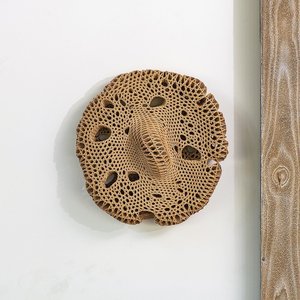
Norie Hatakeyama's "Connection I," created in 1996, is more than just a sculpture; it’s an invitation to contemplate the enduring power of nature and the echoes of ancient symbolism. This intimate piece, measuring 50 x 55 cm, immediately draws the viewer into its intricate world – a meticulously crafted assemblage of shells and coral that seems to breathe with oceanic energy. The photograph captures a moment of profound detail, highlighting the sculpture’s deliberate imperfections, the very holes that lend it such captivating texture and an almost unsettling beauty.
The Artist's Vision: Hatakeyama and the Spirit of Japan
Norie Hatakeyama, born in Tokyo in 1952, is a significant figure within contemporary Japanese art. Her work frequently explores themes of nature, spirituality, and memory, often drawing upon traditional Japanese aesthetics and philosophies. Hatakeyama’s artistic practice reflects a deep connection to the natural world, particularly the sea – a recurring motif in her sculptures. This reverence for the organic informs every aspect of “Connection I,” from its raw materials to its evocative form. Her work is frequently described as embodying a quiet contemplation, inviting viewers to find their own resonance within its delicate structure.
Technique and Materiality: A Dialogue with the Ocean
The sculpture’s remarkable quality stems directly from Hatakeyama's masterful technique. The use of shells and coral – materials inherently imbued with the history of the ocean – elevates the piece beyond a simple assemblage. Each hole, carefully created or naturally occurring, isn’t merely an absence; it’s a deliberate element that contributes to the overall composition. This meticulous attention to detail suggests a profound respect for the raw beauty of the materials and a desire to reveal their inherent qualities. The process likely involved careful selection of each component, considering not just its visual impact but also its tactile properties – the smooth curve of a shell, the rough texture of coral.
Symbolism and Emotional Impact: A Fragmented Narrative
"Connection I" resonates with themes of interconnectedness and impermanence. The fragmented nature of the sculpture—the individual shells and corals combined to form a larger whole—can be interpreted as a metaphor for life itself, constantly shifting and evolving. The holes within the structure might represent voids, absences, or perhaps opportunities – portals to new connections. Considering Hatakeyama’s broader artistic concerns, this piece likely speaks to a deeper yearning for harmony between humanity and nature, echoing sentiments prevalent in Japanese art traditions that emphasize the cyclical nature of existence. The sculpture's quiet power evokes a sense of serenity and invites introspection, making it a compelling addition to any collection or interior space.
よくあるご質問
「Connection I」の技法は何ですか?
畠山直江は、「Connection I」においてSculptureの技法を用いています。この技法が、原画の素材としての性質を決定づけています。
「Connection I」は、畠山直江のキャリアにおけるどの時期の作品でしょうか?
「Connection I」は、畠山直江のMature Periodを象徴する作品です。
畠山直江作「Connection I」の複製画は、お部屋にどのような雰囲気をもたらしてくれるでしょうか?
畠山直江作「Connection I」はEarthyな雰囲気を纏っており、Living Roomに飾るのがおすすめです。作品が周囲の空間にもたらすムード(情緒)をお楽しみください。
アーティスト・プロフィール
The Intricate Geometry of Nature and Material
Norie Hatakeyama is a Japanese artist whose work exists at the profound intersection of nature, urbanization, and mathematical precision. Her practice is defined by a mesmerizing exploration of structure, where the boundaries between organic growth and geometric form become beautifully blurred. Through her unique approach to sculpture, she invites viewers into a world that feels simultaneously ancient and contemporary, capturing the energy of living organisms within meticulously crafted three-dimensional shapes. Her artistic vision is driven by an impulse to redefine both material and method, seeking to uncover the subtle beauty found in rhythm, texture, and thoughtful repetition.
The essence of Hatakeyama’s work lies in her ability to listen to her materials, allowing shape and gesture to unfold through a process of slow making and material intuition. Her sculptures often possess an ethereal quality, appearing as though they have no apparent starting or endpoints, much like the continuous cycles of regeneration found in the natural world. By embracing the tension between science—such as mathematics and geometry—and art, she creates pieces that reflect the complex structures of the universe itself. In her view, the natural world is a field composed of matter and energy, and her work serves as a meditative reflection on this radiating, unremitting energy.
Materiality and the Art of the Plait
One of the most striking aspects of Hatakeyama’s technique is her innovative use of unconventional, factory-made materials to achieve complex, organic results. She is globally recognized for her contemporary, intricate plaited works that utilize Japanese rice paper and paper-packing tape. This choice of medium allows her to bridge the gap between the industrial and the natural, using a mundane, mass-produced substance like tape to realize sophisticated geometric concerns. Her process involves an intense level of craftsmanship, where the act of plaiting becomes a way to explore the transition from simple matter into complex, sculptural forms.
Her development as an artist was significantly shaped by her early studies in basketmaking. In 1980, she began studying this traditional craft under Hisako Sekijima in Japan. This mentorship was transformative; Sekijima’s nontraditional and open-minded approach to the medium of basketry provided Hatakeyama with the freedom to push beyond expected boundaries. This foundation in traditional techniques, combined with her desire to explore modern materials, has allowed her to create a body of work that is both deeply rooted in Japanese craft heritage and strikingly modern in its execution.
Legacy and Global Recognition
The significance of Norie Hatakeyama’s contribution to contemporary sculpture is reflected in the prestigious collections and exhibition venues that house her work. Her pieces have been featured in diverse international settings, ranging from museum collections in the United States to specialized craft museums in Europe and Japan. Her ability to resonate with audiences across different cultures highlights the universal appeal of her themes regarding structure, nature, and the interconnectedness of all things.
Notable recognitions of her work include:
- Selected Collections: The Museum of Art at the University of Michigan, Ann Arbor; Paintings in Hospitals, Derby City Council, UK.
- Exhibition Venues: Nigata Prefectural Museum of History, Japan; National Vlechtmuseum, Noorwolde, the Netherlands; Crafts Council, London, UK; Senbikiya Gallery, Tokyo, Japan; Space S. Tokyo, Japan; Silk Gallery, Japan Embassy, Seoul, Korea; Racine Art Museum, Wisconsin; and the Flinn Gallery, Connecticut.
畠山直江
1952 - , イタリア