
 プレビュー
プレビュー
 プリントを購入
 シェアする
シェアする シェアする
シェアする
 詳細を見る
詳細を見る

 ダウンロード
 似ている作品
 X線調査
X線調査 スライドショー
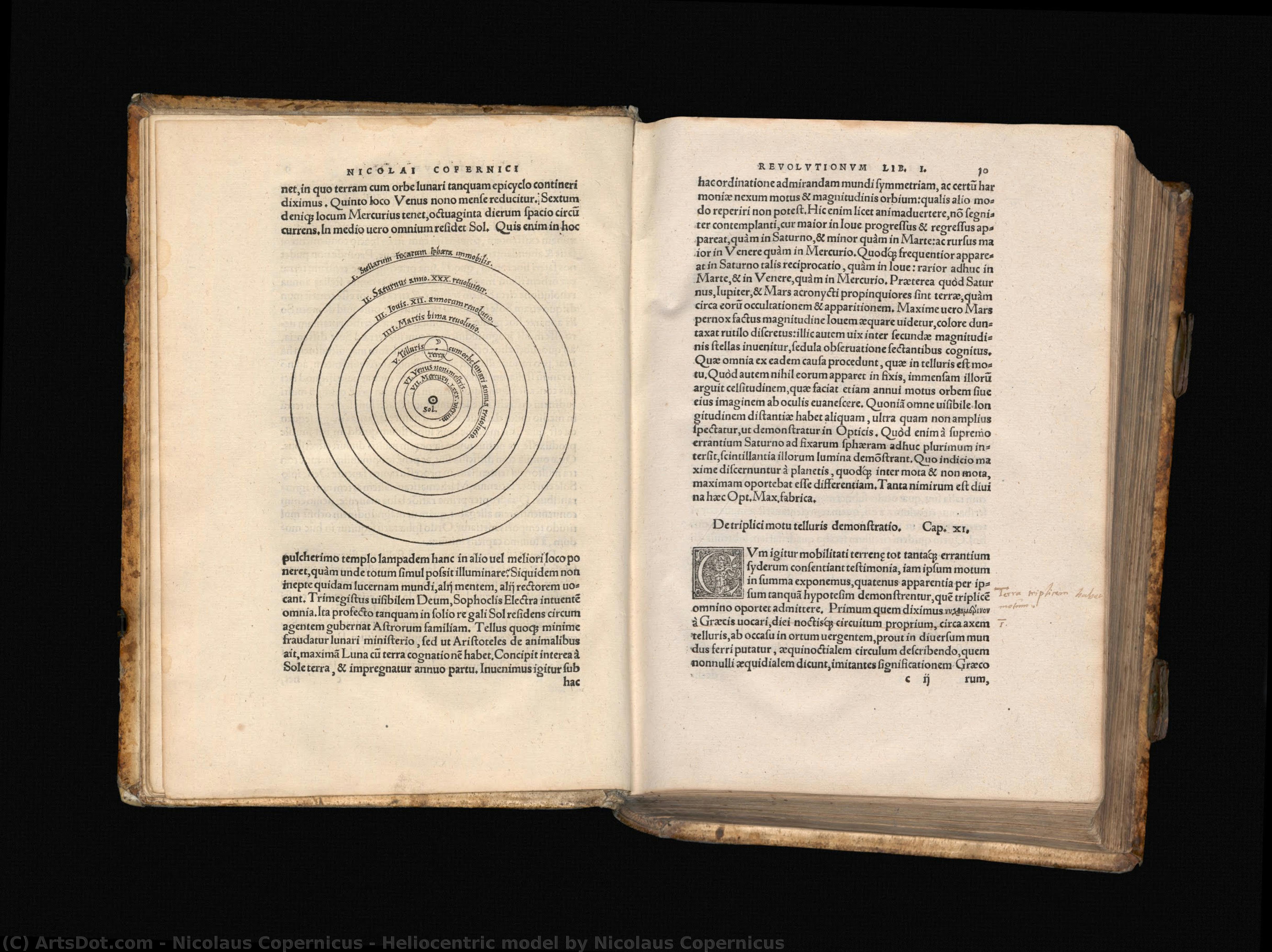
Heliocentric model by Nicolaus Copernicus


 詳細を見る
詳細を見る




































作品のオリジナル比率に合わせた、当店の規定サイズからお選びください。

特定のフレームやスペースに合わせて、ご希望のサイズをご入力いただけます。選択されたサイズが元の画像の比率と異なる場合、アートワークをトリミングするか、手描きで要素を追加して絵画を拡張いたします。デジタルモックアップ を制作し、制作開始前にご確認(承認)をいただきます。
画面上のプレビューは、実際のトリミングや拡張を正確に反映しているものではありません。最終的な構図は、モックアップによってのみ正確にご確認いただけます。
カスタムサイズもご利用いただけますが、元の比率を維持するためには、あらかじめ用意されたリストからサイズを選択することをお勧めいたします。
ご注文後、OriginalUniqueArt.com チームより詳細な指示をお送りするとともに、仕上がりイメージ(モックアップ)をご提供いたします。


 ガラスオプションは、110cm未満のサイズでのみご利用いただけます。

Heliocentric model by Nicolaus Copernicus
複製技法
複製画のサイズ
-


合計金額
$ 300
アーティストの略歴
The Architect of the Heavens: The Life and Legacy of Nicolaus Copernicus
In the twilight of the Middle Ages, a period defined by a geocentric view of existence where the Earth sat motionless at the center of all things, a brilliant mind emerged from Torün, Poland, to redraw the very map of the cosmos. Nicolaus Copernicus, known in his native tongue as Mikołaj Kopernik, was far more than a mere mathematician; he was a visionary whose intellectual courage dismantled centuries of scientific dogma. Born in 1473, his early life was steeped in the rich academic traditions of the University of Krakow, where he immersed himself in the rigorous disciplines of mathematics and astronomy. This foundational education allowed him to look beyond the surface of the night sky, seeking a deeper, more harmonious order within the celestial mechanics that govern our universe.
The intellectual journey of Copernicus was deeply influenced by the classical wisdom of antiquity. By studying the works of Greek philosophers such as Aristotle and Ptolemy, he gained the tools necessary to identify the profound flaws in the existing Ptolemaic system. While his contemporaries accepted a universe revolving around the Earth, Copernicus possessed the mathematical intuition to sense a different truth. His multidisciplinary expertise—spanning medicine, law, and diplomacy—provided him with a unique perspective, allowing him to approach astronomical problems with a holistic understanding of natural philosophy. This period of intense study and observation laid the groundwork for a revolution that would eventually shift the very axis of human thought.
The Heliocentric Revolution and Artistic Resonance
The culmination of Copernicus's life work arrived in 1543 with the publication of his magnum opus, De revolutionibus orbium coelestium (On the Revolutions of the Celestial Spheres). In this monumental text, he presented his heliocentric model, daringly proposing that the Sun, not the Earth, serves as the central point around which the planets revolve. This was not merely a scientific correction; it was a profound philosophical upheaval that stripped humanity of its perceived central position in the cosmos. The impact of this work was seismic, acting as the primary catalyst for the Scientific Revolution and forever altering the trajectory of modern science.
Beyond the mathematical proofs and astronomical diagrams, the legacy of Copernicus has been captured through the lens of art and engraving, preserving his image for posterity. The visual representation of his ideas often blends scientific precision with the aesthetic sensibilities of the Renaissance. For instance:
- The Portraiture of Genius: Engravings such as those by Jacob van Meurs serve to immortalize the astronomer, portraying him not just as a scholar, but as a figure of profound intellectual authority.
- Symbolic Diagrams: The artistic depictions of the heliocentric system act as visual narratives, translating complex orbital mechanics into accessible, evocative imagery that captures the movement of the spheres.
- Historical Documentation: Through various collections in institutions like the Kunstbibliothek in Berlin, the visual history of his contributions remains a vital part of European art and scientific heritage.
Today, the name Nicolaus Copernicus evokes a sense of awe for the power of human reason. His ability to look at the same stars as his predecessors, yet see an entirely different universe, remains one of the greatest achievements in human history. Through both his written word and the enduring artistic tributes that celebrate his intellect, Copernicus continues to inspire those who dare to challenge the status quo and seek the truth hidden within the infinite expanse of the heavens.

nicolaus copernicus
1473 - 1543 , Poland
基本情報
- Artists Who Influenced This Artist:
- Aristotle
- Ptolemy
- Date Of Birth: 1473
- Date Of Death: 1543
- Full Name: Nicolaus Copernicus
- Nationality: Polish
- Notable Artworks: ['De revolutionibus orbium coelestium']
- Place Of Birth: Toruń, Poland

