プリント版に切り替え
 詳細を表示
詳細を表示







































 いずれかの辺が105 cm(約41インチ)を超えるアートワークまたは複製画の場合、フレームは分解されたキットの状態でお届けいたします。この方法は、輸送中の破損を防ぎ、安全に配送するために採用しております。


A Vision of Myth and Romance
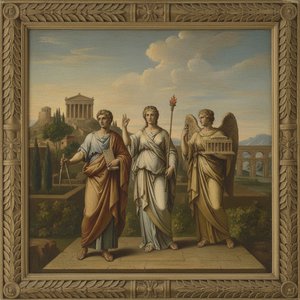
Nicolas Poussin’s “Tancred and Erminia” is not merely a depiction of a classical tale; it's an immersive experience, a carefully constructed tableau vivant that invites the viewer into a world of heightened emotion and profound contemplation. Painted around 1631-1634, during his most productive period in Rome, this work exemplifies Poussin’s mastery of capturing both the grandeur of antiquity and the delicate nuances of human feeling. The scene, drawn from Torquato Tasso's epic poem *Gerusalemme Illustre*, unfolds with a deliberate grace – a moment suspended between action and reflection, brimming with unspoken longing and impending conflict.
At first glance, the composition appears deceptively simple: a man, Tancred, holding his sword poised in readiness, stands beside a woman, Erminia, who clutches her bow. They are surrounded by a small group of figures – soldiers, attendants, and perhaps even a watchful shepherd – all rendered with an exquisite attention to detail that speaks volumes about Poussin’s meticulous technique. However, the painting's power lies not just in its subject matter but in the way Poussin orchestrates light, color, and spatial depth to create a deeply atmospheric effect. The use of *chiaroscuro*, the dramatic contrast between light and shadow, is particularly striking, drawing our eye to the central figures while subtly suggesting the turmoil beneath the surface.
The Classical Narrative and its Baroque Execution
The story itself is one of tragic romance. Tancred, a valiant warrior, has been wounded by Erminia’s father, the formidable King Anghiar. Erminia, deeply in love with Tancred, bravely offers to sacrifice herself to save his life, but he refuses her offer, fearing it would bring shame upon her family. The painting captures this pivotal moment – the hesitation before a potentially devastating choice, the unspoken sorrow and the resolute determination etched on their faces. Poussin skillfully employs classical motifs—the heroic posture of Tancred, the vulnerable beauty of Erminia—to elevate the narrative beyond a simple love story into a meditation on honor, duty, and sacrifice.
Despite its rootedness in classical mythology, “Tancred and Erminia” is undeniably a Baroque painting. Poussin’s use of rich, saturated colors – particularly the deep reds and blues – reflects the dramatic intensity characteristic of the era. Furthermore, his emphasis on line and form, combined with his masterful rendering of textures (the sheen of armor, the softness of fabric), creates a sense of visual dynamism that is both captivating and emotionally resonant. The figures are not simply depicted; they are sculpted into being, imbued with a palpable sense of life and movement.
Symbolism and Emotional Resonance
Beyond the immediate narrative, “Tancred and Erminia” is laden with symbolic meaning. The setting – a rugged, mountainous landscape bathed in golden light – evokes a sense of timelessness and spiritual significance. The presence of the shepherd suggests a connection to pastoral ideals, representing innocence and simplicity amidst the complexities of human affairs. Erminia’s bow and arrow are not merely weapons; they symbolize her willingness to defend Tancred, even at the cost of her own life. The shield on the ground hints at past battles and the enduring scars of conflict.
Ultimately, “Tancred and Erminia” is a painting that speaks to the universal themes of love, loss, and courage. It’s a poignant reminder of the choices we face in life and the sacrifices we make for those we cherish. Poussin's ability to capture these profound emotions with such exquisite beauty and technical skill ensures that this masterpiece continues to resonate with viewers centuries after its creation. A reproduction by OriginalUniqueArt offers a remarkable opportunity to experience the full impact of this extraordinary work, bringing its timeless elegance into your home or studio.
Q&A
その色彩から、ニコラ・プーサン作「Tancrede and Erminia」 はどの部屋に飾るのがおすすめですか?
Earthyの色調を考慮すると、「Tancrede and Erminia」はLiving Roomに最適です。
ニコラ・プーサンによる「Tancrede and Erminia」はパブリックドメインに含まれますか?また、その理由は何ですか?
「Tancrede and Erminia」の著作権の状態について — パブリックドメイン(著作権消滅) — は、作者の没年である1665に基づいています。
ニコラ・プーサン作「Tancrede and Erminia」を特徴づける技法やスタイルは何ですか?
「Tancrede and Erminia」では、Oil On Canvasの技法とFrench Classicismの精神が融合しています。
この絵画の詳細を見る
 設置イメージを表示
 シェアする
シェアする シェアする
シェアする
 詳細を見る
詳細を見る ガイドを表示

 ダウンロード
 似ている作品
 X線調査
X線調査 スライドショーを表示
 Q&A
Q&A 統計情報
統計情報