
 設置イメージを表示
 シェアする
シェアする シェアする
シェアする
 詳細を見る
詳細を見る ガイドを表示

 ダウンロード
 似ている作品
 X線調査
X線調査 スライドショーを表示
 Q&A
Q&A 統計情報
統計情報Himalayas (study)

- 17.0 x 28.0 cm


 詳細を表示
詳細を表示
ジークレー/アートプリント
スピーディーな制作と多彩な仕上げオプションが魅力の、ミュージアムクオリティなジークレー・キャンバスプリント。 ( 手描き複製画を注文する デジタル画像販売へ切り替え)




P118B ¥10

P118H ¥10

P118W ¥10

P438Z ¥10

P508JH ¥12

P508YH ¥12

P805H ¥10

P805Z ¥10

P919BZ ¥10

P919G ¥10

P919XJ ¥10

P959ZH ¥10

P968JZ ¥12

W106C ¥8

W218G ¥10

W218JH ¥8

W218Y ¥10

W307PJ ¥10

W316G ¥10

W316PJ ¥8

W316Y ¥10

W398PJ ¥8

W4111J ¥10

W500HY ¥15

W500JH ¥15

W692G ¥12

W849H ¥8

W940BG ¥15

W953PJ ¥8




作品のオリジナル比率に合わせた、当店の規定サイズからお選びください。

額縁や壁のスペースに合わせて、ご希望の幅と高さを入力してください。プリントはカットすることは可能ですが、元の画像より大きくすることはできないため、異なる比率のサイズを選択された場合は、画像の一部が欠けることになります。印刷を開始する前に、内容を確認していただくためのデジタルモックアップをお送りいたします。このページに表示されている画像は、実際のカット後の状態を示すものではありません。実際の仕上がりはモックアップにてご確認ください。


 ガラスオプションは、110cm未満のサイズでのみご利用いただけます。

Himalayas (study)
ジークレー/アートプリント
複製画サイズ一覧
-


合計金額
¥ 12842
A Symphony of Stone and Spirit
To gaze upon Nicholas Roerich’s “Himalayas (study)” is to step beyond the boundaries of a mere landscape and enter a realm where the terrestrial meets the divine. Created in 1931, this evocative study serves as a profound window into the artist's soul, capturing much more than the physical grandeur of the world's highest peaks. Roerich, a true polymath whose life was a tapestry of archaeology, philosophy, and painting, utilized this piece to explore the intersection of geological majesty and spiritual aspiration. The mountains depicted here are not static monuments of rock; they are living, breathing entities that pulse with an ancient, cosmic energy, inviting the viewer into a state of deep, meditative contemplation.
The composition is anchored by a breathtaking trio of peaks, their silhouettes rising with a rhythmic grace against a sky heavy with atmosphere. The largest peak dominates the canvas, acting as a spiritual North Star, while its companions flank it to create a sense of balanced, monumental stability. Through his masterful use of color, Roerich employs a palette of deep blues, ethereal indigos, and verdant greens to evoke the biting chill of high-altitude air and the lush, hidden vitality of the valleys below. This interplay of cool tones creates a luminous quality, as if the light itself is being filtered through layers of myth and memory.
The Alchemy of Impressionistic Vision
Technically, this study is a triumph of Impressionistic essence blended with a unique, stylized vision. Roerich eschews the rigid precision of photographic realism in favor of capturing the ephemeral "essence" of the atmosphere. His brushwork is deliberate and textured, employing broad, sweeping strokes that build layers of pigment to create a palpable sense of depth. This layering technique allows light to appear as though it is emanating from within the canvas itself, mimicking the way sunlight dances across glacial ice and mountain mist. There is a subtle, rhythmic quality to his application of paint that mirrors the undulating terrain, guiding the eye upward toward the heavens.
For the discerning collector or interior designer, this piece offers an unparalleled emotional resonance. The painting possesses a unique ability to transform a space, bringing a sense of serene permanence and intellectual depth to any room. It is not merely a decorative element but a focal point for quiet reflection. Whether placed in a contemporary gallery setting or a classic study, the work’s ability to evoke both the ruggedness of nature and the softness of a dream makes it a timeless acquisition. Owning a high-quality reproduction of this study means bringing a fragment of the "Cosmic Pilgrimage" into one's own sanctuary, offering a daily encounter with the sublime.
A Legacy of Peace and Exploration
The historical weight of this work is inseparable from Roerich’s personal journey. Painted during his ambitious expeditions across Asia—traversing Tibet, Mongolia, and India—the piece is a byproduct of his quest for universal truths. Roerich believed that the mountains were gateways to higher consciousness, and in "Himalayas (study)," he successfully translates this esoteric belief into visual form. The painting stands as a testament to his philosophy of Agni Yoga, where art serves as a bridge between the known and the unknown.
In an era of constant movement and digital noise, Roerich’s vision offers a much-needed anchor. The work invites us to slow our breath, to look upward, and to reconnect with the primordial rhythms of the Earth. It is a masterpiece of atmospheric storytelling, making it an essential piece for those who seek art that does not just decorate a wall, but enriches the spirit.
Q&A
ニコライ・ロエリヒ作「Himalayas (study)」の複製画は、どのような用途におすすめですか?
ニコライ・ロエリヒ作「Himalayas (study)」の推奨される用途はStatementですが、それ以外の使い道でもお楽しみいただけます。
Romantic Landscape Romantic Landscapeの作品「Himalayas (study)」は、どのような感情を伝えていますか?
Romantic Landscape Romantic Landscapeのムーブメントにおいて、「Himalayas (study)」はTranquilなトーンで描かれています。
ニコライ・ロエリヒ作「Himalayas (study)」の色彩構成はどのように成り立っていますか?
ニコライ・ロエリヒ作「Himalayas (study)」 の色彩分析は、Balanced なコントラストと Strong Color Unity な調和を捉えています。
作家プロフィール
ニコライ・ロエリヒ:芸術と精神の融合
ニコライ・コンスタンティノヴィチ・ロエリヒは、1874年10月9日、ロシア帝国の文化の中心地であったサンクトペテルブルクに生まれました。彼は単なる画家ではありませんでした。考古学者、作家、哲学者であり、平和と文化遺産の保護を熱心に訴えかけた公的人物でもありました。彼の育ちは、父親が法務官であり知的な厳格さと母親による芸術への深い理解によって支えられ、多才なキャリアの基盤となりました。1893年からは、サンクトペテルブルク大学で法学と美術を同時に学び、世界に対する幅広い理解への初期からのコミットメントを示しました。この二つの道は矛盾するものではなく、むしろ芸術的ビジョンには歴史的文脈と知的規律が必要であるという信念を反映していました。1897年に画家としての資格を取得し、翌年には法学の学位を取得し、創造的な探求と合理的な行動の両方に捧げられた人生への舞台を設定しました。象徴主義と劇場革新への誘い
ロエリヒの芸術的発展は、感情と精神の深さを喚起するために暗示的なイメージや形態を用いるロシア象徴主義という潮流によって深く形作られました。彼はすぐにセルゲイ・ディアギレフの影響力のある「世界芸術」協会の活動に積極的に参加し、1910年から1916年までその अध्यक्षताを務めました。この連携は画期的であり、ロシアの芸術風景を再定義していた革新的なアーティスト、作曲家、思想家のネットワークへの露出をもたらしました。彼の初期作品には考古学と舞台デザインへの関心が明らかになり、ディアギレフのバレエ・リュスのとの画期的なコラボレーションにつながりました。アレクサンドル・ボロディンの『イゴール王子』(1909)や、最も有名なイーゴリ・ストラヴィンスキーの革命的な『春の祭典』(1913)のデザインは単なる背景ではなく、劇場体験に不可欠な要素でした。彼は綿密な歴史的調査と大胆な想像力を組み合わせ、音楽と振付の感情的な力を増幅させる視覚的に素晴らしい環境を作り出しました。これらのデザインは単に装飾的なものではなく、神話と精神性への象徴主義者の関心を反映して、原始的な力と古代の儀式を喚起しようとする試みでした。彼の作品はまた、ヘレナ・ブラヴァツキーの『シークレット・ドクトリン』などの異端の著作や中世の秘密結社文献の影響を受けており、芸術的創造に深遠な神秘主義的な意味合いを加えるものでした。神秘主義とヒマラヤへの旅路
ロエリヒのキャリアが進むにつれて、彼の絵画は大きな変化を遂げ、神秘的で精神的なテーマをますます取り入れるようになりました。このシフトは、すべてのものの相互接続性と内なる知恵の追求を強調する、心霊哲学や東洋宗教に対する彼の関心の高まりによって促進されました。1904年から1905年にかけての『建築研究』シリーズは、彼の考古学への関心を反映しているだけでなく、紛争時に芸術を保護することへの後の提唱を予感させるものでした。彼の作品には、雄大な風景、謎に包まれた古代都市、精神的な重要性を持つ人物など、反復するモチーフが現れ始めました。特にヒマラヤ山脈は、単なる地理的場所ではなく、深遠な精神力と啓蒙の領域を表す中心的主題となりました。彼は中央アジアを広範囲にわたって旅行し、古代文化を記録しながら考古学的な調査を行い、彼の芸術的ビジョンに深く影響を与え、すべての文化に対する相互理解の重要性を強化しました。遺産:保存への献身と永続的な影響
ニコライ・ロエリヒはキャンバスを超えた活動にも積極的に取り組みました。彼は紛争時に芸術と建築を保護するための熱心な提唱者でした。文化的財の脆弱性を認識し、1935年に文化財の破壊から保護することを目的とした国際条約であるロエリヒ協定を推進しました。このイニシアチブは彼にノーベル平和賞への複数のノミネートをもたらし、彼の深い人道的精神を強調しました。彼のたゆまぬ努力は、過去を理解するためだけでなく、より平和な未来を築くためにも文化的遺産を保存することが不可欠であるという信念を示していました。今日、ロエリヒの作品は世界中の著名な美術館に展示されており、アストラハニ州立絵画館やニューヨーク市のニコライ・ロエリヒ博物館で特に注目されています。彼のロシア芸術と文化への影響は計り知れません。彼は芸術的表現と精神的な探求の間のギャップを埋め、彼の先見の明のあるアプローチで世代を超えてアーティストや思想家に影響を与えました。彼は画家であるだけでなく、学者、人道家であり、文化的遺産の保存のための希望の灯台として記憶されています。主要作品と継続的な関連性
- 聖ニコライ:中世芸術と紋章記号を詳細に描いたモノクローム壁画。
- 都市:彼の考古学への関心を反映した、古代の都市景観の喚起的な描写。
- ナーガ湖:象徴主義と自然をブレンドしたテンペラ絵画で、彼のユニークな芸術的ビジョンを例証しています。

ニコライ・ロエリヒ
1874 - 1947 , ロシア
プロフィール概要
- フルネーム: ニコライ・コンスタンチノヴィチ・ロエリヒ
- 主な作品:
- 聖ニコライ
- 都市
- ナーガスの湖
- 出生地: サンクトペテルブルク、ロシア
- 国籍: ロシア人
- 影響を与えたアーティストまたは運動: ['ロシア象徴主義']
- 影響を受けたアーティスト: ['セルゲイ・ディアギレフ']
- 死亡年月日: 1947年12月13日
- 生年月日: 1874年10月9日
- 芸術運動またはスタイル: 象徴主義、精神的芸術
関連記事

Nicholas Roerich: Mysticism, Mountains & the Search for Ageless Wisdom in Art
Explore the captivating art of Nicholas Roerich – a visionary painter whose Himalayan landscapes blend spiritual mysticism with cultural preservation. Discover his legacy & symbolism.

ロマン派ランドスケープ:時代を彩る巨匠の10選|アートとインテリアの世界
ロマン派絵画の時代を彩る10選。巨匠たちの風景が織りなす感動の世界へ。ターナー、ルーベンスなど、名作の裏話と高精細複製でアートをお部屋に。OriginalUniqueArt.comで至福のアート体験を。
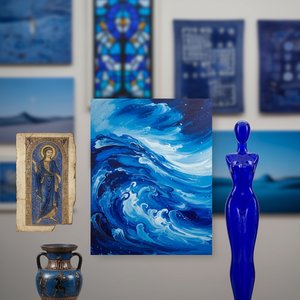
The Allure of Azure: Exploring the Symbolic & Aesthetic Depths of Blue in Art History
Explore the rich history of blue in art! Discover its symbolism, from ancient pigments to modern masterpieces by Kandinsky & Seurat. Uncover the psychological impact and cultural meanings behind this captivating hue.

Serene Blue Backgrounds: Discover Soulful Art to Transform Your Space with Timeless Elegance
Transform your home with soulful blue art. From serene Monet impressions to modern textured sculptures, discover curated masterpieces designed to inspire calm. Explore expert art consultations and bespoke hand-painted reproductions to create your personal sanctuary.

Slate Blue Masterpieces: 10 Iconic Paintings & Timeless Home Decor Ideas
Immerse yourself in the captivating world of slate blue! Explore 10 iconic paintings by Monet, Van Gogh & Renoir. Discover their stories, techniques & find museum-quality art reproductions for your home at .


