 油彩画を購入
 Chéri Bibiの詳細







































 いずれかの辺が105 cm(約41インチ)を超えるアートワークまたは複製画の場合、フレームは分解されたキットの状態でお届けいたします。この方法は、輸送中の破損を防ぎ、安全に配送するために採用しております。


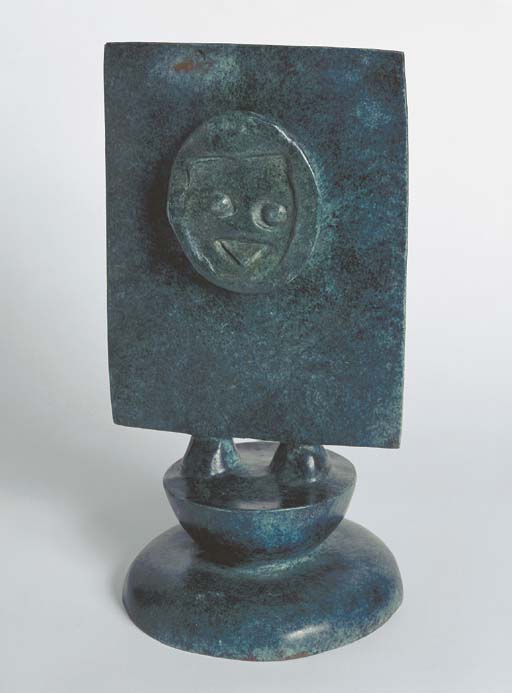
A Fragment of Surreal Reverie: The Enigmatic Presence of Chéri Bibi
In the vast, labyrinthine landscape of Surrealism, few objects possess the quiet, unsettling charm of Max Ernst’s Chéri Bibi. Crafted in the mid-1930s, this sculpture serves as a profound window into the artist's psyche, acting less like a static object and more like a fragment of a dream captured in metal. At first glance, the work presents a striking simplicity, yet beneath its surface lies a complex tapestry of philosophical inquiry and psychological depth. The piece is composed of three interconnected elements—a sturdy rectangular base, a central pedestal, and a stylized face relief—that together create a vertical ascent toward a whimsical, yet enigmatic, expression. It is an artwork that does not merely occupy space; it commands attention through its ability to bridge the gap between the tangible world and the boundless reaches of the subconscious.
The materiality of Chéri Bibi is central to its emotional resonance. Utilizing bronze or patinated metal, Ernst embraced a texture that feels intentionally raw and uneven. This deliberate manipulation of the surface avoids the polished perfection often found in classical sculpture, instead leaning into a primitive, almost tribal aesthetic. The rough contours invite the viewer to touch with their eyes, sensing the weight and history embedded in the patina. Through this technique, Ernst disrupts the illusion of reality, using the interplay of light and shadow across the textured metal to evoke primal emotions. For the discerning collector or interior designer, this piece offers a sophisticated textural element that brings an organic, historical soul to any contemporary setting.
Symbolism and the Architecture of the Subconscious
To understand Chéri Bibi, one must look through the lens of Ernst’s academic background in philosophy, psychology, and psychiatry. The sculpture is a masterclass in the juxtaposition of opposites: the rigid, geometric precision of the rectangular base and cylindrical pedestal stands in stark contrast to the soft, organic curves of the facial relief. This tension between the rational and the irrational mirrors the core tenet of the Surrealist movement—the desire to liberate the imagination from the constraints of logic. The face itself, with its oversized eyes, small nose, and a wide, playful smile, transcends literal representation. It taps into archetypal imagery, reminiscent of ancient masks, suggesting a sense of timelessness and universality that speaks to the shared human experience of joy and mystery.
The emotional impact of the work is found in its duality. While the smile suggests a sense of whimsy or even amusement, there is an underlying enigmatic quality that prevents the piece from feeling merely decorative. It invites contemplation about vulnerability, desire, and the repressed layers of the human mind. For those seeking to curate a space filled with intellectual depth, Chéri Bibi provides a focal point that stimulates conversation and introspection. As a high-quality reproduction, it allows the spirit of Ernst’s revolutionary vision to inhabit modern interiors, offering a touch of Surrealist magic that transforms a room into a sanctuary for the imagination.
Q&A
Chéri Bibiは手描きですか、それともプリントですか?
手描きによる制作:熟練した画家が、リネンキャンバスに油彩でChéri Bibiを模写します。
Chéri Bibiのサイズはどれを選べばよいですか?
サイズは36.8 x 27.2 cm (¥31567)から245.0 x 181.0 cm (¥258847)まで展開しております。こちらのページ内の表に、主な工程とそれぞれの価格を記載しています。
配送にはどのくらいの時間がかかりますか?
配送には4〜5週間を要し、世界中どこでも速達便にて無料でお届けいたします。また、本ページではお急ぎの方向けの特急制作オプションもご用意しております。商品は、理由を問わず100日以内であれば全額返金での返品が可能です。
マックス・エルンストはChéri Bibiの制作にどのような画材(メディア)を使用しましたか?
Bronze
 シェアする
 シェアする
 詳細を見る
 解説シート


 ダウンロード
 似ている作品
 スライドショーを表示
 Q&A

 統計情報





