
 シェアする
シェアする シェアする
シェアする
 詳細を見る
詳細を見る

 ダウンロード
 似ている作品
 スライドショー
 統計情報
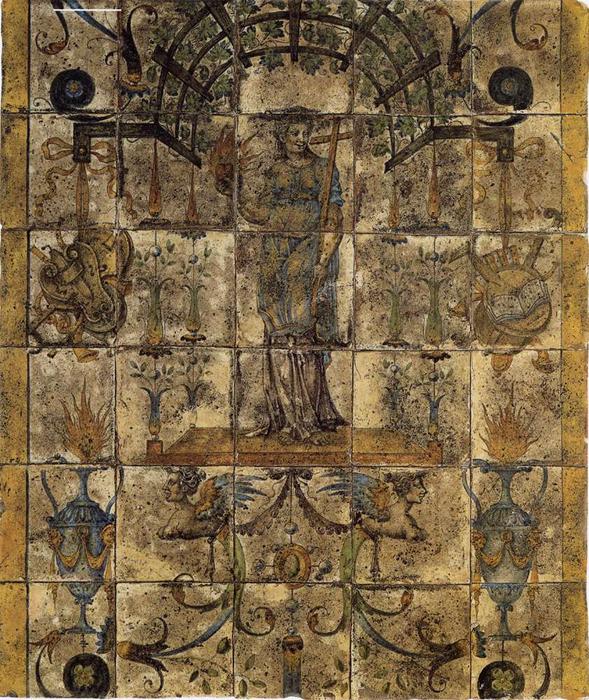
統計情報Ceramic Floor


 詳細を見る
詳細を見る
手描き油彩複製画
当社のアーティストが、お客様のご希望のサイズと額縁に合わせて、キャンバスに手描きで制作する油彩画です。 ( プリント版に切り替え デジタル画像販売へ切り替え)




































作品のオリジナル比率に合わせた、当店の規定サイズからお選びください。

特定のフレームやスペースに合わせて、ご希望のサイズをご入力いただけます。選択されたサイズが元の画像の比率と異なる場合、アートワークをトリミングするか、手描きで要素を追加して絵画を拡張いたします。デジタルモックアップ を制作し、制作開始前にご確認(承認)をいただきます。
画面上のプレビューは、実際のトリミングや拡張を正確に反映しているものではありません。最終的な構図は、モックアップによってのみ正確にご確認いただけます。
カスタムサイズもご利用いただけますが、元の比率を維持するためには、あらかじめ用意されたリストからサイズを選択することをお勧めいたします。
ご注文後、OriginalUniqueArt.com チームより詳細な指示をお送りするとともに、仕上がりイメージ(モックアップ)をご提供いたします。


 ガラスオプションは、110cm未満のサイズでのみご利用いただけます。

Ceramic Floor
複製技法
複製画のサイズ
-


合計金額
$ 300
アーティストの略歴
The Renaissance Potter of Rouen: Masséot Abaquesne and the Brilliance of French Faience
Masséot Abaquesne, a name perhaps unfamiliar to many outside the circles of ceramic history, represents a pivotal figure in the development of French faience during the 16th century. Born around 1500 in Cherbourg, Normandy, and passing away in 1564 in Sotteville-lès-Rouen, Abaquesne wasn’t merely a potter; he was an innovator who brought a new level of artistry and technical skill to earthenware production in France. His work emerged at a time when French decorative arts were increasingly looking towards Italy for inspiration, and he became instrumental in translating Italian Renaissance aesthetics into the distinctly French medium of tin-glazed pottery.Early Life and the Rise of Rouen Ceramics
Details surrounding Abaquesne’s early life remain somewhat scarce, a common challenge when studying artisans from this period. However, it is known that he established himself in Rouen by 1538, quickly becoming a leading figure in the burgeoning ceramic industry of the city. Rouen, strategically located and with access to essential raw materials, was poised to become a center for faience production. Abaquesne’s arrival coincided with a growing demand for decorative ceramics among the French nobility and wealthy merchant class, who were eager to emulate the sophisticated tastes of Italy. He rapidly rose through the ranks, eventually becoming director of the Rouen factory, solidifying his position as a master craftsman. His early work demonstrated a keen understanding of Italian maiolica techniques, but he wasn’t simply an imitator; he began to develop a unique style that blended Italian influences with French sensibilities.A Master of Technique and Design
Abaquesne's mastery lay in his skillful application of *grand feu* technique – firing the glaze and metallic oxides at a high temperature, resulting in a limited but vibrant palette of blues, yellows, browns, and greens. This contrasted with later *petit feu* methods that allowed for greater color variation but required more complex firing processes. His most celebrated achievement is undoubtedly the ceramic pavement created for the Château d'Écouen in 1542 for Anne de Montmorency, Constable of France. This remarkable floor, a veritable “earthenware carpet,” showcased his ability to create large-scale decorative schemes with intricate designs and narrative scenes. The subject matter often drew from mythology, heraldry, and grotesque motifs – popular themes during the Renaissance. Beyond the Écouen pavement, Abaquesne became renowned for his *albarello* jars—pharmacy vessels adorned with faces and floral wreaths. He produced over 4,000 of these jars for Pierre Dubosc, a Rouen apothecary, demonstrating both his technical capacity and the commercial success of his workshop.Influences and Legacy
The artistic lineage of Abaquesne is complex. While Luca della Robbia’s sculptural ceramics undoubtedly influenced his early style, particularly in the use of relief decoration and expressive faces, he also drew inspiration from Bernard Palissy, another pioneering French potter who experimented with innovative glazing techniques. However, Abaquesne predated much of Palissy's most famous work, establishing himself as a key figure *before* Palissy’s rise to prominence. His studio became a hub for ceramic innovation, and his influence extended beyond Rouen. The tiles he created for Claude d'Urfé’s chapel in the Loire Valley, though later dispersed, further attest to his widespread reputation and patronage. Abaquesne’s work paved the way for the flourishing of French faience in the 17th and 18th centuries, influencing generations of potters and contributing significantly to the development of a distinctly French ceramic tradition. His legacy is not merely one of technical skill but also of artistic vision—a testament to his ability to transform humble earthenware into objects of beauty and enduring cultural significance.Rediscovering Abaquesne: Modern Appreciation
For centuries, Abaquesne’s contributions were often overshadowed by the fame of later ceramicists like Palissy. However, recent scholarship and exhibitions – such as the retrospective organized by the National Renaissance Museum in partnership with the Rouen Museum of Fine Arts and Ceramics – have brought renewed attention to his work. Museums worldwide, including The Metropolitan Museum of Art, now showcase examples of his tiles and *albarello* jars, allowing a wider audience to appreciate his artistry. The brilliance of Abaquesne’s faience lies not only in its aesthetic qualities but also in its historical context. He represents a crucial moment in the French Renaissance—a time when artistic influences converged, and new techniques were embraced, leading to the creation of uniquely beautiful and culturally significant objects. His story serves as a reminder that even seemingly modest crafts can embody profound artistic innovation and lasting cultural impact. His work continues to inspire contemporary artists and collectors alike.
masséot abaquesne
1500 - 1564 , France
基本情報
- Artistic Movement Or Style: Faience, Rouen ceramics
- Artists Or Movements Influenced By This Artist: ['Anne de Montmorency']
- Artists Who Influenced This Artist:
- Luca della Robbia
- Bernard Palissy
- Date Of Birth: 1500
- Date Of Death: 1564
- Full Name: Masséot Abaquesne
- Nationality: French
- Notable Artworks:
- The Flood
- Ceramic Floor (Ecouen)
- Albarello
- Place Of Birth: Cherbourg, France
関連記事
The Art of Ceramics: A Guide to Mastery, Texture, and Timeless Form for the Discerning Collector
Explore the profound elegance of ceramic art. From master glazes to sculptural forms, our expert guide offers discerning collectors deep insights into the mastery, texture, and timeless value of fine ceramics for sophisticated collections and luxury interiors.
The Timeless Elegance of Academic Classicism: A Journey Through Order, Precision, and the Pursuit of Perfection
Explore the profound beauty of Academic Classicism. Discover how masters used order, precision, and classical ideals to achieve timeless perfection in art history, from Neoclassical portraits to the pursuit of ideal beauty.

The Enduring Legacy of Classicism: Principles, Evolution & Influence in Western Art
Explore the enduring legacy of Classicism in Western art! Discover its historical context, key principles, iconic masterpieces & lasting influence. Learn about Renaissance and Neoclassical movements with OriginalUniqueArt.
Neo-Classicism's Greatest Hits: 10 Masterpieces for Your Home |
Journey through Neo-Classicism's finest! Explore 10 iconic masterpieces by David, Ingres & Canova. Discover art history, techniques & timeless beauty – perfect for inspiring your home decor. Find museum-quality reproductions at

The Alchemy of Clay: A Collector's Guide to the Mastery, Texture, and Timeless Form of Ceramic Art
Discover the profound beauty of ceramic art. Our expert guide explores the alchemy of clay, texture, and glaze, offering collectors deep insights into mastering earth and fire to create timeless, sculptural masterpieces for any curated collection.