 設置イメージを確認
 送る
送る シェア
シェア
 詳細情報
詳細情報 ガイドを表示

 画像をダウンロード
 似ている作品
 X線調査
X線調査 スライドショー
 Q&A
Q&A 統計情報
統計情報Cupid as a Honey Thief


 続きを読む
続きを読む
ジークレー/アートプリント
スピーディーな制作と多彩な仕上げオプションが魅力の、ミュージアムクオリティなジークレー・キャンバスプリント。 ( 手描きの複製画を注文する デジタル画像販売へ切り替え)




P118B ¥10

P118H ¥10

P118W ¥10

P438Z ¥10

P508JH ¥12

P508YH ¥12

P805H ¥10

P805Z ¥10

P919BZ ¥10

P919G ¥10

P919XJ ¥10

P959ZH ¥10

P968JZ ¥12

W106C ¥8

W218G ¥10

W218JH ¥8

W218Y ¥10

W307PJ ¥10

W316G ¥10

W316PJ ¥8

W316Y ¥10

W398PJ ¥8

W4111J ¥10

W500HY ¥15

W500JH ¥15

W692G ¥12

W849H ¥8

W940BG ¥15

W953PJ ¥8




作品のオリジナル比率に合わせた、当店の規定サイズからお選びください。

額縁や壁のスペースに合わせて、ご希望の幅と高さを入力してください。プリントはカットすることは可能ですが、元の画像より大きくすることはできないため、異なる比率のサイズを選択された場合は、画像の一部が欠けることになります。印刷を開始する前に、内容を確認していただくためのデジタルモックアップをお送りいたします。このページに表示されている画像は、実際のカット後の状態を示すものではありません。実際の仕上がりはモックアップにてご確認ください。


 ガラスオプションは、110cm未満のサイズでのみご利用いただけます。

Cupid as a Honey Thief
ジークレー/アートプリント
複製画サイズ一覧
-


合計金額
¥ 12624
Lucas Cranach's "Cupid as a Honey Thief": A Portrait of Mischief and Reformation
Lucas Cranach the Elder’s “Cupid as a Honey Thief,” painted in 1531, is more than just a charming depiction of a baby; it’s a window into the tumultuous heart of the German Renaissance. This captivating work, currently residing at the Staatliche Kunsthalle Karlsruhe, reveals the artist's masterful ability to blend technical skill with profound psychological insight – qualities that cemented his place as a pivotal figure in the era’s artistic landscape.
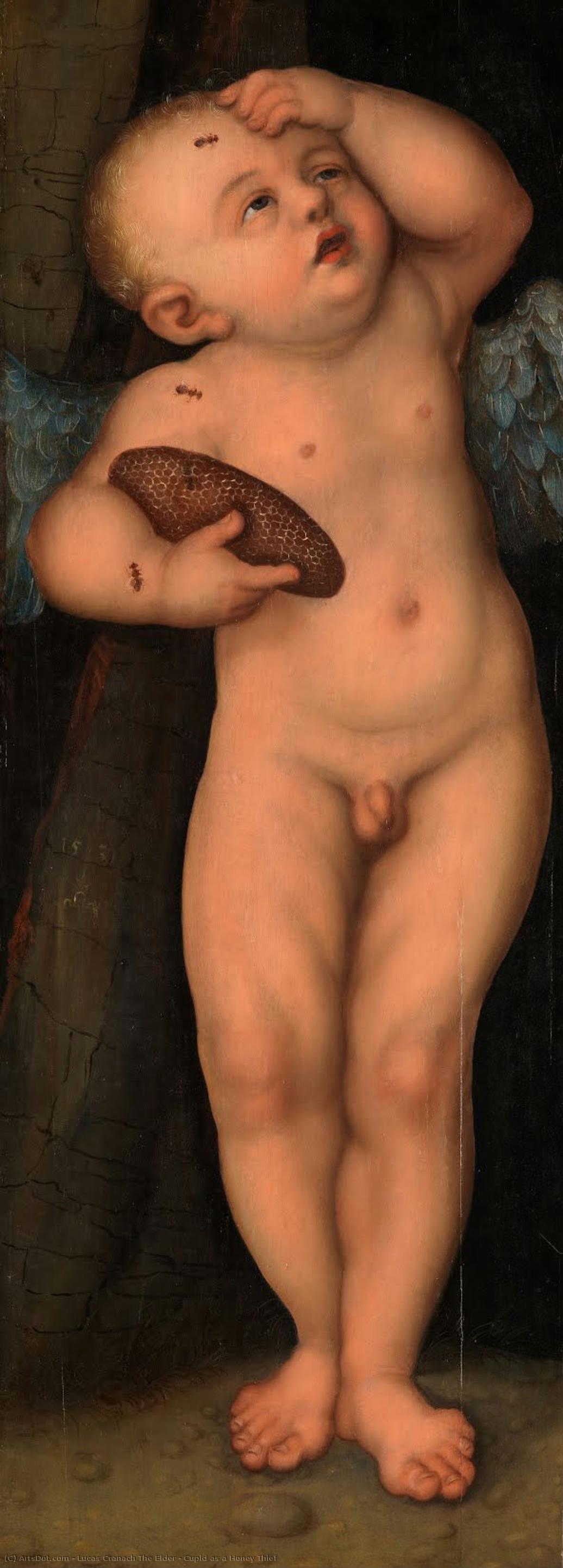
The painting portrays a naked infant, seemingly caught in the act of pilfering a ball. The child’s expression is one of discomfort, a subtle yet powerful detail that elevates the image beyond simple representation. Cranach doesn't simply depict a baby; he captures a fleeting moment of youthful transgression, hinting at the inherent mischief and vulnerability within human nature. The loose handling of the drapery and the slightly blurred edges contribute to this sense of immediacy and spontaneity – hallmarks of Cranach’s evolving style.
Renaissance Symbolism and Courtly Patronage
Created during a period of intense religious and political change, “Cupid as a Honey Thief” reflects the anxieties and aspirations of its time. The Reformation was gaining momentum, challenging established Catholic doctrines, and Cranach’s work often navigated this complex terrain. The image of Cupid, traditionally associated with love and desire, is here transformed into a ‘thief,’ suggesting a disruption of order – perhaps mirroring the religious upheaval occurring across Europe.
Cranach's patronage primarily came from the court of Frederick III, Elector of Saxony, a relationship that provided him with both security and access to influential circles. This connection is evident in the painting’s refined execution and its adherence to Renaissance ideals of beauty and humanism. The use of rich pigments – reds, golds, and browns – reflects the opulence associated with courtly life, while the careful attention to detail demonstrates Cranach's mastery of oil paint, a medium he skillfully employed to achieve luminous effects.
Technique and Artistic Innovation
Cranach’s technique in “Cupid as a Honey Thief” is characterized by its remarkable realism combined with an expressive quality. He utilized sfumato – a subtle blurring of edges – to create a sense of depth and atmosphere, particularly noticeable in the rendering of the baby's face. The artist’s use of light and shadow further enhances the painting’s dramatic effect, drawing the viewer’s eye to the central figure.
Unlike some of his contemporaries who favored idealized representations, Cranach embraced a more naturalistic approach, evident in the infant’s slightly awkward pose and the realistic depiction of skin tones. This commitment to observation and detail was revolutionary for its time and contributed significantly to Cranach's enduring legacy as one of the most important artists of the German Renaissance.
Emotional Impact and Reproduction Possibilities
"Cupid as a Honey Thief" resonates with viewers on multiple levels, evoking feelings of nostalgia, amusement, and perhaps even a touch of guilt. The painting’s inherent vulnerability and innocence invite contemplation about childhood, temptation, and the complexities of human behavior. A hand-painted reproduction of this iconic work offers an unparalleled opportunity to bring this captivating image into your home or office – a testament to Cranach's genius and a timeless symbol of youthful mischief.
よくあるご質問
ルイス・クラナッハの長老作「Cupid as a Honey Thief」は、絵画、デッサン、それとも版画のいずれでしょうか?
「Cupid as a Honey Thief」は、WallArtの作品です。
「Cupid as a Honey Thief」の作者であるルイス・クラナッハの長老には、他に知られている名前はありますか?
ルイス・クラナッハの長老は、ルイス・マラー, ルイス・クラナッハという別名でも知られています。
「Cupid as a Honey Thief」は、いつ、どのような技法と素材で制作されましたか?
「Cupid as a Honey Thief」は、1531年にOil On Canvas技法を用いて制作されました。素材と制作年は、原画がどのように、いつ制作されたかを示すものです。
アーティストについて
Lucas Cranach the Elder
Lucas Cranach the Elder, born around 1472 in Kronach (現在のドイツ)、フランコンテンの都市として、彼の父親ハンス・マラーは画家であり、彼はハンス・マラーから最初の芸術的な指導を受けた。彼の母親はハブナー氏で、1491年に亡くなった。その後、彼の出生地の名前が彼の姓に用いられ、これは美術家の職業ではなく、その出自を表すものであった。クラナッハの訓練場所は不明であるが、彼は南ドイツの画家たちの影響を受けていたと考えられている。特にマティアス・グリュニューアルドとの関係は非常に近く、彼の息子ハンスも同じように芸術的な指導を受けた。彼は1504年にエレクトルのフリードリヒ3世に仕え、この関係は彼のキャリアを定義し、同時に彼に影響力のある人々へのアクセスを提供した。このエレクトルの画家としての任命は単に装飾的な作品を作ることだけではなかった。それはエレクトルの権威、聖職、そして伝統的な宗教秩序に挑戦するリーダーの役割を投影するように設計されたイメージだった。ウィッテンベルクでエレクトルの画家を務めることで、クラナッハはヨーロッパにおける最も重要な動きの中心にいた。Early Life and Artistic Training
彼の父親ハンス・マラーとの関係は単に収入を得ることだけではなかった。彼は美術家の職業ではなく、その出自を表すものであった。クラナッハの訓練場所は不明であるが、彼は南ドイツの画家たちの影響を受けていたと考えられている。特にマティアス・グリュニューアルドとの関係は非常に近く、彼の息子ハンスも同じように芸術的な指導を受けた。彼は1504年にエレクトルのフリードリヒ3世に仕え、この関係は彼のキャリアを定義し、同時に彼に影響力のある人々へのアクセスを提供した。このエレクトルの画家としての任命は単に装飾的な作品を作ることだけではなかった。それはエレクトルの権威、聖職、そして伝統的な宗教秩序に挑戦するリーダーの役割を投影するように設計されたイメージだった。ウィッテンベルクでエレクトルの画家を務めることで、クラナッハはヨーロッパにおける最も重要な動きの中心にいた。彼は父親ハンス・マラーから最初の芸術的な指導を受けた。彼の母親はハブナー氏で、1491年に亡くなった。その後、彼の出生地の名前が彼の姓に用いられ、これは美術家の職業ではなく、その出自を表すものであった。クラナッハの訓練場所は不明であるが、彼は南ドイツの画家たちの影響を受けていたと考えられている。特にマティアス・グリュニューアルドとの関係は非常に近く、彼の息子ハンスも同じように芸術的な指導を受けた。彼は父親ハンス・マラーから最初の芸術的な指導を受けた。彼の母親はハブナー氏で、1491年に亡くなった。その後、彼の出生地の名前が彼の姓に用いられ、これは美術家の職業ではなく、その出自を表すものであった。クラナッハの訓練場所は不明であるが、彼は南ドイツの画家たちの影響を受けていたと考えられている。特にマティアス・グリュニューアルドとの関係は非常に近く、彼の息子ハンスも同じように芸術的な指導を受けた。彼は父親ハンス・マラーから最初の芸術的な指導を受けた。彼の母親はハブナー氏で、1491年に亡くなった。その後、彼の出生地の名前が彼の姓に用いられ、これは美術家の職業ではなく、その出自を表すものであった。クラナッハの訓練場所は不明であるが、彼は南ドイツの画家たちの影響を受けていたと考えられている。特にマティアス・グリュニューアルドとの関係は非常に近く、彼の息子ハンスも同じように芸術的な指導を受けた。彼は父親ハンス・マラーから最初の芸術的な指導を受けた。彼の母親はハブナー氏で、1491年に亡くなった。その後、彼の出生地の名前が彼の姓に用いられ、これは美術家の職業ではなく、その出自を表すものであった。クラナッハの訓練場所は不明であるが、彼は南ドイツの画家たちの影響を受けていたと考えられている。特にマティアス・グリュニューアルドとの関係は非常に近く、彼の息子ハンスも同じように芸術的な指導を受けた。彼は父親ハンス・マラーから最初の芸術的な指導を受けた。彼の母親はハブナー氏で、1491年に亡くなった。その後、彼の出生地の名前が彼の姓に用いられ、これは美術家の職業ではなく、その出自を表すものであった。クラナッハの訓練場所は不明であるが、彼は南ドイツの画家たちの影響を受けていたと考えられている。特にマティアス・グリュニューアルドとの関係は非常に近く、彼の息子ハンスも同じように芸術的な指導を受けた。彼は父親ハンス・マラーから最初の芸術的な指導を受けた。彼の母親はハブナー氏で、1491年に亡くなった。その後、彼の出生地の名前が彼の姓に用いられ、これは美術家の職業ではなく、その出自を表すものであった。クラナッハの訓練場所は不明であるが、彼は南ドイツの画家たちの影響を受けていたと考えられている。特にマティアス・グリュニューアルドとの関係は非常に近く、彼の息子ハンスも同じように芸術的な指導を受けた。彼は父親ハンス・マラーから最初の芸術的な指導を受けた。彼の母親はハブナー氏で、1491年に亡くなった。その後、彼の出生地の名前が彼の姓に用いられ、これは美術家の職業ではなく、その出自を表すものであった。クラナッハの訓練場所は不明であるが、彼は南ドイツの画家たちの影響を受けていたと考えられている。特にマティアス・グリュニューアルドとの関係は非常に近く、彼の息子ハンスも同じように芸術的な指導を受けた。彼は父親ハンス・マラーから最初の芸術的な指導を受けた。彼の母親はハブナー氏で、1491年に亡くなった。その後、彼の出生地の名前が彼の姓に用いられ、これは美術家の職業ではなく、その出自を表すものであった。クラナッハの訓練場所は不明であるが、彼は南ドイツの画家たちの影響を受けていたと考えられている。特にマティアス・グリュニューアルドとの関係は非常に近く、彼の息子ハンスも同じように芸術的な指導を受けた。彼は父親ハンス・マラーから最初の芸術的な指導を受けた。彼の母親はハブナー氏で、1491年に亡くなった。その後、彼の出生地の名前が彼の姓に用いられ、これは美術家の職業ではなく、その出自を表すものであった。クラナッハの訓練場所は不明であるが、彼は南ドイツの画家たちの影響を受けていたと考えられている。特にマティアス・グリュニューアルドとの関係は非常に近く、彼の息子ハンスも同じように芸術的な指導を受けた。彼は父親ハンス・マラーから最初の芸術的な指導を受けた。彼の母親はハブナー氏で、1491年に亡くなった。その後、彼の出生地の名前が彼の姓に用いられ、これは美術家の職業ではなく、その出自を表すものであった。クラナッハの訓練場所は不明であるが、彼は南ドイツの画家たちの影響を受けていたと考えられている。特にマティアス・グリュニューアルドとの関係は非常に近く、彼の息子ハンスも同じように芸術的な指導を受けた。彼は父親ハンス・マラーから最初の芸術的な指導を受けた。彼の母親はハブナー氏で、1491年に亡くなった。その後、彼の出生地の名前が彼の姓に用いられ、これは美術家の職業ではなく、その出自を表すものであった。クラナッハの訓練場所は不明であるが、彼は南ドイツの画家たちの影響を受けていたと考えられている。特にマティアス・グリュニューアルドとの関係は非常に近く、彼の息子ハンスも同じように芸術的な指導を受けた。彼は父親ハンス・マラーから最初の芸術的な指導を受けた。彼の母親はハブナー氏で、1491年に亡くなった。その後、彼の出生地の名前が彼の姓に用いられ、これは美術家の職業ではなく、その出自を表すものであった。クラナッハの訓練場所は不明であるが、彼は南ドイツの画家たちの影響を受けていたと考えられている。特にマティアス・グリュニューアルドとの関係は非常に近く、彼の息子ハンスも同じように芸術的な指導を受けた。彼は父親ハンス・マラーから最初の芸術的な指導を受けた。彼の母親はハブナー氏で、1491年に亡くなった。その後、彼の出生地の名前が彼の姓に用いられ、これは美術家の職業ではなく、その出自を表すものであった。クラナッハの訓練場所は不明であるが、彼は南ドイツの画家たちの影響を受けていたと考えられている。特にマティアス・グリュニューアルドとの関係は非常に近く、彼の息子ハンスも同じように芸術的な指導を受けた。彼は父親ハンス・マラーから最初の芸術的な指導を受けた。彼の母親はハブナー氏で、1491年に亡くなった。その後、彼の出生地の名前が彼の姓に用いられ、これは美術家の職業ではなく、その出自を表すものであった。クラナッハの訓練場所は不明であるが、彼は南ドイツの画家たちの影響を受けていたと考えられている。特にマティアス・グリュニューアルドとの関係は非常に近く、彼の息子ハンスも同じように芸術的な指導を受けた。彼は父親ハンス・マラーから最初の芸術
ルイス・クラナッハの長老
1472 - 1553 , ドイツ
アーティスト情報
- Artistic Movement Or Style: 北欧ルネサンス美術
- Artists Or Movements Influenced By This Artist: ['アルブレヒト・デューラー']
- Artists Who Influenced This Artist: ['ハンス・マラー']
- Date Of Birth: 1472年頃
- Date Of Death: 1553年10月16日
- Full Name: Lucas Cranach der Ältere
- Nationality: ドイツ人
- Notable Artworks: ['聖狩礼儀']
- Place Of Birth: クローナッハ、ドイツ
関連記事

OriginalUniqueArt.com F.A.Q.: Elevate Your Decor with Premium Textured Giclée Prints
Discover the distinction of OriginalUniqueArt.com premium textured Giclée prints. Expertly crafted with archival 12-color pigments and museum-grade substrates, our prints offer unparalleled vividness for the discerning collector seeking luxury, durability, and timeless elegance.