
 設置イメージを確認
 送る
送る シェア
シェア
 詳細情報
詳細情報 ガイドを表示

 画像をダウンロード
 似ている作品
 X線調査
X線調査 スライドショー
 Q&A
Q&A 統計情報
統計情報COUPE DE CERISES, PRUNES ET MELON


 続きを読む
続きを読む
ジークレー/アートプリント
スピーディーな制作と多彩な仕上げオプションが魅力の、ミュージアムクオリティなジークレー・キャンバスプリント。 ( 手描きの複製画を注文する デジタル画像販売へ切り替え)




P118B ¥10

P118H ¥10

P118W ¥10

P438Z ¥10

P508JH ¥12

P508YH ¥12

P805H ¥10

P805Z ¥10

P919BZ ¥10

P919G ¥10

P919XJ ¥10

P959ZH ¥10

P968JZ ¥12

W106C ¥8

W218G ¥10

W218JH ¥8

W218Y ¥10

W307PJ ¥10

W316G ¥10

W316PJ ¥8

W316Y ¥10

W398PJ ¥8

W4111J ¥10

W500HY ¥15

W500JH ¥15

W692G ¥12

W849H ¥8

W940BG ¥15

W953PJ ¥8




作品のオリジナル比率に合わせた、当店の規定サイズからお選びください。

額縁や壁のスペースに合わせて、ご希望の幅と高さを入力してください。プリントはカットすることは可能ですが、元の画像より大きくすることはできないため、異なる比率のサイズを選択された場合は、画像の一部が欠けることになります。印刷を開始する前に、内容を確認していただくためのデジタルモックアップをお送りいたします。このページに表示されている画像は、実際のカット後の状態を示すものではありません。実際の仕上がりはモックアップにてご確認ください。


 ガラスオプションは、110cm未満のサイズでのみご利用いただけます。

COUPE DE CERISES, PRUNES ET MELON
ジークレー/アートプリント
複製画サイズ一覧
-


合計金額
¥ 12626
Louise Moillon’s “Coupe de Cerises, Prunes et Melon”: A Baroque Still Life of Quiet Abundance
The painting "Coupe de cerises, prunes et melon" by Louise Moillon, completed around 1633, is more than just a depiction of fruit; it's a meticulously crafted meditation on beauty, abundance, and the fleeting nature of pleasure. Within its deceptively simple composition lies a wealth of Baroque artistry – a masterful blend of Flemish realism, French elegance, and subtle symbolism that continues to captivate viewers centuries later. This intimate still life, now residing within the hallowed halls of the Louvre Museum in Paris, offers a rare glimpse into the world of a pioneering female artist operating within a traditionally male-dominated field.
Moillon’s artistic journey unfolded against the backdrop of 17th-century France, a period marked by religious upheaval and burgeoning artistic innovation. Born into a Huguenot family – refugees fleeing persecution in Holland – her upbringing instilled a deep appreciation for naturalism and symbolic representation, qualities that profoundly shaped her distinctive style. Unlike many of her contemporaries who favored grand historical or mythological scenes, Moillon focused on the quiet beauty of everyday objects, elevating them to an almost sacred level through her painstaking attention to detail and masterful use of light and shadow.
A Symphony of Color and Texture
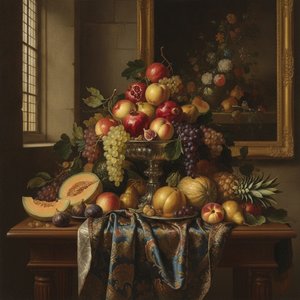
The painting’s immediate impact is one of serene elegance. Moillon employs a carefully orchestrated palette – a harmonious blend of deep browns, rich reds, vibrant yellows, and muted greens – that draws the eye into the heart of the composition: a gleaming porcelain bowl overflowing with an array of fruits. The cerises, bursting with juicy red color, are strategically placed to command attention, their brightness contrasted against the darker tones of the plums and melon. Moillon’s technique is characterized by an extraordinary level of detail; each fruit – from the velvety texture of the melon rind to the delicate veins on a plum leaf – is rendered with astonishing precision.
The artist's mastery extends beyond mere representation. Moillon skillfully manipulates light and shadow, creating a dramatic chiaroscuro effect that adds depth and volume to the scene. The strong directional lighting, originating from an unseen source above and slightly to the left, casts long, elegant shadows that define the forms of each object, lending them a tangible presence. This masterful use of light not only enhances the visual impact but also evokes a sense of stillness and contemplation – inviting the viewer to linger and appreciate the beauty before them.
Symbolism and Context
Still lifes during the Renaissance and Baroque periods were often imbued with symbolic meaning, representing concepts such as wealth, prosperity, and mortality. In "Coupe de cerises," the abundance of fruit can be interpreted as a symbol of earthly delights – a reminder of the pleasures of life but also a poignant acknowledgment of their transient nature. The carefully arranged composition itself suggests an order and harmony that reflects the ideals of classical art and Renaissance thought.
Furthermore, Moillon’s work is rooted in the artistic traditions of the Netherlands, particularly the Flemish school of painting, which was highly influential in France during this period. The use of trompe l'oeil – a technique designed to create an illusion of three-dimensionality – is evident in the subtle details and realistic textures that contribute to the painting’s overall sense of depth and realism. The placement of the bowl on a dark wooden table, extending into the background, further enhances this effect, blurring the boundaries between the painted world and the viewer's perception.
A Timeless Masterpiece
"Coupe de cerises, prunes et melon" stands as a testament to Louise Moillon’s artistic skill and her ability to capture the essence of beauty in a single image. It is a painting that rewards repeated viewing, revealing new details and nuances with each encounter. More than just a still life, it's a profound meditation on art, nature, and the human experience – a timeless masterpiece that continues to inspire and delight viewers today. Reproductions of this iconic work offer an accessible way to bring its serene elegance into any space, allowing one to appreciate the artistry and symbolism within.
よくあるご質問
「COUPE DE CERISES, PRUNES ET MELON」は、どのアーティストの作品とされていますか?
「COUPE DE CERISES, PRUNES ET MELON」はルイーズ・モワヨンによって制作されました。このページでは、ルイーズ・モワヨンのオリジナル作品についてご紹介しています。
ルイーズ・モワヨン作「COUPE DE CERISES, PRUNES ET MELON」の複製画は、お部屋にどのような雰囲気をもたらしてくれるでしょうか?
Elegantな雰囲気を持つ「COUPE DE CERISES, PRUNES ET MELON」は、Living Roomに飾るのがおすすめです。
ルイーズ・モワヨンによる「COUPE DE CERISES, PRUNES ET MELON」は、どの程度知られていますか?
「COUPE DE CERISES, PRUNES ET MELON」の注目度はRecognizedに分類されます。
アーティストについて
ルイーズ・モイヨンの静かなる輝き
ドラマと躍動感がキャンバスを支配することの多いバロック時代の壮大な物語の中で、ルイーズ・モイヨンの作品は、深遠で瞑想的な選択肢を私たちに提示してくれます。1610年にパリで生まれたモイヨンは、17世紀フランスの激しい宗教的・文化的変革によって形作られた世界から現れました。彼女の血統そのものが、強靭な精神と芸術的遺産の物語を語っています。オランダから逃れてきたユグノー(プロテスタント)の末裔として、彼女は自然界を細部まで観察することを尊ぶ伝統の中に身を置いていました。この背景は単なる家族の歴史にとどまらず、光、質感、そして象徴的なリアリズムにおけるオランダの卓越した技法に根ざした、独自の様式美という語彙を彼女に授けたのです。
モイヨンの幼少期は、喪失と深い芸術的指導の両面によって刻まれました。わずか10歳の時に、風景画家であり画商でもあった父ニコラ・モイヨンを亡くしたことは、彼女の歩む道を大きく変えていたかもしれません。しかし、彼女の育ちは芸術の中に深く根ざしたままでした。熟練した芸術家であり画商であった義父フランソワ・ガルニエの指導の下、彼女は後に自身の代名詞となる技法を磨き上げました。彼女の教育は、単にキャンバスに顔料を塗る技術を学ぶことだけではありませんでした。それは当時のヒューマニズム的な価値観への没入でもあり、熟れていく果実の微細なディテールや、花びらの繊細な曲線の中に、神聖なものを見出す術を学ぶ過程でもあったのです。
質感と光の習熟
モイヨンの真の天才性は、ありふれた日常を非凡なものへと変貌させる能力にあります。彼女の構図は、静謐な静止状態を特徴としており、その静けさは鑑賞者を立ち止まらせ、じっくりと観察へと誘います。彼女は、シトロンの蝋のような質感のある皮、桃の柔らかな産毛、あるいは潰れた果実から溢れ出す半透明の果汁など、主題が持つ触覚的な性質を捉える、ほとんど超自然的な能力を備えていました。白い多葉皿に盛られたシトロンとキュラソーオレンジの静物画といった作品では、磁器の硬く艶やかな表面に対比される果実の冷ややかな湿り気を感じ取ることができ、二次元の平面を超越した感覚的な体験を生み出しています。
彼女の技法は、彼女が属していたプロテスタントの社交界における自然主義的な伝統から深い影響を受けていました。このアプローチは、より華美なバロックの巨匠たちが用いた演劇的な陰影よりも、明晰さと精密さを好みました。その代わりに、モイヨンは光を用いて主題を彫り出し、微妙な階調の変化を用いることで立体感と奥行きを生み出したのです。彼女のパレットは、自然界の鮮やかな色彩に焦点を当てることが多かったものの、極めて抑制された表現で用いられていたため、それぞれの色がまるで内側から照らされているかのように、光を放っているように感じられます。この熟練した技法によって、彼女は単なる植物図譜とハイアート(高尚な芸術)の境界を埋め、あらゆる作品に生命感と活力をもたらすことに成功したのです。
遺産と歴史的意義
90年近くに及ぶ長い生涯を通じて、モイヨンは当時の女性芸術家としては稀なほどの名声を得ました。王宮の人物を含む権威あるパトロンたちから依頼を獲得できたことは、彼女の作品が持つ否定しようのない質と洗練さを物語っています。彼女の作品はしばしば静物画という親密なスケールに焦点を当てていましたが、その影響力は広範囲に及び、フランスの静物画の伝統の発展に大きく貢献しました。
ルイーズ・モイヨンの歴史的な意義は、単なる技術的な卓越性を超えたところにあります。彼女は、オランダの自然主義的伝統と、17世紀に芽生えつつあったフランス的美学を結びつける重要な架け橋となったのです。彼女の絵画は、失われたパリの市場や私的な庭園の世界へと通じる窓であり、豊穣さと儚い美しさを捉えています。今日、彼女の作品はルーヴル美術館などの機関において大切に保管される至宝であり続けており、日常の中に非凡なものを見出すことに捧げられた生涯の、不朽の証として存在しています。彼女の遺産は、自然界の静かで息を呑むような素晴らしさを讃える、あらゆる一筆一筆の中に生き続けているのです。

ルイーズ・モワヨン
1610 - 1696 , フランス
アーティスト情報
- Artistic Movement Or Style: バロック静物画
- Artists Or Movements Influenced By This Artist:
- ミケランジェロ
- ラファエロ
- ティツィアーノ
- Artists Who Influenced This Artist:
- アイザック・モイヨン
- フランソワ・ガルニエ
- Date Of Birth: フランス、パリ (1610年)
- Date Of Death: 1696年
- Full Name: ルイーズ・モイヨン
- Nationality: フランス
- Notable Artworks:
- アプリコットの籠
- チェリー、プラム、メロンの器
- 桃、マルメロ、プラムの籠
- Place Of Birth: パリ
関連記事
Nature's Bounty: The Art History of Fruit Arrangement Masterpieces and the Baroque Still Life Tradition
Explore the profound beauty of fruit arrangement masterpieces. From Dutch Golden Age opulence to Baroque chiaroscuro, discover the art history, symbolism, and timeless elegance of classical still life paintings for the discerning collector.

バロック美術の真髄:光と影、劇的な動性が描き出す17世紀ヨーロッパの情熱
バロック美術の核心である光と影の技法や、カラヴァッジョからハルスに至る巨匠たちの情熱を専門的に解説します。17世紀ヨーロッパが放つ劇的な美の世界を今すぐ体験してください。

Baroque Classicism: The Grandeur of Order and Drama in 17th-Century Art History
Explore the profound elegance of Baroque Classicism. Discover how 17th-century masters synthesized dramatic emotion with classical order through the lens of the Counter-Reformation and the works of legends like Carlo Maratta and Andrea Sacchi.

バロック美術を極めた至宝:時代を彩る10大名作の世界
バロック美術の華!カラヴァッジョ、ベルニーニら巨匠が創り上げた10大名作を徹底解剖。ドラマチックな色彩と豪華絢爛の世界観に触れ、至宝のアートプリントで空間を彩ろう。OriginalUniqueArt.comで美術館品質の複製と洗練されたインテリアを見つけましょう!

The Bountiful Still Life: Symbolism & Artistic Representation of Fruit Across Art History
Explore the rich history of still life painting & the symbolism of fruit across art movements. Discover masterpieces from Caravaggio to Cézanne with OriginalUniqueArt – expert guidance & museum-quality reproductions.