
 設置イメージを確認
 送る
送る シェア
シェア
 詳細情報
詳細情報 ガイドを表示

 画像をダウンロード
 似ている作品
 X線調査
X線調査 スライドショー
 統計情報
統計情報Earth


 続きを読む
続きを読む
手描き油彩複製画
当社のアーティストが、お客様のご希望のサイズと額縁に合わせて、キャンバスに手描きで制作する油彩画です。 ( プリント版に切り替え デジタル画像販売へ切り替え)




P118B $10

P118H $10

P118W $10

P438Z $10

P508JH $12

P508YH $12

P805H $10

P805Z $10

P919BZ $10

P919G $10

P919XJ $10

P959ZH $10

P968JZ $12

W106C $8

W218G $10

W218JH $8

W218Y $10

W307PJ $10

W316G $10

W316PJ $8

W316Y $10

W398PJ $8

W4111J $10

W500HY $15

W500JH $15

W692G $12

W849H $8

W940BG $15

W953PJ $8




作品のオリジナル比率に合わせた、当店の規定サイズからお選びください。

特定のフレームやスペースに合わせて、ご希望のサイズをご入力いただけます。選択されたサイズが元の画像の比率と異なる場合、アートワークをトリミングするか、手描きで要素を追加して絵画を拡張いたします。デジタルモックアップ を制作し、制作開始前にご確認(承認)をいただきます。
画面上のプレビューは、実際のトリミングや拡張を正確に反映しているものではありません。最終的な構図は、モックアップによってのみ正確にご確認いただけます。
カスタムサイズもご利用いただけますが、元の比率を維持するためには、あらかじめ用意されたリストからサイズを選択することをお勧めいたします。
ご注文後、OriginalUniqueArt.com チームより詳細な指示をお送りするとともに、仕上がりイメージ(モックアップ)をご提供いたします。


 ガラスオプションは、110cm未満のサイズでのみご利用いただけます。

Earth
再現技法
複製画サイズ一覧
-


合計金額
$ 300
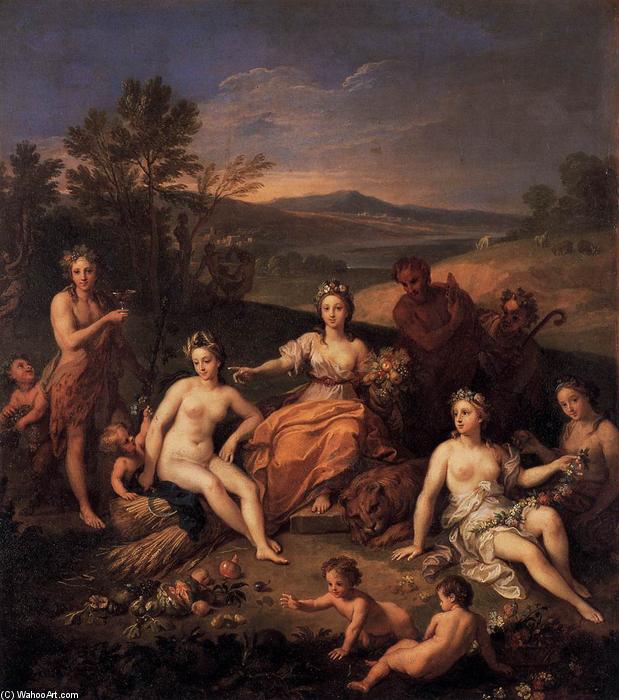
Symbolism and Composition
The woman at the center is seated on a rock, adorned with flowers and leaves that seem to sprout from her skin, symbolizing the bounty of nature. She holds a basket filled with fruits and vegetables, emphasizing the theme of abundance. The surrounding figures are engaged in different activities, such as playing musical instruments, suggesting a celebration or ritual. The presence of animals like a lion, a unicorn, and a bird adds to the diversity of life depicted in the painting. Key Features of the painting include:- The use of color, with shades of green, brown, and blue bringing the scene to life
- The serene landscape in the background, featuring trees and mountains under a clear blue sky
- The intricate details, such as the flowers and leaves on the central figure's body
The painting "Earth" is a testament to Louis The Younger Boullogne's ability to convey complex themes through visual storytelling. As a masterpiece of art, it continues to inspire and captivate audiences today. To explore more artworks like this, visit the OriginalUniqueArt.com collection, which features hand-made oil painting reproductions of famous works.
アーティストについて
The Scion of a Parisian Artistic Dynasty
Born in the heart of Paris in 1654, Louis de Boullogne the Younger entered a world where art was not merely a profession but a profound family inheritance. As the son of the esteemed Louis Boullogne I, his early years were steeped in the grand traditions of French painting and the rigorous atmosphere of the capital. While his father’s monumental religious frescoes commanded the sacred spaces of cathedrals like Saint-Denis, the younger Boullogne sought to carve a path that was uniquely his own. Alongside his brother, Bon Boullogne, he navigated the prestigious corridors of the Académie Royale, absorbing the humanist principles and technical discipline that would define his illustrious career. This formative period was less about escaping a familial shadow and more about refining a legacy, as he transformed the inherited mastery of his lineage into a sophisticated, personal vision of classical elegance.The Pursuit of Classical Elegance
As the seventeenth century gave way to the eighteenth, Boullogne’s artistic style underwent a profound metamorphosis. While his early inclinations leaned toward the intricate and sometimes strained complexities of Mannerism, he eventually found his true voice in the balanced clarity and serene grace championed by masters such as Nicolas Poussin and Claude Lorrain. His canvases became windows into a more ordered, luminous world. He possessed an unparalleled ability to render the human form with anatomical precision, yet he never allowed technical accuracy to overshadow the emotional resonance of his subjects. Through smooth, meticulous brushwork and a masterful command of subtle tonal gradations, he achieved a sense of visual harmony that felt both timeless and profoundly modern for his era. His skill in depicting the heavy, flowing folds of drapery and the soft, ethereal glow of light upon skin became the unmistakable hallmarks of his celebrated technique.A Symphony of Nature and Myth
The depth of Boullogne’s artistry is perhaps most vibrantly captured in his mythological and allegorical compositions. In works such as Earth, created in 1698, one witnesses a breathtaking celebration of the natural world. In this masterpiece, the artist uses a semi-circle of figures and animals to orbit a central, divine feminine presence—a woman whose very skin seems to sprout with the bounty of flowers and leaves. This painting serves as a testament to his ability to weave complex symbolism into a cohesive narrative, where the abundance of fruits and vegetables reflects the generosity of the land. Whether portraying the celestial drama of Venus in the forge of Vulcan or the quiet dignity of an academic nude, Boullogne’s work consistently sought to elevate the viewer through beauty, intellectual depth, and a profound connection to the natural order.Legacy of the Académie
Beyond the canvas, Louis de Boullogne the Younger left an indelible mark on the institutional fabric of French art. His ascent to the position of Director of the Académie Royale in Paris solidified his influence over generations of painters, marking him as a pillar of the artistic establishment. He was not merely a creator of images but a guardian of the classical ideals that would shape the eighteenth-century aesthetic. His life, spanning from the height of the Baroque to the dawn of a new era, represents a vital bridge between the dramatic intensity of the past and the refined, luminous classicism of the future. Through his dedication to precision, anatomy, and the pursuit of perfection, he ensured that the name Boullogne would remain synonymous with the very essence of French artistic mastery.
louis the younger boullogne
1654 - 1733 , France
アーティスト情報
- Artistic Movement Or Style: Baroque
- Artists Who Influenced This Artist:
- Peter Paul Rubens
- Gian Lorenzo Bernini
- Date Of Birth: November 19, 1654
- Date Of Death: November 2, 1733
- Full Name: Louis de Boullogne the Younger
- Nationality: French
- Notable Artworks:
- Earth
- Male Nude on his Right Knee, his Left Leg Raised
- Venus in the forge of Vulcan
- Place Of Birth: Paris, France
関連記事
プラド美術館の至宝25選:名画が語るスペイン美術史 | OriginalUniqueArt
プラド美術館の至宝25選🎨 ベルラスケス、ゴヤの名画を紐解き、スペイン美術史を旅する。油絵、バロック、印象派…OriginalUniqueArtで高品質な複製画とインテリアアートを見つけよう。名画の世界をあなたの空間に✨ Explore the full collection online!
ルーブル美術館の至宝25選:名画と芸術史を巡る旅 | OriginalUniqueArt
ルーブル美術館の至宝25選。レオナルド・ダ・ヴィンチ、ミロのヴィーナス…名画の歴史と感動を紐解きます。複製画やインテリアアートも豊富に。OriginalUniqueArtで、あなただけの芸術空間を。

Bring Drama to Your Walls: The Timeless Elegance of Baroque Oil Masterpieces
Elevate your collection with the dramatic grandeur of Baroque oil masterpieces. OriginalUniqueArt offers exquisite, hand-painted reproductions of the Great Masters, featuring authentic chiaroscuro and premium textures. Discover bespoke artistry and expert consultation for elite collectors worldwide.
サンクトペテルブルク・エルミタージュ美術館:至宝25選 - 歴史と芸術の輝きをあなたの空間に
サンクトペテルブルク・エルミタージュ美術館の至宝25選。レムブランド、ダ・ヴィンチの名作を紐解き、歴史と芸術の輝きをご堪能ください。OriginalUniqueArt.comで高品質な複製画やインテリアアートを見つけ、空間に感動を。今すぐコレクションをご覧ください。

バロック美術を極めた至宝:時代を彩る10大名作の世界
バロック美術の華!カラヴァッジョ、ベルニーニら巨匠が創り上げた10大名作を徹底解剖。ドラマチックな色彩と豪華絢爛の世界観に触れ、至宝のアートプリントで空間を彩ろう。OriginalUniqueArt.comで美術館品質の複製と洗練されたインテリアを見つけましょう!