
 油彩画を購入
 Self-Portraitのすべて

































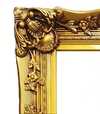
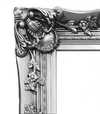

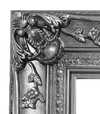


 いずれかの辺が105 cm(約41インチ)を超えるアートワークまたは複製画の場合、フレームは分解されたキットの状態でお届けいたします。この方法は、輸送中の破損を防ぎ、安全に配送するために採用しております。


Identification of the Self-Portrait by Lee Krasner
Lee Krasner produced Self-Portrait in 1929. The work emerged during a formative period of her training, intended for submission to the National Academy to secure enrollment in a specific class. This piece represents an early engagement with the academic traditions of the time, even as it signaled her developing individual agency.
The composition features the artist herself, rendered with a defiant expression. She is positioned within a natural setting, surrounded by elements of the outdoors. This specific portrayal captures a sense of personal resolve through the subject's gaze and the organic environment that frames her.
Composition and Visual Elements of the Work
The composition is centered on a young woman positioned within a semi-outdoor setting. Her face occupies a significant portion of the canvas, establishing a direct presence. The background is composed of a window frame, lush greenery, and a weathered wooden barrel. These elements create a sense of intimacy through a close-up view, while the perspective remains somewhat flattened, a characteristic typical of portraiture, with only a slight recession into the background.
Organic lines dominate the visual structure, following the natural contours of the figure and the surrounding foliage. The shapes are predominantly natural, seen in the rounded forms of the plants and the cylindrical volume of the barrel. Diffused lighting defines the scene, casting soft shadows and highlights that emphasize the subject's facial features and the varied textures of the environment.
Technique and Material Application
Executed in oil on canvas, the work demonstrates a technical approach rooted in academic realism while incorporating early impressionistic tendencies. The artist employs layering and careful blending to achieve realistic effects, particularly in the rendering of light and atmosphere. Soft brushstrokes define the subject, creating a sense of intimacy through the subtle modulation of tone.
Texture is articulated through deliberate brushwork rather than heavy impasto. The artist distinguishes between surfaces by varying the application of paint: the walls and background elements possess a suggested roughness, while the skin and clothing are rendered with a smoother, more seamless finish. This tactile differentiation helps establish a sense of depth and physical presence within the semi-outdoor setting.
Historical Context and Artistic Training
The artist’s formal education began at the Women's Art School of Cooper Union, where she acquired foundational discipline in visual arts. This period of rigorous training provided the technical bedrock for her later experiments in abstraction. By the time she produced this work, she had transitioned to the National Academy of Design, where she studied between 1928 and 1932. This academic environment emphasized traditional techniques and anatomical accuracy, skills evident in her early portraiture.
The late 1920s marked a significant shift in the American art landscape. The opening of the Museum of Modern Art in 1929 introduced new modernist perspectives that influenced her developing aesthetic. This work emerged during a formative stage of her career, as she navigated the tension between the structured logic of her academic training and the burgeoning influence of modernism. The painting reflects a moment of transition, captured while she was a student at the National Academy of Design.
Related Works by Lee Krasner
The artist's broader oeuvre demonstrates a continuous evolution of form and scale. In 1949, Krasner produced Untitled, a work that reflects her engagement with the shifting dynamics of the mid-century art scene. This period of her practice often involved a dialogue between structured composition and gestural expression, marking a departure from her earlier academic training.
Later developments in her career are represented by Rising Green, 1972. This work, held in the Metropolitan Museum of Art, exemplifies the stylistic shifts that characterized her later years. Her ability to reinvent her visual language allowed her to move through distinct phases, transitioning from the controlled studies of her youth toward the expansive, organic abstractions seen in her later catalog.
Q&A
Self-Portraitは手描きですか、それともプリントですか?
手描きによる制作:熟練した画家が、リネンキャンバスに油彩でSelf-Portraitを模写します。
Self-Portraitのサイズはどれを選べばよいですか?
原画のサイズは76 x 82 cmです。 サイズは30.5 x 32.8 cm (¥34935)から230.8 x 248.8 cm (¥370728)まで展開しております。こちらのページ内の表に、主な工程とそれぞれの価格を記載しています。
配送にはどのくらいの時間がかかりますか?
配送には4〜5週間を要し、世界中どこへでも速達便にて無料でお届けいたします。また、本ページではお急ぎの方向けの特急制作オプションもご用意しております。商品は、理由を問わず100日以内であれば全額返金での返品が可能です。
リー・クラスナーはSelf-Portraitの制作にどのような画材(メディア)を使用しましたか?
Oil On Canvas
 設置イメージを表示

 シェアする
 シェアする
 詳細を見る
 解説シート


 ダウンロード
 似ている作品
 X線調査
 スライドショーを表示
 Q&A

 統計情報


