

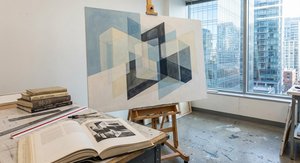
 設置イメージを確認
 送る
送る シェア
シェア
 詳細情報
詳細情報 ガイドを表示

 画像をダウンロード
 似ている作品
 X線調査
X線調査 スライドショー
 統計情報
統計情報Merz Composition


 続きを読む
続きを読む
手描き油彩複製画
当社のアーティストが、お客様のご希望のサイズと額縁に合わせて、キャンバスに手描きで制作する油彩画です。 ( プリント版に切り替え デジタル画像販売へ切り替え)




































作品のオリジナル比率に合わせた、当店の規定サイズからお選びください。

フレームや壁のスペースに合わせて、ご希望の幅と高さを入力してください。本作品は手描きのため、異なる比率のサイズをご希望の場合、絵画の周囲を少し広げて描くか、あるいは端を少しカットして調整することが可能です。お客様のご要望に合わせます。制作を開始する前に、仕上がりを確認するためのデジタルモックアップをお送りいたします。このページに表示されている画像は完成品の実物ではなく、あくまでモックアップによるイメージです。
ご注文後、OriginalUniqueArt.com チームより詳細な指示をお送りするとともに、仕上がりイメージ(モックアップ)をご提供いたします。


 ガラスオプションは、110cm未満のサイズでのみご利用いただけます。

Merz Composition
再現技法
複製画サイズ一覧
-


合計金額
¥ 47438
The Fragmented Soul of Dada: Understanding Merz Composition
In the wake of the Great War's devastation, the art world found itself fractured, much like the very materials used by Kurt Schwitters in his seminal Merz Composition. Created in 1922, this masterpiece serves as a profound window into the Dadaist spirit—a movement that sought to dismantle the rigid, bourgeois logic of a society that had descended into chaos. Unlike the traditional painters of his era who sought beauty in the sublime, Schwitters found a new, raw vitality in the discarded and the mundane. Through his unique "Mer mer" technique, he transformed the debris of everyday life into a rhythmic, visual language that speaks to the beautiful instability of the modern age.
The composition itself is a mesmerizing dance of geometry and chance. At first glance, the eye is drawn to a series of squares and rectangular forms that appear scattered across the canvas like fallen leaves or architectural blueprints. Some shapes overlap with deliberate precision, while others seem to float in a state of weightless suspension. This interplay between foreground and background creates a sense of deep, multidimensional space, inviting the viewer to lose themselves in a labyrinth of texture and tone. The inclusion of a clock element on the right side introduces a poignant layer of symbolism; it acts as a memento mori, a subtle reminder of the relentless passage of time that governs both the decay of objects and the evolution of human thought.
Technically, Merz Composition is a triumph of collage and assemblage. Schwitters’ method was revolutionary, utilizing found materials to bridge the gap between high art and the reality of the streets. The painting possesses a tactile quality that is almost palpable; one can sense the grit, the paper edges, and the layered histories embedded within each fragment. For the discerning collector or interior designer, this piece offers an unparalleled opportunity to introduce a sense of intellectual depth and avant-garde sophistication into a space. It is not merely a decoration but a conversation starter—a complex arrangement of shapes that challenges the viewer to find order within disorder.
Integrating a high-quality reproduction of this work into a contemporary interior can transform a room from a mere living space into a curated gallery. Whether placed in a minimalist setting where its intricate details can stand out, or layered within an eclectic collection of modern works, the Merz Composition radiates an aura of creative rebellion and timeless curiosity. It captures that rare, evocative moment in history when art stopped trying to mirror life and instead began to rebuild it from the pieces left behind.
よくあるご質問
「Merz Composition」はいつ制作されたもので、どの様式(ムーブメント)に属していますか?
Kurt Schwitters作「Merz Composition」は1922年に制作されたもので、Dadaismに属します。
「Merz Composition」の高解像度ダウンロード版は購入可能ですか?
Kurt Schwitters作「Merz Composition」のデジタルイメージは、こちらのデジタル画像ページにてご購入いただけます:高解像度デジタル画像のダウンロード
「Merz Composition」の推奨されるプリント方法について教えてください。サイズや向きはどうするのが良いでしょうか?
「Merz Composition」の推奨プリント設定は、サイズSmall、向きPortraitです。
アーティストについて
Kurt Schwitters: A Life in Merz
Early Life and Education
- Born: June 20, 1887, in Hanover, Germany.
- Schwitters was the only child of Eduard and Henriette Schwitters. His father co-owned a ladies' clothing shop.
- The family’s financial situation improved after selling the business in 1898, allowing them to live off rental income from properties they acquired.
- He studied art at the Dresden Academy from 1909-1915 alongside artists like Otto Dix and George Grosz, though he seemingly remained unaware of their work at the time.
- Schwitters suffered his first epileptic seizure in 1901, which later exempted him from military service for a period during World War I.
Artistic Development and the Birth of Merz
- Initially, Schwitters worked in a post-impressionist style. His early work reflected this influence.
- The devastation of World War I profoundly impacted his artistic direction. He felt traditional academic training was irrelevant in the face of societal collapse.
- “In the war, things were in terrible turmoil…everything had broken down and new things had to be made out of the fragments; and this is Merz.”
- Around 1918, he began creating abstract collages using found objects – scraps of paper, tickets, and other discarded materials.
- The term “Merz” itself came from a fragment of text (“Commerz und Privatbank”) cut from an advertisement and incorporated into one of his early works, *Das Merzbild* (1918-19).
Key Works and Artistic Styles
- Merz Pictures: These collages are arguably Schwitters’ most famous contribution. They represent a radical departure from traditional art, embracing chance and the aesthetics of everyday life.
- Merzbau: A monumental architectural construction within his home in Hanover, continuously evolving over decades. It was a three-dimensional embodiment of Merz principles – a labyrinthine space filled with niches, grottoes, and found objects.
- Assemblage & Installation Art: Schwitters pioneered these forms, blurring the boundaries between painting, sculpture, and architecture.
- He also worked in poetry, sound, graphic design, and typography, exploring a wide range of artistic media.
Influences and Connections
- Early influences included post-impressionism, but he quickly moved beyond these conventions.
- He came into contact with members of the Berlin avant-garde – Raoul Hausmann, Hannah Höch, and Hans Arp – through Herwarth Walden’s *Der Sturm* gallery.
- While associated with Dadaism, Schwitters maintained a distinct artistic identity. He was initially rejected by some Dadaists for his ties to expressionism.
Later Life and Legacy
- Facing increasing persecution under the Nazi regime due to his “degenerate art,” Schwitters fled Germany in 1937.
- He spent time in Norway and England, continuing to create Merz works despite challenging circumstances. He was briefly interned as an enemy alien during World War II.
- Died: January 8, 1948, in Ambleside, England.
- Kurt Schwitters’ work profoundly influenced subsequent generations of artists, particularly those involved in Pop Art, Minimalism, and Conceptual Art.
- His innovative use of found objects and his exploration of the relationship between art and everyday life continue to resonate with contemporary audiences.
Historical Significance
- Schwitters’ Merz aesthetic challenged traditional notions of artistic beauty and authorship.
- He expanded the definition of art by incorporating non-art materials and blurring the lines between different disciplines.
- His work remains a powerful testament to the creative potential of fragmentation, reconstruction, and the embrace of chance.

Kurt Schwitters
1887 - 1948
アーティスト情報
- Name: Kurt Schwitters
- Movement:
- Dadaism
- Constructivism
- Surrealism
- Merz
- Birth Date: June 20, 1887
- Death Date: 1948
- Birth Place: Hanover, Germany
- Nationality: German
- Date Of Birth: 1887
- Date Of Death: 1948
- Notable Works:
- Merz pictures
- Merzbau
関連記事

Kandinsky's Masterpieces: 25 Paintings That Define Abstract Art | OriginalUniqueArt
Journey through Wassily Kandinsky's 25 most iconic abstract paintings. Explore his revolutionary use of color, form & spiritual expressionism. Find museum-quality Kandinsky reproductions and elevate your home decor with OriginalUniqueArt.com. Discover all masterpieces on OriginalUniqueArt.com!

Neo-Abstract Art: The High-Impact Evolution of Modern Visual Energy and Geometric Sophistication
Discover the power of Neo-Abstract art. Explore how bold geometric forms and high-impact visual energy are redefining modern design. Learn to curate sophisticated, high-energy spaces with the latest trends in contemporary abstraction and structural color.

幾何学的抽象絵画を定義した傑作10選|アート、アーティスト、インテリア装飾
モンドリアン、マレーヴィチ…幾何学的抽象絵画を代表する傑作10選。各作品の背景や色彩構成、アーティストの情熱に迫ります。美術館品質の複製画はOriginalUniqueArt.comで。オンラインでアートコレクションをご覧ください。
Beyond Form & Color: Geometric Abstraction's Enduring Legacy in Art History
Explore the captivating world of geometric abstraction! Discover its origins, key artists like Malevich & Mondrian, and why this movement remains highly valued by art collectors today. Expert insights at OriginalUniqueArt.

Beyond Form & Color: Geometric Abstraction's Evolution in 20th/21st Century Art
Explore the evolution of geometric abstraction from Cubism to contemporary art. Discover key artists like Malevich & Mondrian, investment insights, and expert collecting advice at OriginalUniqueArt.