

 プレビュー
プレビュー
 シェアする
シェアする シェアする
シェアする
 詳細を見る
詳細を見る

 ダウンロード
 似ている作品
 X線調査
X線調査 スライドショー
 統計情報
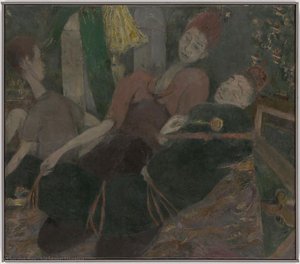
統計情報Untitled
 2010
2010 153.0 x 117.0 cm
 詳細を見る
詳細を見る
オンラインプレビューをはるかに凌ぐ、高解像度で鮮明なデジタル画像をご購入いただけます。
各ファイルは、社内の専門家が高度なツールと熟練した手作業によるレタッチを用いて、細心の注意を払って準備されています。すべての画像において、卓越した鮮明度、正確な色彩再現性、そして繊細なディテールを保証いたします。
最終ファイルは、プロフェッショナルな編集・印刷環境ですぐにご利用いただけるよう最適化された状態で、72時間以内にメールにてお届けいたします。これは、一流のデザインスタジオ、出版社、ギャラリーから信頼されているものと同等の品質です。
デジタルアート
個人での鑑賞、印刷、クリエイティブなプロジェクト用に、高解像度ファイルをダウンロードできます。 ( プリント版に切り替え 手描きの絵画を購入)
デジタル画像のご注文に付随する特典
高品質なデジタル画像配信を、確かな品質で。
OriginalUniqueArt.com を選ぶことは、単に画像を手に入れることではありません。それは、プロの手によって精密に仕上げられ、満足保証が付いた高品質なデジタルアートワークを受け取ることを意味します。ご注文いただいた際に自動的に付随する内容は、以下の通りです:

メールですぐにお届け
ご注文から72時間以内に、高解像度のデジタル画像ファイルがメールでお手元に届きます。すぐにそのままご利用いただけます。

AI技術で最適化されたデジタルファイル
お客様の作品は、高度なAIツールと専門家による手作業の編集を組み合わせてプロフェッショナルに最適化されており、細部のディテール、鮮明さ、そして正確な色再現性を最大限に引き出しています。

一生涯無料の再送サービス
ファイルを誤って削除したり、紛失してしまったりしましたか?ご安心ください。いつでも無料で再送いたします。

輸入手数料は一切かかりません
関税や手数料、配送料を気にすることなく、お気に入りのアートワークをすぐにお楽しみいただけます。デジタルダウンロードは常に免税です。

色彩再現の保証
プロ仕様のツールとカラーマネジメント技術を用いることで、デジタル画像が元の色を最大限に忠実に再現することを保証いたします。

100日間満足保証
ご購入いただいたデジタル画像にご満足いただけない場合は、100日以内であれば、理由を問わず修正または100%の返金対応をさせていただきます。

100% 返金保証
ご満足いただけない場合は、デジタルファイルを受け取ってから100日以内であれば、理由を問わず全額返金いたします。

まとめ買い割引
3枚購入で10%OFF - 5枚購入で15%OFF - 10枚以上購入で20%OFF。クリエイティブなプロジェクト、ギャラリー、エージェンシーに最適です。
作家の略歴
A Cartography of the Imaginary: The World of Kai Althoff
Kai Althoff, born in Cologne, Germany, in February 1966, is an artist who resists easy categorization. He isn’t simply a painter, sculptor, or video artist; rather, he's a conjurer of worlds—complex, layered environments that feel simultaneously ancient and utterly contemporary. His work operates within a fascinating tension between historical reference and deeply personal expression, creating allegorical spaces brimming with symbolism and emotional resonance. Althoff doesn’t present narratives so much as fragments of them, echoes of stories half-remembered or never fully formed, inviting the viewer to participate in their reconstruction. This deliberate ambiguity is central to his practice, fostering a sense of unease and prompting introspection.Early Influences & Artistic Development
Althoff’s artistic journey wasn't linear. Emerging from a vibrant Cologne art scene, he initially explored music alongside visual arts, forming bands like Workshop with Christoph Rath, Stefan Mohr, and Stephan Abry, and later Subtle Tease with Justus Köhncke. This immersion in sound profoundly shaped his aesthetic sensibility—a rhythmic layering of elements, a fascination with dissonance, and an embrace of the ephemeral. His early paintings already hinted at the concerns that would define his mature work: a preoccupation with Germanic folklore, religious iconography (particularly medieval and Gothic imagery), and the expressive power of German Expressionism. However, it wasn’t merely imitation; Althoff began to *reconfigure* these sources, introducing collaged techniques and a deliberately naive figuration that disrupted traditional notions of skill and mastery. He wasn't interested in replicating the past but rather excavating its emotional core, stripping away polish to reveal raw vulnerability. The influence of artists like Max Beckmann and Ernst Ludwig Kirchner is palpable, yet Althoff’s work quickly developed a unique voice—one characterized by a haunting lyricism and a refusal to adhere to any single stylistic convention.Collaborative Visions & Site-Specific Installations
A defining aspect of Althoff's career has been his embrace of collaboration. He frequently works with other artists, creating projects that blur the boundaries between individual authorship. His 2004 installation *Kolten Flynn*, created with Lutz Braun for the 4th Berlin Biennale, exemplifies this approach. The work consisted of three vitrines draped in red foil, filled with a child’s paintings, drawings, and abandoned materials—a poignant tableau evoking memory, loss, and the fragmented nature of identity. This wasn't simply an exhibition *of* objects but rather the creation of a psychological space, a miniature world charged with unspoken narratives. Similarly, his collaboration with Yair Oelbaum on *There We Will Be Buried* (2010) took the form of a dramatic play, performed live and later adapted for various venues including the Whitney Museum of American Art. The play centered around two single mothers searching for a lost daughter, exploring themes of abandonment, grief, and the complexities of familial relationships. These collaborative projects demonstrate Althoff’s interest in performance, theater, and the power of collective storytelling. *Die kleine bushaltestelle (gerüstbau)* (Little Bus Stop , 2012), performed with Isa Genzken, further cemented his reputation for absurdist humor and unconventional artistic expression.Themes & Symbolism: Allegories of Human Experience
Althoff’s work is deeply symbolic, drawing on a vast reservoir of cultural references—from religious parables to popular culture ephemera. Recurring motifs include figures with elongated limbs and distorted features, architectural fragments suggesting decaying grandeur, and landscapes that feel both familiar and alien. His characters often inhabit imaginary worlds that serve as allegories for human experience and emotion. They are not portraits in the traditional sense but rather archetypes—representations of longing, despair, or spiritual yearning. The use of collage is particularly significant, allowing Althoff to juxtapose disparate images and create unexpected associations. This technique reflects his interest in fragmentation and the subjective nature of memory. He often incorporates found objects into his work, imbuing them with new meaning and challenging conventional notions of artistic value. The overall effect is one of dreamlike disorientation, inviting viewers to question their own perceptions and interpretations. His paintings are not meant to be deciphered but rather experienced—felt on an emotional level.Historical Significance & Contemporary Relevance
Kai Althoff’s work occupies a unique position within contemporary art. He resists categorization, blending historical reference with deeply personal expression in a way that is both intellectually stimulating and emotionally resonant. His influence can be seen in the work of younger artists who are similarly interested in exploring themes of memory, identity, and the fragmented nature of experience.- His embrace of collaboration challenges traditional notions of authorship.
- His use of collage and found objects expands the boundaries of painting and sculpture.
- His exploration of symbolism and allegory invites viewers to engage with art on a deeper level.
kai althoff
1966 -
プロフィール概要
- Artistic Movement Or Style: Expressionism, Multimedia
- Artists Who Influenced This Artist:
- Germanic folk traditions
- Medieval religious imagery
- Date Of Birth: February 1966
- Full Name: Kai Althoff
- Nationality: German
- Notable Artworks:
- Kolten Flynn
- There we will be buried
- Die kleine bushaltestelle
- Place Of Birth: Cologne, Germany