プリント版に切り替え
 続きを読む
続きを読む







































 いずれかの辺が105 cm(約41インチ)を超えるアートワークまたは複製画の場合、フレームは分解されたキットの状態でお届けいたします。この方法は、輸送中の破損を防ぎ、安全に配送するために採用しております。


A Portrait of Dignified Suffering
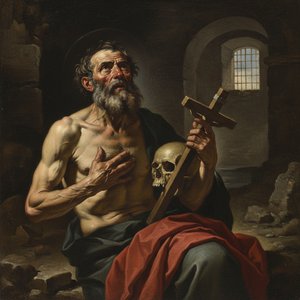
In the profound stillness of Jusepe de Ribera’s 1632 masterpiece, St. Philip, viewers are invited into a space where spiritual fortitude meets palpable human sorrow. This arresting depiction portrays the saint not as an idealized icon, but as a figure of raw, earthly devotion. As a Dominican monk, St. Philip stands as a testament to unwavering faith, yet Ribera refuses to mask the weight of his existence. The figure dominates the composition with a heavy, commanding presence, embodying a characteristic motif found throughout Ribera's oeuvre: the intersection of divine grace and mortal struggle. To gaze upon this portrait is to witness a soul caught in the quiet tension between the agony of the flesh and the peace of the spirit.
The technical brilliance of the work lies in Ribera’s mastery of tenebrismo, a dramatic form of chiaroscuro that defines the Spanish Baroque era. By skillfully manipulating extreme contrasts between light and shadow, the artist creates an unsettling juxtaposition that heightens the emotional stakes of the scene. The light does not merely illuminate; it carves the saint's features out of an encroaching darkness, emphasizing the rugged textures of his weathered skin and the coarse fabric of his monastic robes. This meticulous attention to detail—the way light catches the folds of a sleeve or the subtle lines of a furrowed brow—underscores the importance of materiality in conveying spiritual truth. Ribera eschews the polished perfection of the Renaissance, opting instead for a brutally honest portrayal of human anatomy that feels startlingly immediate even centuries later.
Historical Resonance and Symbolic Depth
Painted during a period of intense religious fervor in 17th-century Naples, St. Philip reflects the complex cultural landscape of a city under Spanish rule. This was an era where artists were tasked with wrestling with themes of piety, mortality, and the profound complexities of the human experience. The dark, atmospheric sky that serves as the backdrop is far more than a mere void; it acts as a canvas for contemplation, mirroring the saint's internal spiritual battles and hinting at the looming shadow of divine judgment. Every element within the frame is laden with symbolic resonance, designed to pull the viewer into a state of meditative reflection.
For the discerning collector or interior designer, this piece offers more than just aesthetic beauty; it provides a profound emotional anchor for any space. The painting’s ability to transcend mere representation makes it a captivating centerpiece, capable of sparking conversation and evoking deep introspection. Whether placed in a quiet study or a grand gallery, the work's visceral response—born from Ribera's unflinching gaze at human vulnerability—commands respect and admiration. It is a piece that lingers in the mind long after the first encounter, offering a timeless window into the heart of Baroque intensity.
よくあるご質問
ホセ・デ・リベラ作「St. Philip」 に似た作品を見つけるにはどうすればよいですか?
「St. Philip」に似た作品は、作品の似ている作品ページに掲載されています。
ホセ・デ・リベラ作「St. Philip」の複製画は、どのような用途に適していますか?
ホセ・デ・リベラ作「St. Philip」の推奨される用途はStatementです。もちろん、それ以外の用途でもお楽しみいただけます。
ホセ・デ・リベラ作「St. Philip」において、芸術運動と時代はどのように交差しているのでしょうか?
ホセ・デ・リベラ作「St. Philip」において、Baroque Dramatic Intensityの潮流と近世美術の時代が融合しています。
More about this painting
 設置イメージを確認
 送る
送る シェア
シェア
 詳細情報
詳細情報 ガイドを表示

 画像をダウンロード
 似ている作品
 X線調査
X線調査 スライドショー
 Q&A
Q&A 統計情報
統計情報