プリント版に切り替え
 詳細を表示
詳細を表示







































 いずれかの辺が105 cm(約41インチ)を超えるアートワークまたは複製画の場合、フレームは分解されたキットの状態でお届けいたします。この方法は、輸送中の破損を防ぎ、安全に配送するために採用しております。


Juan de Arellano: A Master of Floral Still Life
Juan de Arellano (1614 – 1676) stands as a singular figure in the Baroque art landscape of Spain, celebrated primarily for his breathtaking floral still life paintings. Born in Santorcaz, near Madrid—a city that would become synonymous with his artistic legacy—Arellano’s life unfolded amidst the opulent patronage of Philip III and witnessed the burgeoning influence of Flemish and Italian artistic traditions. While biographical details remain somewhat sparse, he emerged as a student under Juan de Solís, whose landscapes offered a contrasting aesthetic to Arellano's focused dedication to botanical representation. His work embodies the spirit of the era—a fascination with observation, meticulous detail, and an attempt to capture not merely what is seen but also what is felt.- Style: Arellano’s style firmly rooted itself within the Baroque tradition, inheriting its dramatic chiaroscuro techniques and embracing a humanist sensibility that prioritized natural beauty and contemplation. However, unlike many of his contemporaries who sought grandeur and spectacle, he opted for a quieter, more intimate portrayal of nature—a deliberate choice reflecting the prevailing taste for decorative art during Philip III’s reign.
- Technique: Arellano excelled in oil painting on linen, utilizing layering and glazing methods to achieve remarkable luminosity and depth. He painstakingly rendered individual petals, stems, and leaves with astonishing accuracy, capturing subtle variations in color and texture—a testament to his mastery of observation and artistic skill. The artist’s meticulous approach ensured that each flower seemed to pulsate with life on the canvas.
The Influence of Flemish Masters
Like many artists of his era, Arellano absorbed the stylistic precepts of Flemish masters such as Daniel Seghers and Mario Nuzzi. These influences instilled in him a meticulous attention to detail and a masterful command of chiaroscuro—the dramatic interplay of light and shadow—techniques characteristic of Northern Baroque painting. Seghers’ landscapes taught Arellano how to convey atmosphere and perspective, while Nuzzi's flower paintings demonstrated the importance of capturing delicate nuances of color and form. This synthesis of artistic influences resulted in a distinctive visual language that distinguishes Arellano’s oeuvre from other Spanish painters of his time.Symbolism and Emotional Resonance
Beyond mere aesthetic beauty, Arellano's floral still lifes carried profound symbolic meaning—a hallmark of Baroque art. Flowers were frequently employed to convey concepts of mortality, remembrance, and spiritual contemplation, reflecting the anxieties of a society grappling with religious dogma and facing imminent death. The artist’s careful composition—often featuring birds perched atop vases or flowers—reinforced these themes, inviting viewers to engage in introspection and consider the ephemeral nature of existence. His paintings evoke a sense of serenity and melancholy, capturing the fleeting beauty of the natural world while simultaneously prompting reflection on human mortality.Notable Works
Among Arellano’s most celebrated pieces are “Bouquet of Flowers” (c.1660), currently housed in the Museo del Prado, Madrid—a masterful depiction of roses and lilies bathed in soft light—and “Garland of Flowers, Birds and Butterfly,” displayed at The Louvre. He also executed commissions for the sacristy of San Jerónimo el Real, showcasing his versatility as an artist. Furthermore, reproductions of his paintings can be found in museums across Europe, including Bilbao Fine Arts Museum and The Royal Academy of Fine Arts of San Fernando. Examining these artworks offers a glimpse into the artistic sensibilities of a pivotal moment in Spanish Baroque history.Q&A
「Still Life」はどの様式に属していますか?
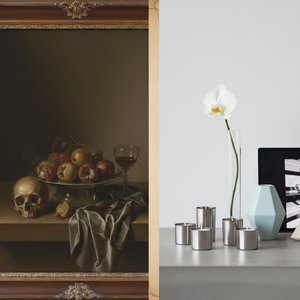
フアン・デ・アレラノ作「Still Life」はCubist Still Lifeに属しています。このムーブメントは、本作の様式的な背景を形作るものです。
ヒル・ステッド・ミュージアムに所蔵されているフアン・デ・アレラノ作「Still Life」は、法的に複製することが可能でしょうか?
フアン・デ・アレラノ作「Still Life」の著作権の状態は明確であり、本作はパブリックドメイン(著作権消滅)です。ヒル・ステッド・ミュージアムに所蔵されているという事実によって、この状態が変わることはありません。
拡張現実(AR)を使って、自分の部屋にフアン・デ・アレラノ作「Still Life」を配置して見ることはできますか?
対応するデバイスの拡張現実(AR)機能を使用し、作品のARで見るページから、ご自身の壁にフアン・デ・アレラノ作「Still Life」をプレビュー表示することができます。
この絵画の詳細を見る
 設置イメージを表示
 シェアする
シェアする シェアする
シェアする
 詳細を見る
詳細を見る ガイドを表示

 ダウンロード
 似ている作品
 X線調査
X線調査 スライドショーを表示
 Q&A
Q&A 統計情報
統計情報