

 プレビュー
プレビュー
 シェアする
シェアする シェアする
シェアする
 詳細を見る
詳細を見る

 ダウンロード
 似ている作品
 X線調査
X線調査 スライドショー
 統計情報
統計情報Landscape in Cassis


 詳細を見る
詳細を見る
手描き油彩複製画
当社のアーティストが、お客様のご希望のサイズと額縁に合わせて、キャンバスに手描きで制作する油彩画です。 ( プリント版に切り替え デジタル画像販売へ切り替え)




































作品のオリジナル比率に合わせた、当店の規定サイズからお選びください。

特定のフレームやスペースに合わせて、ご希望のサイズをご入力いただけます。選択されたサイズが元の画像の比率と異なる場合、アートワークをトリミングするか、手描きで要素を追加して絵画を拡張いたします。デジタルモックアップ を制作し、制作開始前にご確認(承認)をいただきます。
画面上のプレビューは、実際のトリミングや拡張を正確に反映しているものではありません。最終的な構図は、モックアップによってのみ正確にご確認いただけます。
カスタムサイズもご利用いただけますが、元の比率を維持するためには、あらかじめ用意されたリストからサイズを選択することをお勧めいたします。
ご注文後、OriginalUniqueArt.com チームより詳細な指示をお送りするとともに、仕上がりイメージ(モックアップ)をご提供いたします。


 ガラスオプションは、110cm未満のサイズでのみご利用いただけます。

Landscape in Cassis
複製技法
複製画のサイズ
-


合計金額
$ 300
アーティストの略歴
Wassily Kandinsky: Pioneer of Abstraction
Wassily Wassilyevich Kandinsky (1866-1944) stands as a monumental figure in the history of art, not merely for his prolific output but for his radical and transformative role in dismantling traditional representation. Often hailed as one of the earliest pioneers of abstraction, Kandinsky’s journey from a classically trained artist to a visionary whose work explored the very essence of feeling and spirituality within color and form is a compelling narrative of artistic evolution. Born in Moscow amidst a rich cultural heritage – his lineage tracing back through Russian nobility and connections to Mongolia – Kandinsky's early life was marked by exposure to diverse influences, from the grandeur of European capitals like Venice and Florence to the stark landscapes of Siberia.
Initially pursuing a legal education at the University of Moscow, Kandinsky’s artistic inclinations soon took precedence. He enrolled in Anton Ažbe’s private school and later at the Imperial Academy of Arts, where he diligently studied anatomy, perspective, and traditional painting techniques. However, it was during his travels through Europe – particularly to Munich – that a seismic shift occurred within his artistic consciousness. The vibrant energy of Impressionism, the expressive fervor of Post-Impressionism, and the burgeoning avant-garde movements all contributed to a growing dissatisfaction with the constraints of objective representation. He began experimenting with color and form, seeking ways to convey emotions and inner experiences directly through his art – a pursuit that would ultimately define his legacy.
Early Influences and Artistic Development
Kandinsky’s artistic development was profoundly shaped by a confluence of influences. His early work, such as *Picture with an Archer* (1909), reveals a tentative exploration of abstraction, where recognizable forms—an archer, a horse, buildings—are rendered through intense color and dynamic composition. Yet, even in this piece, the emphasis is not on depicting reality but on evoking a specific mood or atmosphere. The influence of music was particularly significant; Kandinsky believed that art should resonate with the same emotional depth as music, and he frequently described his paintings as “compositions” akin to musical scores.
A pivotal moment in his artistic trajectory occurred in 1911 when he attended a concert by Arnold Schoenberg, whose atonal music challenged conventional harmonic structures. This experience ignited a new understanding of abstraction – not merely as the absence of representation but as a means of expressing pure feeling and spiritual ideas. That same year, he created *Concerning the Spiritual in Art*, a seminal text that outlined his philosophy of abstract art, arguing that it could bypass language and directly communicate with the soul. He joined forces with Gabriele Münter, forming a close artistic partnership that fueled experimentation and innovation.
The Blaue Reiter and Constructivism
Kandinsky’s most influential period began in 1911 with the formation of “Der Blaue Reiter” (The Blue Rider), an artist group centered in Munich. Alongside artists like Franz Marc, August Macke, and Paul Klee, Kandinsky explored themes of spirituality, color theory, and non-objective art. The group’s name reflected their use of vibrant blues and yellows, colors associated with the heavens and spiritual enlightenment. During this time, Kandinsky developed his own unique style, characterized by increasingly simplified geometric forms and a focus on the expressive power of color.
Following the Russian Revolution in 1917, Kandinsky returned to Russia and became involved in the new government’s cultural initiatives. He served as director of the Museums of Painterly Culture and later the Institute of Artistic Culture, playing a key role in establishing art education and promoting abstract art within the Soviet Union. However, his spiritual outlook clashed with the increasingly materialistic ideology of the regime, leading him to seek opportunities abroad.
Mature Works and Legacy
Kandinsky’s mature works—particularly those created between 1920 and 1944—represent a culmination of his artistic explorations. He moved to France in 1933, escaping the rising tide of Nazism in Germany, and continued to produce powerfully evocative abstract paintings characterized by bold colors, dynamic compositions, and a profound sense of spirituality. His later works, such as *Composition VII* (1913) and *Improvisation 28* (1940), are considered masterpieces of the abstract art movement.
Kandinsky’s influence on subsequent generations of artists is immeasurable. He not only pioneered abstraction but also developed a sophisticated theory of color and form that continues to be studied today. His work challenged conventional notions of representation, paving the way for countless artists to explore new ways of expressing themselves through non-objective art. Wassily Kandinsky’s legacy endures as a testament to the power of art to transcend language and connect with the deepest realms of human experience.

józef pankiewicz
1866 - 1940
基本情報
- Artistic Movement Or Style:
- Abstraction
- Blaue Reiter
- Bauhaus
- Artists Or Movements Influenced By This Artist:
- Herbert Bayer
- Sonia Delaunay
- Artists Who Influenced This Artist:
- Anton Ažbe
- Gabriele Münter
- Date Of Birth: 1866-12-04
- Date Of Death: 1944-12-13
- Full Name: Wassily Wassilyevich Kandinsky
- Nationality: Russian, French
- Notable Artworks:
- Concerning the Spiritual in Art
- Komposition V
- Improvisation
- Place Of Birth: Moscow, Russia
関連記事
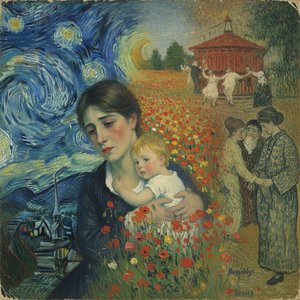
Capturing the Soul: The Most Emotionally Moving Impressionist and Post-Impressionist Masterpieces
Discover the profound emotional depth of Impressionist and Post-Impressionist masterpieces. Explore how legends like Monet, Van Gogh, and Gauguin captured light and soul through evocative landscapes and vibrant brushwork for a timeless connection to art history.

印象派風景を彩った至宝:アート史に名を刻む10選
印象派風景の革新を彩った10選。モネ、ルノワールら巨匠の名作を紐解き、色彩と光が生み出す感動の世界へ。アートの歴史とインテリアのインスピレーションをOriginalUniqueArt.comで。高品質な複製画で、あなただけの空間を創造しましょう。

Beyond the Horizon: A Curated Guide to Integrating Post-Impressionist Landscapes into Modern Interiors
Transform your home with the emotive power of Post-Impressionist landscapes. Discover expert tips on selecting hand-painted oil reproductions to create a soulful, vibrant interior that reflects your unique style and connection to nature.
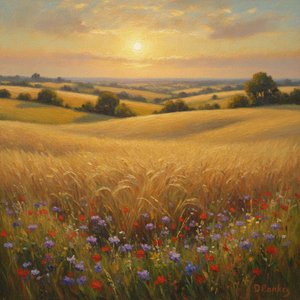
Golden Fields & Sun-Drenched Meadows: Capturing the Soul of Impressionist Landscapes
Immerse yourself in the luminous world of Impressionist landscapes. Discover how masters like Monet and Gauguin captured ephemeral light through plein air painting, and learn to bring the soul of sun-drenched meadows into your home with exquisite, hand-painted oil reproductions.

Impressionistic Landscapes: 10 Masterpieces That Changed Art & Decor
Journey into the heart of Impressionism! Explore 10 masterpieces by Monet, Renoir & Degas that revolutionized landscape art. Discover their stories, techniques & find museum-quality reproductions to elevate your home decor on OriginalUniqueArt.com.